
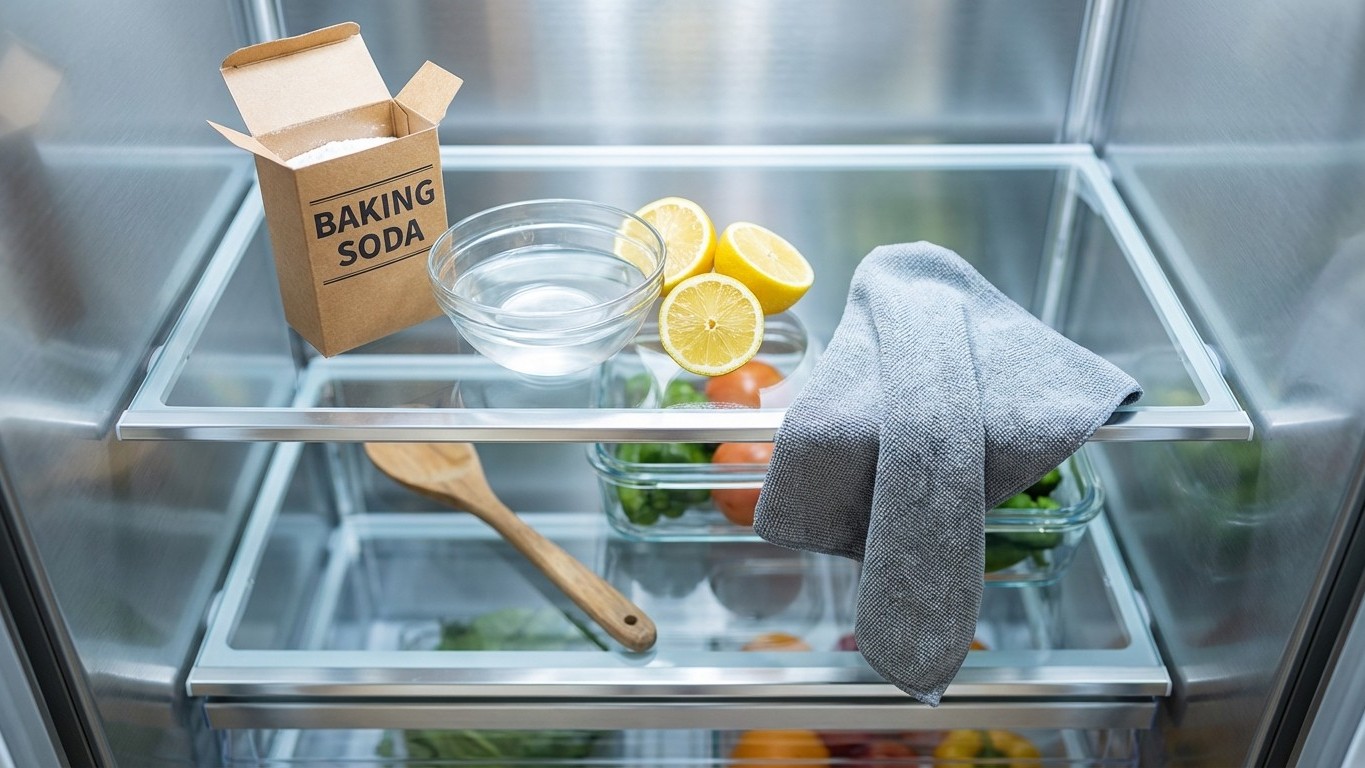
A fridge that smells peculiar is one of those household problems that sneaks up on you quietly, and then suddenly it’s all you can think about every time you open the door. Most commercial fridge cleaners contain surfactants and synthetic fragrances that simply mask the problem rather than solving it, and frankly, spraying chemical products inside an appliance that stores your food has always struck me as a rather odd idea. The good news is that a handful of humble pantry ingredients will do a far better job, at a fraction of the cost.
Why Clean Your Fridge the Natural Way?
The Risks of Chemical Products Around Food
Refrigerators are enclosed, cold environments. Chemical residues from conventional cleaners linger on shelves and walls, particularly in corners and joints where rinsing is tricky. Because the fridge stays cool, these residues evaporate slowly, which means they can transfer to uncovered food over time. Conventional disinfectant sprays often contain quaternary ammonium compounds or chlorine derivatives that are not recommended for direct contact with food surfaces. The British Food Standards Agency has consistently advised that food contact surfaces be cleaned with products that either rinse away completely or are food-safe by composition.
Natural solutions sidestep this concern entirely. Bicarbonate of soda, white vinegar, and lemon juice are all food-grade ingredients. If a tiny trace remains on a shelf after rinsing, it poses no risk whatsoever to the food sitting on it.
Ecology, Effectiveness, and Your Purse
A large box of bicarbonate of soda and a bottle of white vinegar cost very little and between them handle the vast majority of household cleaning tasks, from the fridge to the oven. If you’re already exploring natural cleaning hacks across your home, the fridge is one of the easiest wins: fewer products to buy, no plastic spray bottles to replace, and genuinely effective results. Bicarbonate neutralises acidic odour molecules rather than covering them, and white vinegar’s acetic acid dissolves mineral deposits and kills a broad range of bacteria and moulds.
Preparing for the Clean: Organisation and Safety
Emptying the Fridge and Sorting Your Food
Set aside about 45 minutes when the fridge is relatively empty, typically before your weekly shop. Take everything out and work quickly: place dairy, meat, and cooked leftovers in a cool bag or a box with ice packs if your kitchen is warm. Check every item as you remove it. This is the moment to discard that forgotten jar of chutney from two years ago, the slightly grey leftover pasta, and anything past its use-by date. Removing the source of odours is half the battle.
Unplugging and Protecting the Seals
Switch the fridge off at the wall or unplug it before you begin. This is simple good practice when working with liquids near electrical appliances. The rubber door seal deserves particular attention: it’s porous and tends to trap crumbs, moisture, and mould in its folds. Be gentle with it during cleaning because a cracked or damaged seal will affect the fridge’s energy efficiency and allow warm air to enter, which itself encourages bacterial growth.
Natural Ingredients for Cleaning and Deodorising
Bicarbonate of Soda: Uses and a Word of Caution
Bicarbonate of soda (sodium bicarbonate) is alkaline, which makes it particularly good at neutralising the acidic compounds responsible for most fridge smells. It’s mildly abrasive in paste form, useful for scrubbing stubborn sticky patches without scratching plastic surfaces. One precaution worth knowing: don’t use it neat on aluminium components if your fridge has any, as prolonged contact can cause slight discolouration. On plastic shelves and glass, it’s perfectly safe.
White Vinegar: Disinfecting and Neutralising Odours
White vinegar at 5–8% acetic acid concentration is the workhorse of natural fridge cleaning. Studies on acetic acid’s antimicrobial properties show it is effective against E. coli and Listeria at concentrations achievable with standard household white vinegar, both of which are concerns in a food environment. The sharp smell dissipates completely once dry, which often surprises people the first time they try it. One thing to be mindful of: never mix vinegar with bicarbonate of soda in the same solution expecting a combined effect. The two neutralise each other and produce mainly water and carbon dioxide. Use them in sequence, not together.
If you’re tackling greasy residue around door shelves, the same principle applies as when you use a natural degreaser for kitchen cabinets: a slightly warmed vinegar solution cuts through fat far more effectively than a cold one.
Lemon, Essential Oils, and a Few Other Tricks
Fresh lemon juice adds a pleasant antibacterial boost and leaves surfaces smelling clean without any synthetic fragrance. A few drops of tea tree essential oil mixed into your cleaning solution provide additional antifungal action, particularly useful if you’ve spotted any mould on the fridge walls. Activated charcoal sachets, while not a cleaning agent per se, are worth mentioning here as they are outstanding odour absorbers when left inside the fridge between cleans.
Step-by-Step: How to Clean a Fridge Naturally
Your Natural Cleaning Solution Recipe
For the interior surfaces, mix the following in a spray bottle or a bowl:
- 250 ml warm water
- 3 tablespoons white vinegar (standard household strength)
- 1 teaspoon bicarbonate of soda (added after the vinegar has been measured out separately, if using in sequence rather than combined)
- 1 tablespoon fresh lemon juice
- Optional: 3 drops of tea tree essential oil
A simpler version that works well for a quick clean is simply equal parts water and white vinegar. The lemon and bicarbonate approach suits a deeper monthly clean. Spray or wipe the solution over all interior surfaces, including the back wall, side walls, and the underside of each shelf. Leave it to work for two to three minutes before wiping down.
Cleaning Shelves, Drawers, and Seals Without Causing Damage
Remove glass shelves and plastic drawers and wash them separately in the sink with warm water, a few drops of washing-up liquid, and a splash of white vinegar. Glass shelves should never be placed under very hot water immediately after coming out of a cold fridge: the thermal shock can crack them. Let them come to room temperature for ten minutes first.
For the door seal, dip an old toothbrush into a bicarbonate paste (bicarbonate mixed with just enough water to form a thick consistency) and work it gently into the folds. Rinse with a damp cloth. If you spot black mould spots on the seal, apply undiluted white vinegar with the toothbrush, leave for five minutes, then scrub and rinse.
Rinsing, Drying, and Reassembling
Wipe all surfaces down with a clean damp cloth to remove any cleaning solution residue. Dry thoroughly with a clean tea towel or paper towel. A damp fridge interior encourages mould growth, so this step matters more than people often realise. Once everything is dry, replace the shelves and drawers, plug the fridge back in, and allow ten minutes before returning your food.
Eliminating Bad Fridge Smells: Natural Methods That Actually Work
Neutralising Persistent Odours
If a thorough clean hasn’t fully resolved the smell, the culprit is usually a residue that’s been absorbed into the plastic walls or an ongoing source you haven’t identified yet. Three natural odour neutralisers are worth keeping in your toolkit:
- Bicarbonate of soda: Place an open shallow dish containing 3–4 tablespoons inside the fridge. Replace it every four to six weeks. It works by chemically binding to odour molecules rather than masking them.
- Activated charcoal sachets: More powerful than bicarbonate for particularly stubborn cases. Available in most homeware shops, they last two to three months and can be recharged by placing them in sunlight for a few hours.
- Ground coffee or used coffee grounds: Spread on a small plate and left in the fridge for 24–48 hours, this is a traditional remedy that works by absorption. It’s not a long-term solution, but it’s effective in a pinch.
Prevention: Smarter Storage Limits Future Problems
Strong-smelling foods like aged cheese, fish, and raw onion should always be stored in airtight containers. Leftovers covered with just cling film still allow odours to escape; a lidded container makes a genuine difference. Keep a dedicated spot for foods that are approaching their use-by date so they get used first, rather than getting pushed to the back and forgotten. This is the single most effective preventative measure I can offer.
Regular Maintenance: Keeping Your Fridge Fresh Year-Round
How Often and What to Do
A full natural clean, as described above, works well every four to six weeks for most households. Between those, a quick weekly wipe of shelves and the vegetable drawer with a damp cloth takes no more than five minutes. Spills should be wiped up immediately, before they dry and begin to harbour bacteria. The door shelves, particularly the bottom one where leaking jars tend to drip, need attention most often.
The approach mirrors what works well in the rest of the kitchen. If you’re already using natural kitchen cleaning hacks for your worktops and sink, adding the fridge to that routine is straightforward and keeps your entire food preparation area consistently hygienic.
Additional Tips for Stubborn Lingering Smells
If a smell returns quickly after a clean, check the drip tray at the bottom or back of the fridge. Many people never think to clean it, and it can accumulate stagnant water and mould over months. Remove it if possible, rinse it with hot water and vinegar, and dry it before replacing. Also check that the drainage hole (a small hole usually at the back of the interior) isn’t blocked with food debris: a blocked drain is a surprisingly common cause of musty fridge odours.
FAQ: Natural Fridge Cleaning
What to Do if Smells Persist After Cleaning
Start by checking every possible source: the drip tray, the drain hole, and any shelf edges where residue may have been missed. Leave an open bowl of bicarbonate in the fridge for 48 hours and see if it improves. If the smell is very deeply embedded in the plastic, applying a paste of bicarbonate and lemon juice to the interior walls, leaving it for 20 minutes, then rinsing can help lift what a simple spray hasn’t reached. In cases of very strong fish or meat odours after a spill, a paste of bicarbonate left overnight is your best option.
Which Natural Ingredients to Avoid in the Fridge
Avoid using essential oils in high concentrations near uncovered food. A few drops in a cleaning solution that you then wipe and rinse away is fine; leaving an open dish of concentrated essential oil inside the fridge is not. Some people suggest placing vanilla extract on a cotton ball inside the fridge: this can leave a sticky residue on shelves and isn’t recommended. Bleach, even diluted, is unsuitable for use inside a fridge regardless of how thoroughly you rinse it. The same principle applies to the oven, where natural methods are equally superior, as this guide on how to clean oven naturally with baking soda and vinegar explains in detail.
A Quick Clean Between Full Routines
Mix a small spray bottle with half water, half white vinegar and keep it in a kitchen cupboard. A two-minute wipe of the main shelves and door pockets twice a week keeps the fridge fresh between deeper cleans without any extra effort or expense. A dry microfibre cloth removes moisture immediately after. That’s genuinely all it takes.
A Fridge That Stays Fresh, Naturally
Getting into a rhythm with natural fridge cleaning is one of those small domestic changes that pays dividends in a way that’s slightly disproportionate to the effort involved. Your food tastes better when it’s stored somewhere clean, your kitchen smells fresher, and you’re no longer exposed to synthetic chemicals every time you reach for the milk. The bicarbonate, the vinegar, the lemon, they’ve been doing this work reliably for generations, long before the cleaning products aisle existed.
If this approach to the fridge has sparked your interest in tackling other kitchen surfaces the same way, the wider collection of natural cleaning hacks covers everything from floors to bathroom tiles with the same practical, ingredient-led approach. The question worth sitting with is this: once you’ve seen how well these simple ingredients work in the fridge, which corner of your home will you tackle next?