
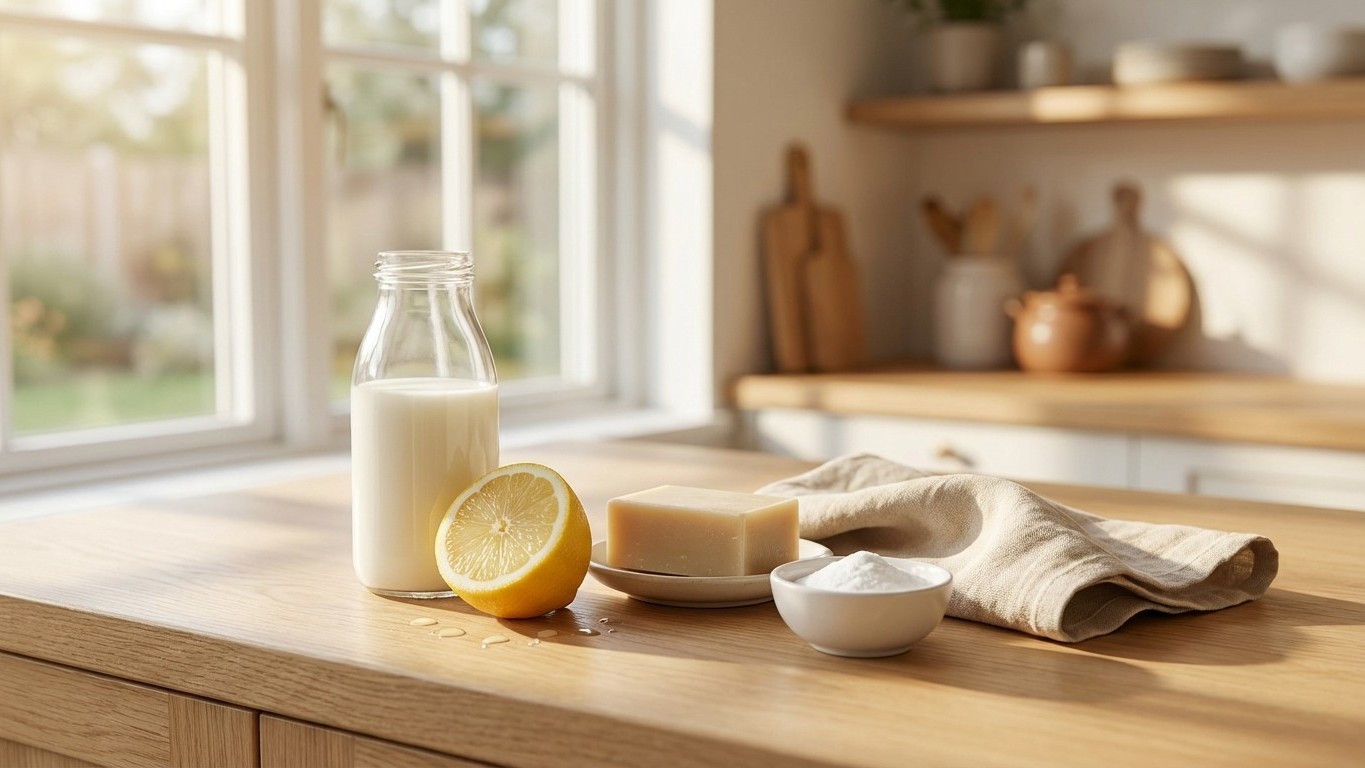
Forty years ago, my mother kept the whole house spotless with a bottle of white vinegar, a block of soap, and a lemon from the fruit bowl. No plastic bottles lined up under the sink, no fumes that made your eyes water, and certainly no hefty weekly shopping bill for cleaning products. Somewhere along the way, we were convinced that a different chemical spray was needed for every surface in the home. The good news? You can go back to something simpler, safer, and surprisingly effective with proven cleaning with vinegar and baking soda hacks, and this guide gives you everything you need to do it.
These natural cleaning hacks cover every room, every stubborn stain, and every tricky surface. From the greasy hob to the limescale-encrusted bathroom tap, from muddy carpet patches to smudgy windows, you will find a practical recipe or technique here. For kitchen-specific challenges, these natural kitchen cleaning hacks are particularly valuable, for stubborn carpet stains, you might also want to explore these natural carpet cleaning hacks, for streak-free glass surfaces, these natural window cleaning hacks are essential, and for laundry-specific challenges, these natural laundry hacks will prove invaluable. Each one uses ingredients you can buy cheaply from any supermarket, with clear measurements so there is no guesswork involved. Let us get started.
Why Choose Natural Cleaning?
Health, Safety, and the Environment
Conventional cleaning products often contain a cocktail of synthetic surfactants, preservatives, and fragrances. Many of these are perfectly legal and deemed safe at the concentrations used, but regular inhalation in poorly ventilated spaces, a small bathroom being the classic culprit, can irritate the respiratory system over time. Children and pets, being closer to the floor and more likely to mouth surfaces, are especially exposed. Switching to plant-based and mineral ingredients removes most of these concerns at a stroke. For areas that need both deep cleaning and freshening, these natural disinfecting cleaning hacks offer safe solutions that tackle germs and odours effectively, whilst these natural bathroom cleaning hacks are perfect for tackling those poorly ventilated bathroom spaces safely.
There is also the packaging mountain to consider. A household that replaces five spray bottles a month with a handful of bulk-bought ingredients generates a fraction of the plastic waste. White vinegar, bicarbonate of soda, and washing soda are all widely available in large containers or even loose, and soap flakes keep almost indefinitely in a sealed tin. The savings are real too: a litre of white vinegar costs a fraction of a specialist cleaner, and a kilogram of bicarbonate goes an extraordinarily long way.
Limits and Precautions Worth Knowing
A word of honest caution, because this is not a guide that will pretend natural always means perfect. White vinegar is acidic, which makes it brilliant against limescale and grease, but it will etch natural stone surfaces such as marble, limestone, or granite worktops. Bicarbonate of soda is mildly abrasive, which is useful on stubborn patches but can scratch soft finishes if you scrub too hard. And lemon juice, however cheerful it smells, has the same acid problem as vinegar on stone.
The other reality is disinfection. Vinegar does kill some bacteria and is effective against mould spores, but it does not achieve the level of germ-killing that a hospital would require. For a family kitchen or bathroom, used regularly, it is genuinely adequate. If someone in the household is immunocompromised, or you are dealing with raw poultry contamination, hydrogen peroxide (3% solution, widely available from pharmacies) is a stronger natural option. Knowing the limits of your tools is not a weakness, it is what makes the approach trustworthy.
The Star Ingredients of Natural Cleaning
White Vinegar, Bicarbonate, Lemon, Castile Soap, and Essential Oils
White distilled vinegar (5% acidity) is the backbone of almost every natural cleaning recipe. Its mild acidity dissolves mineral deposits, cuts through grease, and tackles mould. Buy it in the largest bottle you can find, a five-litre container from a supermarket or cash-and-carry makes the economics genuinely compelling.
Bicarbonate of soda (baking soda, sodium bicarbonate, all the same thing) is a gentle alkali that neutralises odours rather than merely masking them. It also provides just enough gentle abrasion to lift baked-on residue without scratching most surfaces. Washing soda (sodium carbonate) is its stronger cousin: more alkaline, better for heavy grease and laundry, but should be used with rubber gloves as it can irritate skin.
Castile soap is a pure vegetable-oil soap, available as a liquid or in bar form, that adds surfactant power, the ability to lift and rinse away dirt, without synthetic chemicals. A small amount goes a remarkably long way, which is why most recipes call for just a teaspoon or two. Lemon juice brings fresh acidity and a clean scent. And essential oils like tea tree (naturally antimicrobial), lavender, and eucalyptus add fragrance and a little extra antibacterial action. A few drops are all you ever need.
Which Ingredient for Which Job?
Think of it as a simple matching game. Limescale and mineral deposits respond to acid, so reach for vinegar or lemon. Grease and oily residue need an alkali or a surfactant, washing soda, castile soap, or a pinch of bicarbonate. Odours are neutralised by bicarbonate, not by fragrance sprayed on top of them. Mould needs something that can penetrate the spore structure: vinegar does this well, and hydrogen peroxide does it better on porous surfaces. Once this logic is in your head, you will start improvising your own solutions naturally.
40 Natural Cleaning Hacks: Room by Room
All-Purpose Recipes to Start With
The most versatile thing you can make is a simple all-purpose spray. Combine 250ml white vinegar with 250ml water and 10 drops of tea tree oil in a clean spray bottle. That is your everyday workhorse: wipe down worktops, clean the outside of appliances, freshen bin lids, and tackle bathroom surfaces. For a gentler version safe on painted woodwork, replace the vinegar with water and add half a teaspoon of liquid castile soap instead. Shake gently before each use and rinse if the surface will be touched by food. If you want to go deeper into the science and variations behind these base recipes, the dedicated guide on natural cleaning hacks covers every variation in satisfying detail.
Hack 1. All-purpose vinegar spray (above), effective on most hard, non-porous surfaces.
Hack 2. Castile soap spray : 500ml warm water, half a teaspoon liquid castile soap, 5 drops lavender oil. Gentle enough for baby toys and painted furniture.
Hack 3. Baking soda paste : 3 tablespoons bicarbonate mixed with enough water to form a thick paste. Apply, leave 15 minutes, scrub gently, rinse. Works on grout, oven glass, and sink stains.
Hack 4. Washing soda solution for heavy grease, dissolve 2 tablespoons washing soda in 500ml hot water. Wear gloves. Use on heavily soiled surfaces, floors, and outdoor furniture.
Hack 5. Hydrogen peroxide disinfectant spray, use 3% solution straight from the bottle in a dark spray bottle. Spray, leave 5 minutes, wipe. Do not mix with vinegar in the same bottle (more on that shortly).
The Kitchen: Natural Hacks for Grease, Odours, and Surfaces
The kitchen is where cleaning earns its keep. Grease builds up in layers on hobs, extractor fans, and the inside of oven doors, and it attracts bacteria. The key is alkalinity. Washing soda dissolved in hot water will cut through the kind of grease that has been baked on over weeks. Apply with a cloth, leave it to work for ten minutes, then scrub and rinse. For everyday hob splashes, the bicarbonate paste (hack 3) applied before you go to bed and wiped off in the morning saves enormous amounts of effort.
Hack 6. Oven cleaner: Sprinkle the oven floor generously with bicarbonate, spray with white vinegar until it fizzes, leave overnight, and wipe out with a damp cloth in the morning. The fizzing reaction does the mechanical work for you.
Hack 7. Extractor fan filter: Soak greasy metal filters in a washing-up bowl of hot water with 3 tablespoons washing soda for 30 minutes. The grease simply floats off.
Hack 8. Microwave steam clean: Fill a microwave-safe bowl with 200ml water, the juice of one lemon, and the squeezed halves. Microwave on high for 3 minutes, leave the door shut for another 3 minutes, then wipe the inside clean with a cloth. Effortless.
Hack 9. Kettle descaling: Half-fill with equal parts white vinegar and water, bring to the boil, leave for an hour, then rinse thoroughly at least twice.
Hack 10. Sink shine: Rub half a lemon around a stainless-steel sink, sprinkle with a little salt for extra abrasion, leave two minutes, then rinse. Limescale vanishes and the sink looks genuinely new.
Hack 11. Fridge odour absorber: A small open bowl of bicarbonate on the middle shelf absorbs food smells continuously. Replace monthly.
Hack 12. Chopping board sanitiser: After washing, sprinkle bicarbonate over a wooden or plastic board, spray with undiluted white vinegar, let it fizz for two minutes, then rinse. Removes lingering garlic and fish smells along with surface bacteria.
Hack 13. Drain deodoriser: Pour 3 tablespoons bicarbonate down the drain followed by 100ml white vinegar. Cover with the plug for five minutes, then flush with boiling water. Clears mild blockages and eliminates odours.
The full collection of kitchen techniques, including specific advice for ceramic hobs, copper pans, and heavily stained grout around tiles, is gathered in the natural kitchen cleaning hacks guide, well worth a read if the kitchen is your main battleground.
The Bathroom: Descaling, Mould, and Grout
Limescale and soap scum are the bathroom’s two great villains, and vinegar defeats both. The trick is contact time: a quick spray and wipe does very little, but wrapping a vinegar-soaked cloth around a tap and leaving it for an hour means the scale essentially dissolves without any scrubbing. For shower screens coated in hard water deposits, a spray of undiluted vinegar left for twenty minutes, followed by a wipe with a scrunched-up piece of newspaper, produces a clarity that commercial products rarely match.
Hack 14. Tap descaling wrap: Soak a cloth in undiluted white vinegar, wrap around the tap, secure with a rubber band, leave for one hour, remove and rinse. The scale rinses away cleanly.
Hack 15. Showerhead soak: Place the showerhead (or a plastic bag filled with vinegar secured around it with a rubber band) in white vinegar for two hours. Rinse thoroughly. Water pressure typically improves noticeably.
Hack 16. Toilet bowl cleaner: Pour 200ml white vinegar directly into the bowl, add 2 tablespoons bicarbonate, leave for 30 minutes, then scrub with a toilet brush. For stubborn staining, leave overnight.
Hack 17. Mould on grout: Mix one part hydrogen peroxide (3%) with two parts water in a spray bottle. Spray onto grout, leave for ten minutes, scrub with an old toothbrush, rinse. For severe mould, use undiluted.
Hack 18. Tile shine: Wipe tiles with a solution of equal parts white vinegar and water after cleaning. Buff dry immediately with a microfibre cloth for a streak-free finish.
Hack 19. Bath stain treatment: Sprinkle bicarbonate over the stained area, drizzle a little lemon juice over it, leave for 15 minutes, then scrub with a damp cloth. Works particularly well on the tidemarks that build up around the waterline.
Hack 20. Mirror and glass: Spray with the diluted vinegar solution, wipe with a scrunched sheet of old newspaper or a dry microfibre cloth. No streaks, no smears.
Persistent mould between tiles, silicone sealant issues, and limestone bathroom surfaces each have their own quirks. The natural bathroom cleaning hacks guide addresses all of these with specific techniques and honest advice about when professional help might genuinely be needed.
Floors, Carpets, and Rugs
Hard floors are straightforward. Most benefit from the simplest possible approach: warm water with a few drops of castile soap, wrung almost dry from a mop. Avoid soaking wooden floors, as moisture causes warping over time. For tiled or vinyl floors with a greasy film, add a tablespoon of washing soda to the mop bucket.
Hack 21. General floor wash: A bucket of warm water, a teaspoon of castile soap, and 10 drops of lavender oil. Mop as usual, no rinsing needed on tiles or vinyl.
Hack 22. Wooden floor cleaner: 500ml warm water, one tablespoon white vinegar, one teaspoon castile soap. Use a barely damp mop. Wipe dry immediately.
Hack 23. Fresh carpet spill (the golden rule): Blot immediately, never rub. Cover the damp patch with bicarbonate, leave for 30 minutes, vacuum up. The bicarbonate draws the moisture and the staining agent out of the fibres simultaneously.
Hack 24. Old carpet stain: Mix one tablespoon washing-up liquid, one tablespoon white vinegar, and 250ml warm water. Apply with a cloth, blot working inwards from the edge of the stain, repeat until clear, then blot with plain cold water.
Hack 25. Carpet deodoriser: Sprinkle bicarbonate generously over the whole carpet, leave for at least 30 minutes (overnight is better), then vacuum thoroughly. Particularly effective in bedrooms and living rooms where pet odours accumulate.
Hack 26. Rug freshener: Take the rug outside if possible, sprinkle bicarbonate on both sides, leave in the fresh air for an hour, shake well, and vacuum. Much gentler than chemical sprays on delicate fibres.
For more techniques covering parquet, natural-fibre rugs, and very stubborn stains on fitted carpet, the natural carpet cleaning hacks guide offers a comprehensive room-by-room approach with specific advice by stain type.
Laundry and Delicate Textiles
The washing machine is one area where making the switch to natural products really pays off, both financially and in terms of fabric care. Conventional biological detergents do a thorough job, but the optical brighteners and synthetic fragrances they contain can irritate sensitive skin and build up in fibres over time. A simple soap-based or soda-based approach works well for everyday washing, with a few targeted additions for specific problems.
Hack 27. Washing machine boost: Add 3 tablespoons of washing soda to the drum (not the drawer) along with your usual detergent. It softens water and improves cleaning at lower temperatures.
Hack 28. Natural fabric softener: Add 100ml white vinegar to the fabric softener drawer. The vinegar rinses out completely during the spin cycle, leaving no smell, and it prevents limescale building up inside the machine.
Hack 29. Whitening whites: Add the juice of one lemon or 50ml hydrogen peroxide (3%) to the drum with white laundry. Wash at 40°C. Effective on yellowing without the harshness of bleach.
Hack 30. Sweat stain treatment: Before washing, mix equal parts white vinegar and water, apply to the stained area, leave for 30 minutes, then wash as normal. For set-in stains, a paste of bicarbonate and a little water works well on the yellowed collar or underarm area.
Hack 31. Hand-washing delicates: Dissolve a sliver of pure castile soap bar (or a few drops of liquid castile soap) in cool water. Gently agitate, rinse in cool water with a splash of vinegar to remove all soap residue and restore the fibre’s softness.
Hack 32. Washing machine drum clean: Once a month, run an empty hot cycle with 200ml white vinegar in the drum and 3 tablespoons bicarbonate in the drawer. This clears soap scum, bacteria, and unpleasant odours from the machine itself.
The full range of laundry challenges, ink stains, woollens, heavily soiled workwear, and keeping dark fabrics from fading — is covered in the natural laundry hacks guide, which I think you will find genuinely useful if laundry is a household battleground.
Windows, Mirrors, and Glass
Hack 33. Window cleaner: Mix 250ml white vinegar with 250ml water and 5 drops of washing-up liquid in a spray bottle. Spray, then wipe with scrunched newspaper or a microfibre cloth in circular motions. The slightly abrasive texture of newspaper produces a genuinely streak-free result on glass, something most cloths struggle to achieve.
Hack 34. Interior mirror cleaning: For mirrors in the bathroom where steam is a factor, wipe first with a cloth dampened with plain water, then buff with a dry microfibre cloth spritzed with a tiny amount of the vinegar solution.
Hack 35. Cloudy glass vases or decanters: Fill with equal parts white vinegar and warm water, add a tablespoon of uncooked rice, shake vigorously, leave for an hour, then rinse. The rice provides gentle internal abrasion.
Natural Disinfection and Odour Control
Hack 36. Room deodoriser: Simmer a small pan of water on the hob with lemon slices, a cinnamon stick, and a few cloves. The steam carries the natural fragrance through the house without synthetic aerosols.
Hack 37. Bin deodoriser: After emptying the bin, sprinkle bicarbonate in the bottom before fitting a new liner. Add a drop of tea tree oil if the bin has been particularly pungent. Replace the bicarbonate each time you change the bag.
Hack 38. Pet accident on carpet (urine): Blot up as much as possible immediately, then pour a solution of equal parts white vinegar and cold water over the area. Leave for five minutes, blot again, then cover thickly with bicarbonate. Leave to dry completely (several hours), then vacuum. Enzyme-based cleaners are the professional approach, but this method deals with fresh accidents effectively.
Hack 39. Mattress refresh: Strip the bed, sprinkle bicarbonate mixed with 5 drops of lavender oil generously over the whole mattress surface, leave for at least an hour (longer is better), then vacuum thoroughly. Do this every few months and you will be astonished at the difference it makes to the freshness of the bedroom.
Hack 40. Shoe deodoriser: Place a small fabric pouch of bicarbonate inside each shoe overnight. A used tea bag (dried) works almost as well and costs nothing extra.
Equipment and Basic Precautions
Reusable Cloths, Brushes, and Tools
The cleaning tools you choose matter as much as the solutions you make. Microfibre cloths are transformative, they lift and trap dirt with very little product, clean glass without smearing, and last for hundreds of washes. Keep a supply of old toothbrushes for grout and tight corners. A good-quality scrubbing brush with natural or recycled bristles, a mop with a washable head, and a spray bottle or two are genuinely all you need. Avoid the temptation of disposable wipes, even the ones marketed as “natural”: they create waste and perform no better than a damp cloth.
Glass spray bottles are preferable for anything containing essential oils, as these can degrade plastic over time. Old jam jars make excellent storage for bicarbonate paste. Label everything clearly, this is not optional, it is basic safety.
Dangerous Mixtures to Avoid
This section deserves your full attention because a few combinations that might seem logical are Actually hazardous. Never mix white vinegar and hydrogen peroxide in the same container. Together they form peracetic acid, which is corrosive and can damage skin and mucous membranes. You can use them on the same surface sequentially (spray one, wipe, then apply the other), but never blend them. Similarly, never mix any bleach-based product with vinegar or with ammonia, the gases produced are genuinely toxic. Since this guide is focused on natural alternatives, you should not be using bleach anyway, but it is worth stating clearly.
Bicarbonate and vinegar mixed together in a closed container will build up pressure, always add one to an open surface or open container, and expect fizzing. The fizzing reaction is chemically mostly harmless (it produces water, carbon dioxide, and sodium acetate), but its actual cleaning power is limited. The real work is done by whichever ingredient you apply after the fizz has settled. And as mentioned before: keep vinegar and lemon away from marble, limestone, and unsealed natural stone entirely.
FAQ: Quick Answers to Common Questions About Natural Cleaning
Can you really disinfect with vinegar or bicarbonate? White vinegar (5% acidity) kills a meaningful range of bacteria and mould spores, and is sufficient for routine domestic cleaning. It is not equivalent to medical-grade disinfection. For higher-risk situations, 3% hydrogen peroxide sprayed and left for five minutes is a stronger natural option. Bicarbonate does not disinfect, its job is deodorising and gentle abrasion.
What are the best natural ingredients for cleaning the whole house? White vinegar, bicarbonate of soda, washing soda, liquid castile soap, lemon juice, and 3% hydrogen peroxide cover virtually every domestic cleaning need between them. Tea tree and lavender essential oils add antimicrobial action and pleasant fragrance. These seven ingredients, bought in reasonable quantities, cost a fraction of a conventional cleaning product trolley.
How do you make an effective natural multi-purpose cleaner? The simplest reliable formula: 250ml white vinegar, 250ml water, 10 drops tea tree oil. For a soap-based version safe on painted surfaces: 500ml warm water, half a teaspoon liquid castile soap, 5 drops lavender oil. Both can be made in minutes and stored in a labelled spray bottle for up to four weeks.
What precautions should you take with natural cleaning products? Always label your homemade bottles clearly and keep them out of reach of children. Wear rubber gloves when using washing soda. Never mix vinegar and hydrogen peroxide in the same bottle. Test any new solution on a small hidden area of delicate surfaces. Ventilate the room when using anything with essential oils if anyone in the household has asthma or scent sensitivities.
What are the risks of mixing natural cleaning ingredients? The main danger: vinegar plus hydrogen peroxide in the same container produces a corrosive acid. Any bleach-based product mixed with vinegar, ammonia, or castile soap releases toxic gases, keep bleach entirely separate if you still have it in the house. Bicarbonate and vinegar together fizz harmlessly but lose much of their individual cleaning power in the reaction.
Going Further: Detailed Guides by Room and Problem
This pillar guide gives you the framework, but each cleaning challenge has its own depth. For the fundamental science behind why these ingredients work, the proportions that produce the best results, and a toolkit approach to building your natural cleaning cupboard from scratch, the natural cleaning hacks base guide is the right next step.
The kitchen has its own dedicated space: natural kitchen cleaning hacks goes into specific detail about cast iron, copper, ceramic hobs, and the particular challenge of the extractor fan. For the bathroom, natural bathroom cleaning hacks covers the nuances of different tile types, silicone sealants, and the persistent problem of damp-related mould that returns season after season.
Floors and textiles have specialist needs too. The natural carpet cleaning hacks guide deals with everything from new spills to set-in staining on natural-fibre rugs, while the natural laundry hacks guide will transform your approach to the washing machine and give you workable solutions for the trickiest textile problems, red wine, ink, and the dreaded grass stain included.
A Room-by-Room Natural Cleaning Plan
Here is how to put all forty hacks into a practical weekly rhythm. The principle is simple: keep the core all-purpose spray and a box of bicarbonate accessible in every room, and deal with surfaces daily in a light, quick way rather than letting grime accumulate into a big weekend job.
In the kitchen, wipe worktops daily with the all-purpose vinegar spray (hack 1), treat the hob after every use with a damp cloth while it is still warm, and do the sink with a lemon and salt scrub (hack 10) once a week. The oven only needs the overnight bicarbonate treatment (hack 6) once a month if it is maintained otherwise. Empty and clean the fridge every fortnight, replacing the bicarbonate bowl (hack 11) at the same time.
In the bathroom, a quick spray and wipe of the basin and toilet after every few uses prevents the hard-water deposits from ever gaining a foothold. The tap descaling wrap (hack 14) takes five minutes once a fortnight and keeps the taps looking pristine. Grout mould should be treated at the first sign with the hydrogen peroxide spray (hack 17), before it has a chance to establish itself deeply in the porous surface.
For carpets and soft furnishings, the bicarbonate deodorising routine (hack 25) every two to four weeks keeps the whole house smelling fresh without any synthetic air fresheners. The mattress treatment (hack 39) done seasonally, when you rotate or turn the mattress, is one of those small habits that makes a real difference to the quality of sleep, even if the connection is not immediately obvious.
My mother used to say that a clean house is not one that has been furiously scrubbed once a fortnight, but one that is gently tended every day. These forty hacks are tools for that kind of steady, unhurried care, and they happen to be kinder to your wallet, your lungs, and the planet while they are at it. Perhaps the most useful question to ask yourself is not which product to buy next, but which simple ingredient you already have that could do the job just as well.