
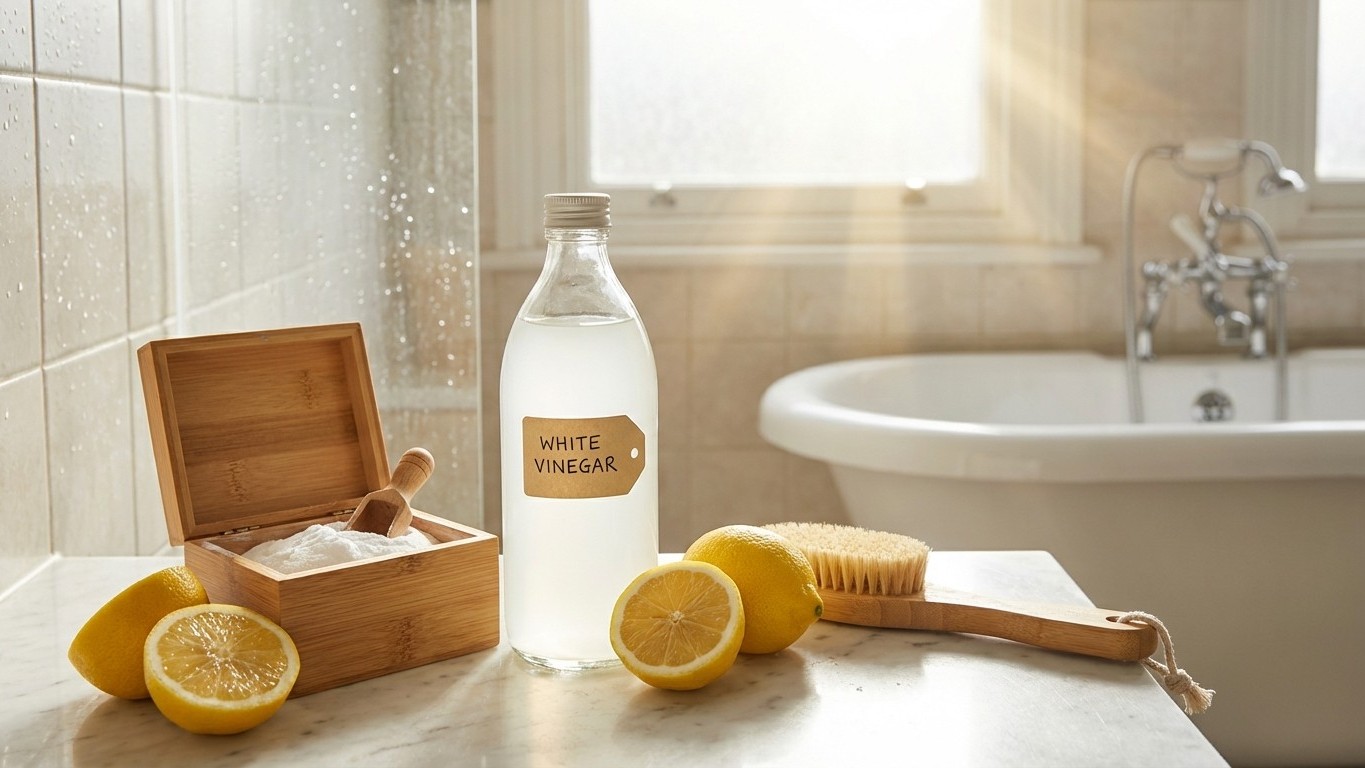
Your bathroom puts up with a lot. Steam, splashing water, damp towels, soap residue, and the constant presence of hard water conspire to turn one of the most-used rooms in the house into a breeding ground for limescale, mould, and grimy grout. The good news? A handful of ingredients that cost next to nothing and have been trusted for generations can tackle all of it, without a single harsh chemical in sight. Whether you’re looking for a natural way to clean toilet bowl stains, discover natural cleaning hacks for shower glass soap scum, or tackle tile grime, these natural bathroom cleaning hacks are the ones that genuinely work, tried and tested in real bathrooms, not laboratory conditions.
Why choose natural cleaning methods for the bathroom?
The bathroom is, by its very nature, an enclosed and humid space. Most of us spend time in there every single day, breathing in whatever we spray on the tiles, the toilet, and the bath. Conventional cleaning products often contain surfactants, bleach derivatives, and synthetic fragrances that linger in the air long after you’ve finished scrubbing. For anyone with asthma, skin sensitivities, or young children crawling around, this is worth thinking about seriously. This is particularly important when tackling persistent issues like learning how to remove mould naturally in bathroom environments, or discovering how to remove limescale naturally from taps and shower.
There’s also the straightforward matter of cost. A large bottle of white vinegar, a box of bicarbonate of soda, and a couple of lemons will set you back far less than a trolley full of branded bathroom sprays, and they’ll last considerably longer. The environmental argument is just as compelling: fewer plastic bottles in the recycling bin, no surfactants flowing into waterways, and no manufacturing footprint from a dozen different specialist products. A single well-stocked natural cleaning hacks cupboard can replace most of what your bathroom cabinet currently holds.
That said, “natural” doesn’t automatically mean “gentle on all surfaces.” White vinegar is acidic enough to damage natural stone and certain grout sealants over time. Understanding which ingredient to use where is what separates genuinely effective eco-cleaning from accidental damage, and that’s exactly what this guide covers. For specific guidance on grout cleaning techniques, you might also want to learn how to clean grout naturally.
The bathroom’s three main enemies: limescale, mould, and dirty grout
How limescale builds up (and why it’s stubborn)
Limescale is calcium carbonate, the chalky white or grey deposit left behind when hard water evaporates. Much of England has famously hard water, particularly in the South East, the Midlands, and East Anglia, where calcium and magnesium minerals dissolve readily into groundwater. Every time your shower runs, water droplets cling to tiles and chrome fittings, then slowly evaporate, leaving their mineral content behind. Over weeks and months, these microscopic layers stack up into the thick, crusty deposits that make taps look neglected and block shower heads.
The key to removing it naturally is simple chemistry: calcium carbonate dissolves in mild acids. White vinegar (acetic acid) and lemon juice (citric acid) are both effective, which is why they’ve been household staples for centuries. The longer the limescale has been building, the longer you’ll need to leave your acid of choice in contact with it.
Where mould comes from, and how to stay one step ahead of it
Mould in the bathroom is almost always a ventilation problem first and a cleaning problem second. The spores that cause those black patches on grout and silicone seals are always present in the air; what they need to colonise a surface is moisture and a food source (soap residue and dead skin cells oblige very generously). A bathroom that stays damp for hours after every shower is essentially a five-star hotel for mould.
Natural cleaning methods can kill existing mould effectively, but unless the underlying humidity issue is addressed, it will return within weeks. Opening a window after showering, running an extractor fan for at least 15 minutes after bathing, and squeegeeing shower walls dry all make a meaningful difference. These habits, combined with a weekly natural spray routine, are your most powerful anti-mould strategy.
Why grout turns dark or yellow over time
Grout is porous by nature, which means it absorbs everything it comes into contact with: soap, shampoo, body oils, mildew, and mineral deposits. The grey or black discolouration you see is usually a combination of mould, soap scum, and calcium. The yellowish tinge that appears in other areas tends to be oxidised soap residue or iron deposits from hard water. Neither is a sign of permanent damage; both respond well to the bicarbonate-based paste recipe covered later in this guide.
Your natural cleaning toolkit: what you actually need
White vinegar: the anti-limescale workhorse
Standard white distilled vinegar (around 5% acidity) is the backbone of almost every natural bathroom cleaning routine. It dissolves calcium deposits, cuts Through soap scum, and leaves chrome and glass surfaces streak-free. For light daily maintenance, dilute it 1:1 with water in a spray bottle. For stubborn limescale, use it undiluted or soak paper towels in it and press them against the affected surface for 30 to 60 minutes.
One firm rule: keep vinegar away from natural stone (marble, travertine, limestone) and from freshly sealed grout. The acid will etch stone surfaces and degrade sealant. On everything else in a typical British bathroom, it’s perfectly safe.
Bicarbonate of soda: gentle abrasion and deodorising in one
Bicarbonate (baking soda) is mildly alkaline and acts as a gentle abrasive, making it ideal for scrubbing without scratching. It neutralises acids and absorbs odours, so it’s excellent for tackling the stale damp smell that builds up in a poorly ventilated bathroom. On its own, it’s a fine scouring powder for the bath and sink. Mixed into a paste with a little washing-up liquid or water, it becomes the grout-cleaning recipe that many people swear by above all others.
Lemon juice: citric acid with a pleasant bonus
Fresh lemon juice contains citric acid, which is effective against limescale and has mild antifungal properties. It’s slightly less potent than white vinegar for heavy deposits, but it leaves surfaces smelling genuinely lovely, which matters in a bathroom. Half a lemon rubbed directly over a chrome tap, left for ten minutes, then buffed with a dry cloth is one of those satisfying cleaning moments that makes the whole enterprise worthwhile. Bottled lemon juice works perfectly well if you don’t want to waste fresh lemons.
Castile soap and essential oils: the optional extras
Liquid Castile soap (made from plant oils rather than petroleum derivatives) makes an excellent base for an all-purpose bathroom spray when diluted in water. A few drops of tea tree essential oil adds genuine antimicrobial properties, and lavender adds a calming scent. Do be cautious with undiluted essential oils on surfaces, and keep them away from children and pets. If in doubt, tea tree diluted to around 1% in water (roughly 20 drops per litre) is a safe and effective concentration for a bathroom spray.
Natural bathroom cleaning hacks for limescale
Taps, showerheads, and shower fittings
For taps crusted with limescale, the most effective method is also the simplest: soak a cloth or a few sheets of kitchen roll in undiluted white vinegar, wrap it around the fitting, and secure it with a rubber band. Leave it for at least 30 minutes, up to an hour for serious build-up. The limescale will have softened considerably and can be wiped away or gently worked off with an old toothbrush. A final buff with a dry microfibre cloth restores the shine.
For a blocked showerhead, unscrew it if possible and submerge it in a bowl of undiluted white vinegar for an hour. If it can’t be removed easily, fill a sturdy sandwich bag with vinegar and tie it around the showerhead so the head is fully submerged. Leave it overnight for the best results. You’ll find a full set of step-by-step recipes in our guide to remove limescale naturally from taps and shower.
Shower screens, tiles, and curtains: cleaning without streaks
Glass shower screens attract both limescale and soap scum, and getting them truly clear requires tackling both at once. Spray undiluted white vinegar over the entire surface and leave for five minutes, then sprinkle a little bicarbonate of soda onto a damp sponge and scrub in circular motions. Rinse thoroughly and squeegee dry immediately. The bicarbonate provides just enough abrasion to lift the soap scum while the vinegar dissolves the mineral deposits underneath.
Fabric shower curtains can go straight into the washing machine on a cool cycle with a splash of white vinegar in the drum instead of fabric conditioner. Add a couple of old towels to help the agitation. Hang the curtain back while it’s still damp so it drip-dries without folding or creasing, which would trap moisture and encourage mildew.
Removing mould naturally from the bathroom
A natural anti-mould spray for grout and corners
Tea tree oil is the key ingredient here. Mix 20 drops of tea tree essential oil with 250ml of water in a spray bottle, shake well, and spray directly onto mouldy grout, corners, and silicone seals. Leave it for at least an hour without rinsing. Tea tree oil has genuine antifungal and antibacterial properties, and unlike bleach, it won’t irritate your airways or damage most bathroom surfaces. For stubborn patches, apply a paste of bicarbonate of soda mixed with a few drops of tea tree oil, scrub with an old toothbrush, then spray with straight white vinegar and watch it fizz the residue away. Our companion guide on remove mould naturally in bathroom covers the full treatment protocol, including dealing with silicone seals and persistent black patches.
One thing worth knowing: hydrogen peroxide (the 3% solution available from pharmacies) is an effective natural mould killer that’s gentler than bleach. Spray it directly onto mouldy areas, leave for ten minutes, then scrub and rinse. It can lighten some surfaces slightly, so test on an inconspicuous spot first.
Treating curtains and bath mats
Bath mats and fabric curtains are mould magnets because they stay wet for hours. Wash them at least once a fortnight. Between washes, hanging the bath mat over the edge of the bath to dry rather than leaving it flat on the floor makes a noticeable difference. A light spray of the tea tree solution on the back of the mat after each shower keeps mould spores at bay.
Preventing mould from coming back
Ventilation really is the foundation of mould prevention. If your bathroom doesn’t have a window, an extractor fan with a humidity sensor is worth the investment. In the meantime, a small bowl of bicarbonate of soda placed in a corner will absorb excess moisture and odours between cleaning sessions. Replace it monthly. Wiping down tile grout with a diluted white vinegar spray once a week after your routine clean creates an acidic environment that mould struggles to establish itself in.
Keeping grout white and clean naturally
Cleaning grout without bleach
Bleach is often the first thing people reach for with discoloured grout, but it can actually weaken grout over time, and the fumes in an enclosed bathroom space are far from pleasant. The natural alternative performs just as well on most staining and is kinder to both the grout and you. Our detailed guide on how to clean grout naturally walks through the full process, but here’s the core method.
The bicarbonate paste recipe for grout
Mix three tablespoons of bicarbonate of soda with one tablespoon of washing-up liquid and enough water to make a thick paste. Apply it along the grout lines with an old toothbrush, working in short sections. Leave the paste for five to ten minutes, then scrub firmly along the grout line. For extra cleaning power, spray or drizzle white vinegar over the paste before scrubbing; the fizzing reaction helps lift embedded grime. Rinse with warm water and dry the area thoroughly.
For very stubborn yellowed grout, you can substitute lemon juice for the water in the paste. The citric acid adds extra brightening action. This is one of those hacks that produces genuinely visible results on the first attempt, which is always satisfying.
Long-term grout protection
Once grout is clean, keeping it that way is mostly about not letting soap and moisture sit on it. A weekly spray of diluted white vinegar (1 part vinegar to 3 parts water) applied after cleaning and allowed to dry without rinsing will inhibit mould growth and slow mineral build-up. Every few months, consider applying a grout sealant (available from DIY shops) to fill the pores and make future cleaning significantly easier.
Natural disinfecting and deodorising for the whole bathroom
Toilet, bath, and sink
The toilet bowl responds wonderfully to bicarbonate of soda and white vinegar. Pour 100g of bicarbonate directly into the bowl, follow with 200ml of white vinegar, and leave the fizzing mixture for 15 to 30 minutes before scrubbing with the toilet brush and flushing. For the exterior of the toilet and the seat, a spray made from diluted Castile soap and a few drops of tea tree oil cleans and disinfects without any harsh residue. The full routine, including under-rim cleaning, is covered in our guide to the natural way to clean toilet bowl.
For the bath and sink, a sprinkle of bicarbonate of soda on a damp cloth is usually enough for weekly maintenance. For tougher soap scum around plug holes, a paste of bicarbonate and white vinegar left for ten minutes before scrubbing does the job well.
A homemade bathroom freshening spray
Fill a 500ml spray bottle with water, add two tablespoons of white vinegar, ten drops of lavender essential oil, and five drops of tea tree oil. Shake before each use. This can be sprayed on tiles, surfaces, and even into the air as a gentle room freshener. The vinegar smell dissipates within minutes, leaving only the lavender. It’s a genuinely pleasant spray to use, which makes it much more likely to become a regular habit.
The right tools for natural bathroom cleaning
The best natural ingredients in the world are undermined by the wrong tools. Microfibre cloths are the single most useful investment: they clean effectively with very little product, dry quickly, and can be washed and reused hundreds of times. Keep a set specifically for the bathroom and wash them at 60°C to kill bacteria. A handful of old toothbrushes for grout scrubbing costs nothing if you repurpose them instead of throwing them away. Natural bristle brushes and wooden-handled scrubbing brushes are increasingly available and avoid the plastic waste of conventional cleaning tools. A squeegee mounted inside the shower takes about twenty seconds to use after each shower and prevents the majority of soap scum and limescale build-up from ever becoming a problem.
Precautions for safe and effective natural cleaning
A few rules that will save you from expensive mistakes. Never mix white vinegar and bicarbonate of soda in a closed container and then seal it; the CO2 produced can build enough pressure to be dangerous. Use them sequentially on a surface rather than pre-mixing. Don’t use any acid (vinegar, lemon juice) on natural stone, marble, or freshly laid or unsealed grout. Always rinse surfaces thoroughly after using bicarbonate paste to prevent a powdery residue forming. When using essential oils, ensure the bathroom is ventilated, and if you have cats, be aware that tea tree oil can be toxic to them if ingested in large quantities.
Store your homemade sprays in dark glass or opaque bottles rather than clear plastic, which degrades with light and acidic contents. Label them clearly, especially if you have children in the house.
Frequently asked questions
How do I clean limescale naturally in the bathroom? White vinegar is your best starting point. Apply it undiluted to affected areas and leave for 30 to 60 minutes before scrubbing. For heavy deposits on taps and showerheads, soak in vinegar for several hours or overnight.
What’s the best way to remove mould from grout without chemicals? A spray solution of tea tree oil in water (20 drops per 250ml), left on the mould for at least an hour without rinsing, is highly effective. For established patches, follow up with a bicarbonate paste scrub.
Which natural ingredients actually disinfect? Tea tree oil has proven antimicrobial properties at sufficient concentrations. White vinegar is effective against many common bacteria and mould spores. Neither provides the same broad-spectrum disinfection as hospital-grade products, but for routine household bathroom maintenance, both are more than adequate.
How do I keep grout clean for longer? Weekly maintenance with a diluted vinegar spray, combined with proper ventilation and sealing the grout every year or so, will keep it noticeably cleaner between deep cleans.
What’s a simple natural routine for a consistently clean bathroom? A daily 30-Second squeegee of the shower walls, a weekly all-over spray and wipe with the lavender and tea tree spray, a monthly grout scrub with bicarbonate paste, and a bi-monthly deep limescale treatment on fittings covers most of what the bathroom needs.
Further reading and related guides
If you’d like to take the natural cleaning approach beyond the bathroom, our main hub of natural cleaning hacks covers 40 recipes and techniques for every room in the house. For in-depth help with specific problems, the dedicated guides on remove limescale naturally from taps and shower, remove mould naturally in bathroom, how to clean grout naturally, and the natural way to clean toilet bowl each go into considerably more detail, with additional recipes and troubleshooting tips for tricky situations.
There’s something quietly satisfying about walking into a bathroom that smells of lavender and lemon rather than industrial bleach, knowing that everything in it is clean because of ingredients you could theoretically put in a cake. Whether that thought delights or slightly unsettles you is entirely a matter of taste, but the results speak for themselves.