
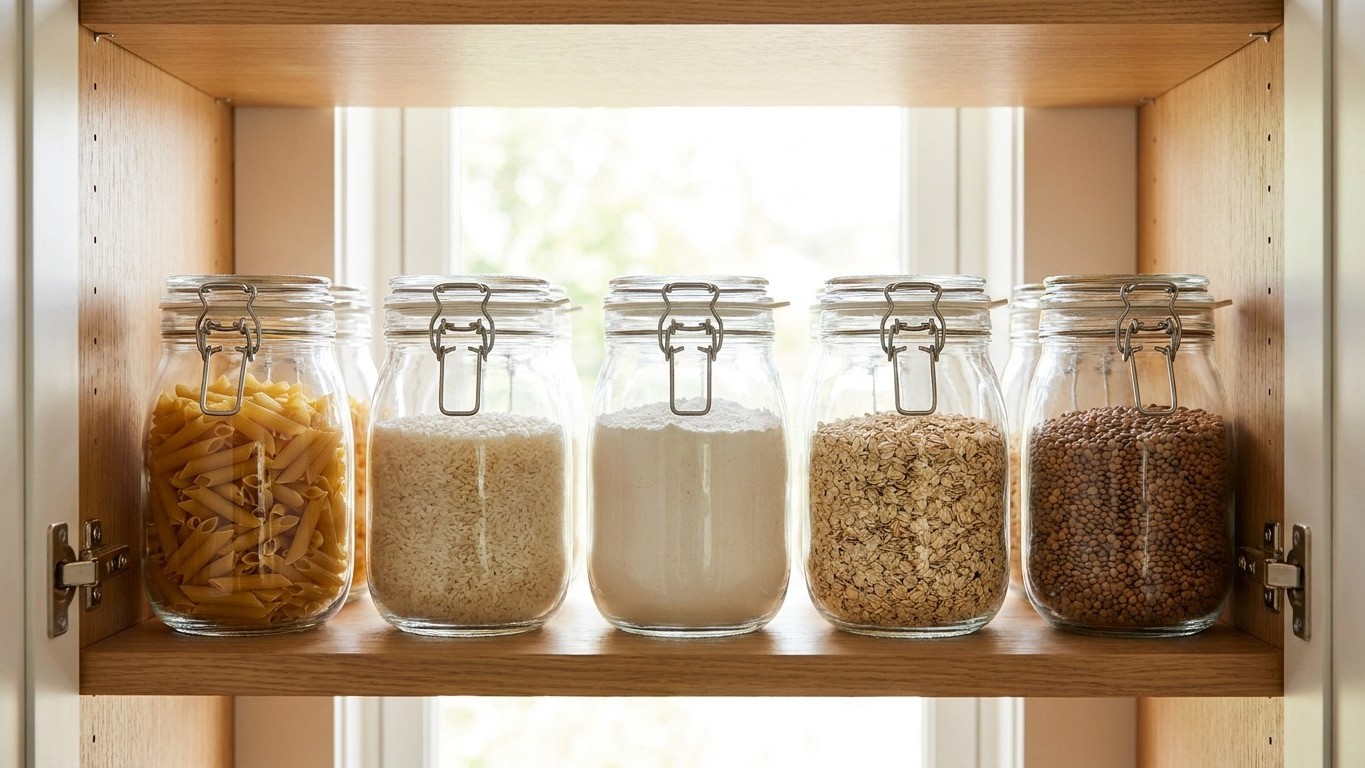
A cupboard full of jam jars, sauce bottles, and random Tupperware doesn’t just look messy, it actively makes your brain work harder every time you open it. Swap the mismatched clutter for a row of identical jars and something odd happens: guests start asking whether you’ve had the whole kitchen redone. You haven’t touched a single cabinet door. You’ve simply given your eyes one shape to process instead of fifteen.
Key takeaways
- A cupboard full of matching jars creates such a calming visual effect that guests assume you’ve completely remodeled your kitchen
- The science behind why uniform containers feel like a luxury upgrade has nothing to do with money and everything to do with how your brain processes visual information
- Matching containers solve real problems: preventing food waste, extending shelf life, and saving space—while looking effortlessly organized
Why matching jars fool the eye into seeing a renovation
The trick isn’t really a trick at all, it’s basic visual processing. Decanting items into matching or complementary containers is visually pleasing, but it’s about so much more than appearances, because visual clutter increases our cognitive load, so streamlining the appearance of your spaces by removing all the different packaging can reduce stress and anxiety. A shelf with a cereal box, a lumpy flour bag, and a half-crushed pasta packet forces your brain to register dozens of edges, colours, and fonts in a split second. Line up six identical jars instead, and that same shelf reads as one calm object.
Professional home organiser Shannon Murphy explains that when we talk about visual clutter, we mean anything your eyes have to constantly process throughout the day, whether it’s the build-up of things on countertops, shelves, tables, or any surface that can make a space feel busy or overwhelming. That’s precisely why a jar makeover reads as a full kitchen refit to visitors: the cupboard is genuinely doing less visual shouting, even though the tiles, the units, and the worktop haven’t moved an inch. Most pantry staples go stale not because they expire, but because air gets in, and that one fact has changed how a lot of people think about kitchen organisation. So the uniformity isn’t just cosmetic vanity, it’s solving a real freshness problem at the same time.
The practical payoff nobody mentions on Instagram
Beyond the calming effect, there’s a properly useful side to this. When packaging is removed, you can see exactly what you have, so there’s no more guessing if there’s enough flour left or buying a duplicate box of pasta you didn’t need. I’ve done exactly that myself over the years, bought a second bag of rice because the first one was hiding behind a box of cereal. A jar you can see through puts a stop to that particular waste of money.
Space is the other quiet winner here. Uniform containers stack and line up more efficiently than original packaging, which often wastes vertical and horizontal space. Cardboard boxes and crinkly bags are built for supermarket shelves, not for your cupboard depth, so they leave awkward gaps everywhere. A set of matching jars, chosen to fit your actual shelf height, closes those gaps up.
Then there’s the freshness question, which matters more than most of us realise. Airtight glass containers are made to exclude air, humidity, and insects, three of the largest dangers facing long-term food storage, and the combination of glass and a tight-sealing lid creates an environment that helps prevent contents from going bad prematurely. Rice, flour, oats and pasta all suffer badly from humidity swings in a warm kitchen, particularly one near a cooker or a steamy kettle. Storing rice, flour, or pulses in regular jars often invites weevils or ants, but with proper airtight storage you can keep them safe for longer periods, since the seal keeps the environment controlled. Anyone who’s found a moth fluttering out of a flour bag will understand Why That Matters More Than the aesthetics ever could.
Doing it without spending a fortune
You don’t need a fitted pantry or a trolley-load of designer canisters to get this effect. Old jam jars, pickle jars, and honey jars wash up beautifully and, once the labels are soaked off, look almost identical if you stick to a few standard shapes. Jars, containers, and bins come in different price points, including great options at dollar and thrift stores, and there’s also the free option of repurposing jars from your groceries. I’d say start with three or four jars from things you’ve already got in the recycling bin before you spend a penny. If the effect pleases you, then think about buying a proper matching set for the items you go through fastest, things like porridge oats, pasta, or sugar, where visibility genuinely saves you money and bother.
One word of caution, and it’s an honest one: this only works if you keep it up. Decanting can create unnecessary clutter when containers pile up faster than groceries are consumed, and without careful maintenance, mismatched lids, empty jars, and half-filled containers slowly replace the tidy system the trend promised. Don’t decant everything in one manic Sunday afternoon. Start by decanting a few essential items in your pantry, rather than going all in on every snack, baking item, and dried good at once. Pick the two or three things you buy most often, spices are a lovely place to begin, and build outward from there once you know you’ll actually keep refilling them.
A small but genuinely useful habit: keep a strip of washi tape or a chalkboard label on the base of each jar noting when you filled it and, for anything with a shelf life worth watching, when it should be used by. Adding the date items were placed in the container and when they expire makes your pantry easier to navigate visually and makes maintaining the system simple. It costs almost nothing, takes ten seconds per jar, and means you’ll never be caught out wondering whether that flour is from last month or last year. Small habit, big peace of mind, and honestly, that’s most of what good kitchen tidiness ever really was.
Sources : valetpackaging.ca | apartmenttherapy.com