
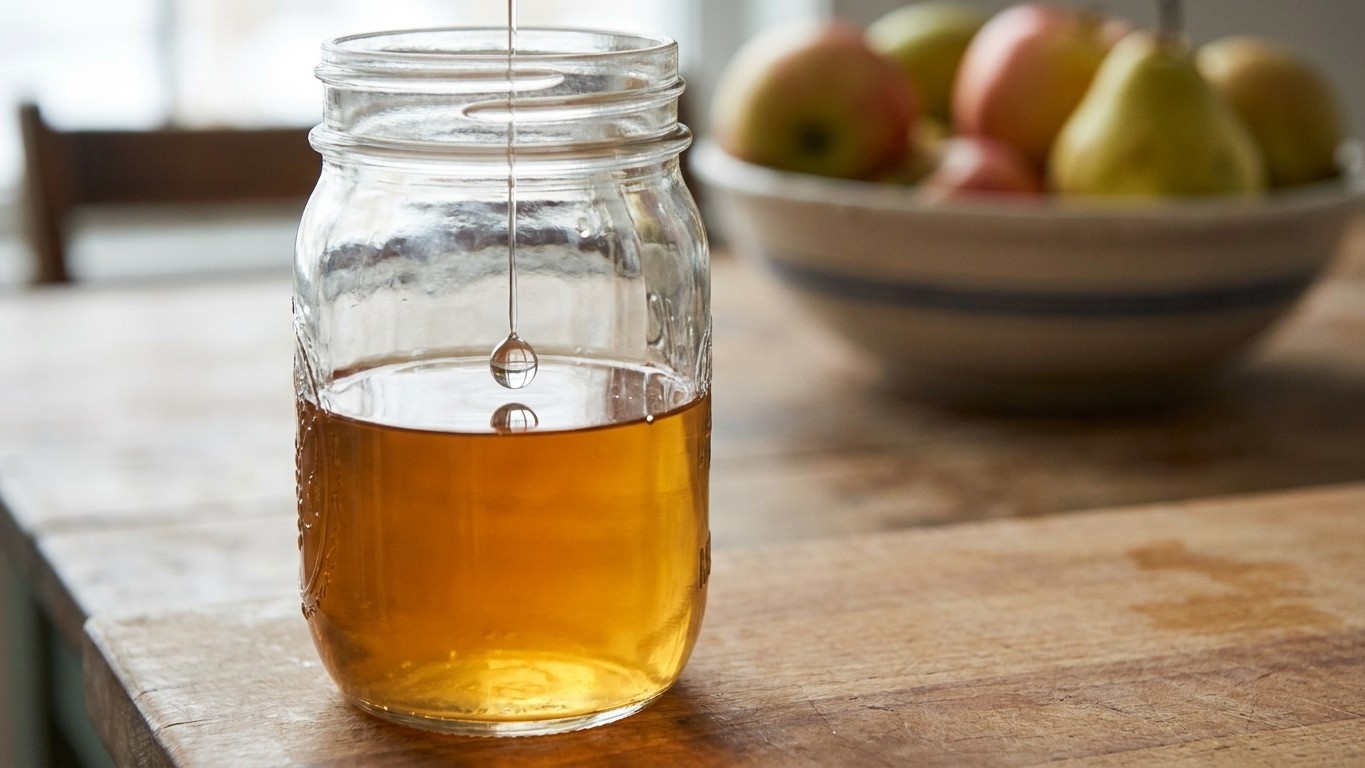
Every July, the same little drama plays out in kitchens across Britain: a cloud of tiny flies hovers over the fruit bowl, someone grabs a tea towel and starts flapping wildly, and within minutes the flies have simply scattered and regrouped somewhere else. It’s satisfying for about ten seconds and achieves precisely nothing. The trick pest professionals actually recommend involves no swatting at all, just a splash of apple cider vinegar and a single, carefully measured drop of washing-up liquid.
The science behind it is refreshingly simple. Apple cider vinegar smells like some of a fruit fly’s favourite foods, and it mimics the smell of rotting fruit, which is where they feed and lay their eggs. Fill a small jar or bowl about half an inch deep with vinegar, and the flies come to it the way teenagers come to the smell of chips. But vinegar alone won’t drown them; fruit flies are surprisingly good at landing on liquid surfaces and walking away unscathed. That’s where the soap comes in.
According to Daniel Baldwin, a board-certified entomologist at Hawx Pest Control who spoke to Chowhound about the trick, most people ruin their own trap by getting the ratio wrong. He explains that you have to get the mixture right, as too much dish soap will disguise the smell of the apple cider vinegar, and the ideal quantity is a drop or two of soap, which is enough to keep the fruit flies from being able to escape. Glug in half a bottle thinking “more is better” and you’ve accidentally built a trap that smells more like a washing-up bowl than a compost heap, and the flies simply won’t bother visiting.
Key takeaways
- Why swatting fruit flies makes the problem worse, not better
- The precise reason one drop of soap works where a splash fails
- What’s really attracting fruit flies to your kitchen (hint: it’s not just the fruit bowl)
Why one drop beats a splash
The soap’s job isn’t to kill the flies through some chemical magic. It works mechanically, by breaking the surface tension of the vinegar. The dish soap breaks the surface tension of the apple cider vinegar, causing the fruit flies to sink when they land on it. Water alone has a skin-like tension strong enough for a fly to stand on; a droplet of soap disrupts that skin instantly, so instead of a landing pad, the fly finds itself sinking straight through.
This is precisely why restraint Matters More Than enthusiasm here. Overdo the soap and, as Baldwin notes, the smell that lured the flies in the first place gets masked. A single drop stirred gently into half a cup of vinegar (don’t be tempted to whisk it into bubbles) keeps the scent dominant while still doing its trapping job. I like to think of it as sabotage rather than assault: you’re not chasing the fly, you’re quietly rigging the floor to give way beneath it.
It’s worth noting that not everyone reaches for apple cider vinegar specifically. Some pest control guidance suggests an alternative trap using white vinegar instead, filling the container and adding three to four drops of dish soap, though the classic amber vinegar tends to be favoured because its sweeter, fruitier smell does a better job of imitating decay. Either way, the one-drop soap principle holds.
Why your fruit bowl becomes a battlefield in July
There’s a reason this problem peaks so reliably this month rather than in, say, February. As one entomologist explained to Food & Wine, when temperatures increase, most insects’ metabolisms increase too, and their life cycles are more compressed, therefore shorter, and they reproduce more. Warmth doesn’t just make fruit flies more active, it genuinely speeds up their biology.
The numbers involved are honestly a bit alarming for something so small. Female fruit flies can lay hundreds of eggs on moist, fermenting fruits, hatching larvae within a day and becoming adults within a week. That’s an entire generation from egg to breeding adult in the time it takes a peach to properly ripen on your windowsill. Little wonder that a single overlooked banana can seemingly conjure a swarm from nowhere within a matter of days.
Kitchens aren’t the only source, either, which is why swatting the visible flies never solves the underlying problem. Pest professionals point out that there are a ton of areas in most homes that are attractive to fruit flies, and in addition to super ripe fruit, the tiny pests are attracted to dirty drains, trash cans, mop buckets, and more. You can bin every last speck of overripe fruit and still have flies emerging from a grubby drain or a damp mop left too long in its bucket. If your trap keeps refilling with fresh victims no matter how often you empty it, it’s worth checking those less obvious spots rather than blaming the fruit bowl.
Getting the most out of your trap
A jam jar with a splash of vinegar and one drop of soap left uncovered will catch some flies, but you’ll do considerably better by covering it. Stretch cling film over the top, secure it with a rubber band, and poke a handful of small holes with a cocktail stick or fork tine. The scent of the apple cider vinegar will attract the fruit flies, and once they enter the trap, they won’t be able to escape the soapy solution. The cling film essentially turns your jar into a lobster pot: easy in, nearly impossible out.
Position matters too. Place it close to the fruit bowl itself, or near the bin, rather than tucked away on a windowsill across the room. And don’t expect a single jar to solve a serious infestation overnight, given how quickly this insect breeds; you may need to refresh the mixture daily for a week or so until numbers drop off properly.
One quiet reassurance for anyone with curious toddlers or nosy cats: this whole set-up is entirely non-toxic, just kitchen cupboard staples doing a job that no aerosol spray or frantic tea towel ever quite manages. Keep a jar going discreetly through the warmer months and you’ll likely find the fruit bowl drama becomes rather less dramatic.
Sources : yahoo.com | happymoneysaver.com