
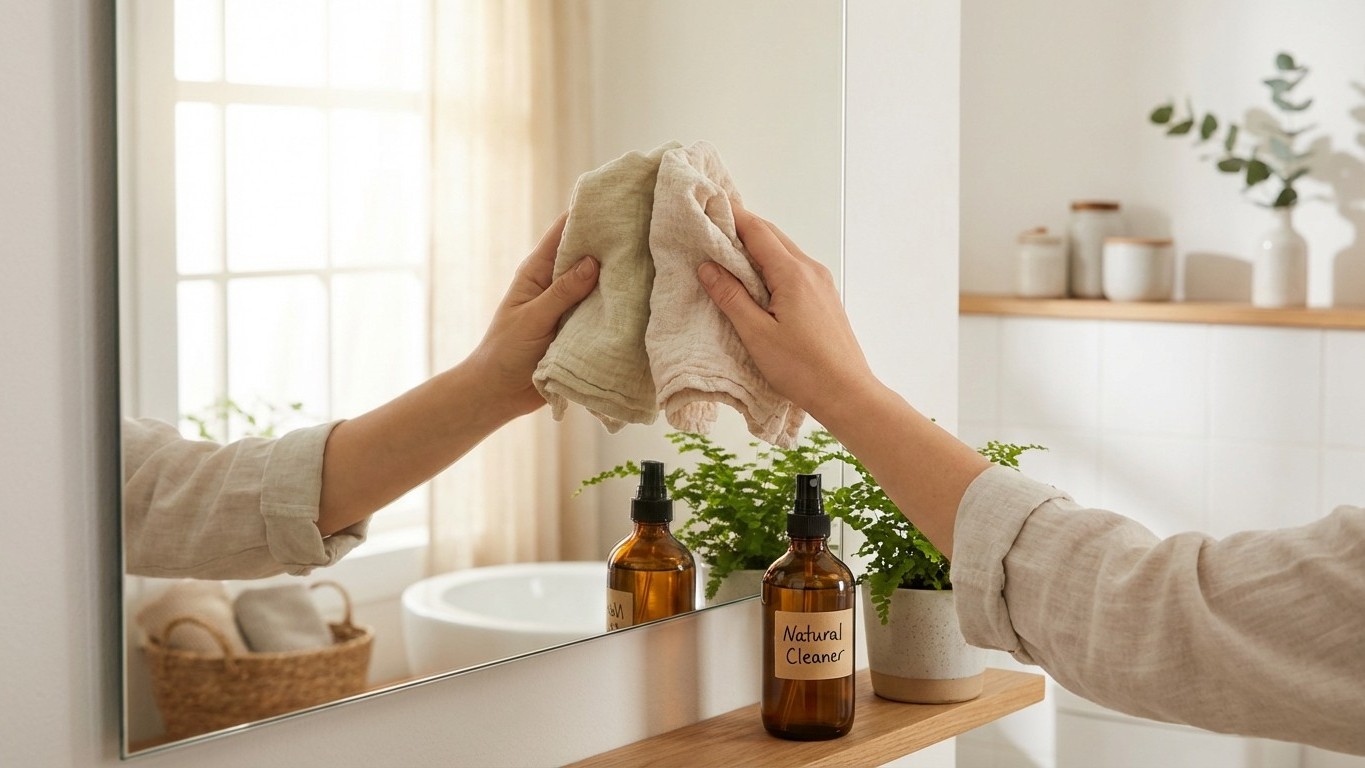
A mirror should flatter you, not tattletale
Bathroom mirrors have a special talent for showing up every speck of toothpaste, every fingerprint, and that hazy film that appears the moment someone takes a hot shower. If you are trying to clean mirrors naturally without streaks, you already know the frustration: you wipe, it looks fine, then the light hits it and the smears grin back at you.
The good news is that a mirror is not “difficult”, it is simply fussy about three things: too much liquid, the wrong cloth, and a product that leaves residue. Below you will find a genuinely natural, practical method that suits mirrors specifically, not just windows, with precise measurements, a simple routine, and the common mistakes that undo all your hard work.
Why choose a natural cleaning approach for mirrors?
Environmental impact of conventional cleaners
Many off-the-shelf glass sprays rely on solvents, fragrances, and packaging that add up over time, especially in households that wipe mirrors daily. Even when a product “works”, the residue can encourage more frequent cleaning, which means more product, more plastic, and more wastewater. A modest homemade mix, used sparingly, usually does the job with fewer ingredients and less waste.
From March 2026, plenty of households are already trimming their cleaning cupboards down to a small set of staples. For mirrors, that “less is more” approach really pays off, because the main goal is to leave nothing behind.
Health and wellbeing (allergies, indoor air)
Bathrooms and bedrooms often have limited ventilation, so strong sprays can hang in the air. If you are sensitive to fragrance, prone to headaches, or managing allergies, reducing perfumed aerosols can make the room feel calmer. Natural does not mean harmless, of course, but vinegar and diluted alcohol are straightforward, quick to evaporate, and easier to control when you mix them yourself.
Understanding what causes streaks on a mirror
Where streaks and haze come from
Most “mystery streaks” are simply leftover residue, either from cleaner, from hard water minerals, or from bathroom products. Mirrors collect an oily mist from hair products, moisturiser, and even cooking vapours if the mirror is near a kitchen-dining space. Add the fine dust that clings to damp surfaces and you get that grey film that seems to reappear overnight.
Then there are the obvious marks: toothpaste splatter, fingerprints, and little dots from hairspray. These need a slightly different first step than general polishing, otherwise you end up spreading them into a larger smear.
Factors that encourage streaking (hard water, poor drying, wrong cloth)
- Hard water: minerals in tap water dry into faint lines and spots, especially in areas with limescale issues.
- Too much liquid: a drenched mirror forces you to push water around rather than lift grime off.
- Leaving it to air-dry: mirrors show drying patterns far more than many surfaces.
- Cloths with fabric softener residue: softener leaves a waxy coating that smears on glass.
- Paper towels that shed: lint and fibres catch the light and look like streaks.
Natural techniques for a streak-free mirror
Effective ingredients: white vinegar, alcohol, lemon, distilled water
Each ingredient has a job, and using them with a light hand is what keeps the mirror clear.
- White vinegar (acetic acid) helps cut through mineral deposits and light soap residue.
- Alcohol (household alcohol such as isopropyl, or high-strength ethanol where appropriate) helps dissolve oils and evaporates quickly, reducing drying marks.
- Lemon can help with grease and leaves a fresh scent, but it can be sticky if overused.
- Distilled water reduces mineral spotting, very handy in hard water areas.
For most bathrooms, a vinegar and alcohol mix, used sparingly and wiped promptly, is the most reliable natural route to clean mirrors naturally without streaks.
Step-by-step: a natural, no-streak mirror method
This method is designed for real-life bathroom grime, including toothpaste and product haze, without leaving a film or dulling reflections.
Step 1: Dry dust first (30 seconds)
Take a clean, dry microfibre cloth and lightly wipe the mirror to remove dust. This prevents you turning dust into muddy streaks the moment liquid hits the glass.
Step 2: Spot-treat the “sticky bits”
For toothpaste splashes or dried droplets, dampen a corner of your cloth with plain water (just water, not your cleaner). Press on the spot for 5 to 10 seconds, then lift. This softens the mark so you are not scrubbing and spreading it around.
Step 3: Light mist on the cloth, not the mirror
Spray your homemade cleaner onto the cloth, not directly onto the mirror. Use 2 to 4 sprays for a standard bathroom mirror. This avoids liquid seeping into the edges and keeps you in control of how wet the surface becomes.
Step 4: Wipe in overlapping passes
Wipe from top to bottom in slightly overlapping vertical passes. Use gentle pressure. If the mirror is large, work in sections about the size of a tea towel.
Step 5: Buff immediately with a second dry cloth
This is the part many people skip. Take a second clean, dry microfibre cloth and buff in small circles, then finish with a few long strokes. You are removing any remaining moisture before it dries into lines.
Step 6: Check from the side
Stand at an angle and look across the mirror with the bathroom light on. Side viewing reveals faint haze you cannot see head-on. If you spot a smear, buff with the dry cloth first. Only add more cleaner if it truly needs it.
DIY recipe: natural mirror cleaner (precise measurements)
This is a balanced everyday recipe that tackles toothpaste haze and light oily film, while drying cleanly.
- 150 ml distilled water
- 150 ml white vinegar
- 100 ml alcohol (household alcohol suitable for cleaning)
Pour into a clean spray bottle and label it. Shake gently before each use. This makes about 400 ml.
Simple variations depending on what you have
- If you cannot get distilled water: use boiled-and-cooled water. It is not identical, but it often reduces spotting compared with straight tap water.
- If vinegar smell bothers you: reduce vinegar to 100 ml and increase water to 200 ml. The mirror may need a little more buffing, but it is kinder on sensitive noses.
- If the mirror has hairspray film: keep the recipe as written and do a first wipe, then a second very light pass, followed by thorough buffing.
Extra tips for a truly clear finish
- Use less product than you think. Most streaks come from excess cleaner that never fully buffs away.
- Keep a “mirror-only” cloth. Microfibre used on kitchen grease will never behave nicely on glass afterwards.
- Wash microfibre without fabric softener. Use a small amount of detergent and an extra rinse if your machine allows it.
Which tools to use? The real impact of the cloth
Microfibre, cotton, paper, newspaper: what works in practice
Mirrors are honest about your cloth choice. A wonderful cleaner with a poor cloth still leaves streaks.
- Microfibre: usually the best for streak-free results because it lifts residue and buffs well, provided it is clean and not clogged with softener or grease.
- Lint-free cotton (old cotton pillowcase or well-washed tea towel): can work nicely for buffing, especially if you do not like microfibre.
- Paper towels: convenient but can shed, and some leave a faint lint trail that shows under bright light.
- Newspaper: a traditional favourite. It can give a good shine, but modern inks and paper quality vary, and it is messy in a steamy bathroom.
For a deeper guide on choosing materials and avoiding lint, see best cloth for streak free natural glass cleaning.
How to avoid lint and leftover marks
- Use two cloths: one slightly damp for cleaning, one fully dry for buffing.
- Fold your cloth into quarters. When one side gets damp or dirty, flip to a fresh side.
- If you see tiny fibres, stop and switch cloths. More wiping with the same linty cloth only makes it worse.
Common mistakes to avoid when you clean a mirror naturally
Problematic ingredient combinations
- Vinegar plus bicarbonate of soda: it fizzes, which looks satisfying, but the reaction largely cancels the cleaning action and can leave a dull residue if not rinsed well.
- Too much lemon: lemon juice contains sugars and other compounds that can leave a faint sticky film if the mix is strong.
- Adding oils for “shine”: oils create glare and smears on mirrors. Save oils for wood, not glass.
Vinegar on its own is generally safe for mirror glass when diluted and used sensibly, but avoid letting liquid pool at the edges or sit on backing materials for long periods.
Overusing product or wiping the wrong way
A mirror does not need to be soaked. When cleaner runs down the surface, it gathers grime and dries into trails. Keep the mist light and controlled, then buff straight away.
- Do not spray the mirror until it glistens. Spray the cloth, then wipe.
- Do not “polish until it squeaks”. Over-buffing with a slightly damp cloth can redeposit residue.
- Do not chase streaks with more and more spray. First try a dry buff with a fresh cloth face.
Temperature and timing errors (hot mirror, steamy room)
Cleaning right after a hot shower is a recipe for frustration. Warm, humid air slows evaporation, so moisture lingers and dries unevenly. Let the bathroom air out for 10 minutes, or open a window, then clean when the mirror is closer to room temperature.
If you must do it quickly, use less liquid and spend longer on the dry buffing stage.
FAQ: natural mirror cleaning
How do I clean a mirror naturally without leaving streaks?
Use a minimal amount of a vinegar and alcohol solution, apply it to the cloth rather than the mirror, and buff immediately with a second dry cloth. Most streaks are leftover moisture or residue that simply needs lifting off before it dries.
What is the most effective homemade recipe for cleaning a mirror?
A dependable everyday mix is 150 ml distilled water, 150 ml white vinegar, and 100 ml alcohol. It cuts through mineral marks and oily haze, then evaporates quickly so you can polish to a clear finish. If you want a dedicated guide to this style of recipe and the safety points, visit homemade glass cleaner vinegar and alcohol.
Why does my mirror still have marks after cleaning?
The usual culprits are a cloth with softener residue, too much cleaner, or hard water minerals. Try switching to distilled water, washing microfibres without softener, and using two-cloth cleaning and buffing. Also check the lighting, some marks only show under LEDs or sunlight at an angle.
Can I use white vinegar on a mirror safely?
Yes, diluted vinegar is typically fine for mirror glass. Keep it off painted or delicate frames, do not let it pool at the edges, and wipe dry promptly. If your mirror has antique backing or a compromised edge seal, use a milder mix and apply to the cloth only.
Which tools help prevent streaks?
A clean microfibre cloth, plus a second dry cloth for buffing, makes the biggest difference. If microfibre is not for you, a lint-free cotton cloth can work well for the final polish.
Go further: other glass surfaces and helpful resources
Mirrors, windows, and that slightly different technique
Windows tolerate more liquid and sometimes need a stronger approach for outdoor grime, while mirrors punish excess product and show haze under indoor lighting. If you are cleaning both, keep a “mirror method” and a “window method” separate so you do not bring heavy soil and detergent residues back onto the mirror.
For broader guidance across panes, frames, and different types of glazing, you may enjoy natural window cleaning hacks.
More natural routines for the whole home
If you are building a small, sensible cleaning kit, a mirror spray is just one piece of the puzzle. This wider collection is handy when you want to streamline cupboards room by room: natural cleaning hacks.
A practical checklist you can keep by the sink
Here is the routine I suggest printing or copying into your notes app, it saves time on busy mornings and stops the “wipe and regret” cycle.
- Ventilate bathroom for 10 minutes if it is steamy.
- Dry dust first with a clean cloth.
- Spot-treat toothpaste with plain water and a brief press.
- Spray cleaner onto cloth, 2 to 4 sprays.
- Wipe in overlapping vertical passes.
- Buff immediately with a second dry cloth.
- Check from the side under the light.
A quick anti-fog habit (budget-friendly)
If your mirror fogs daily, a tiny amount of plain soap can help. Once the mirror is clean and dry, rub a barely damp cloth over a bar of traditional soap, then wipe a whisper-thin layer over the mirror and buff until perfectly clear. The layer is invisible when done properly and can reduce condensation grip. Keep it light, heavy application will cause smears.
Next time you catch yourself reaching for more spray, pause and look at your cloth first, is it truly clean, truly dry, and truly dedicated to mirrors, or is the poor thing still carrying yesterday’s kitchen adventure?