
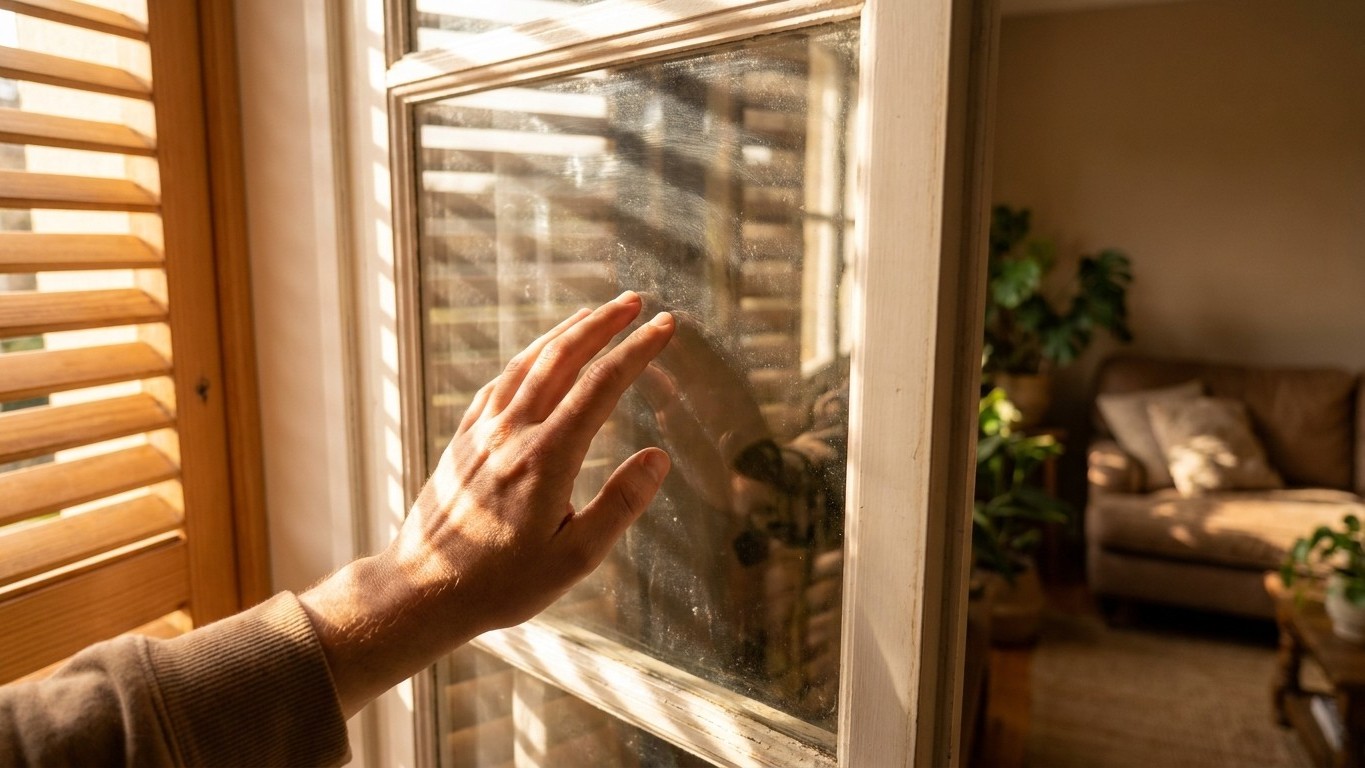
The glass was hot enough to make me snatch my hand back, as if I’d touched the hob. That was the moment years of careful heatwave routine fell apart in my mind. I’d been closing my shutters at the first hint of sunshine, feeling rather smug about it too, only to discover that behind those slats I’d created a little oven pressed right against my windowpanes.
What I hadn’t understood is that shutters and glass together can behave like a greenhouse, especially when there’s no gap for air to move between them. Sunlight passes through the slats in dappled patches, warms the glass and the trapped air pocket, and then has nowhere to go. The heat doesn’t vanish just because you can’t see the sun anymore. It sits there, radiating steadily into the room through the windowpane, sometimes for hours after you’ve gone to bed thinking you’d outsmarted the weather.
Key takeaways
- Shutters and windows together create a greenhouse effect that traps heat instead of blocking it—but most people don’t realize this is happening
- The timing of when you close shutters matters far more than closing them at all, and there’s a critical window where everything changes
- A tiny gap, the right color, and a nightly ritual transform shutters from heat traps into genuinely effective cooling tools
The greenhouse trapped behind your own shutters
Glass is a peculiar material when it comes to heat. It lets short-wave sunlight through quite happily, but once that light hits a surface and turns into long-wave infrared heat, glass is far less willing to let it back out. This is the same principle that makes a car interior unbearable after twenty minutes in a car park, and it’s exactly what happens in the narrow cavity between a closed shutter and a closed window. The air in that gap heats up, the glass itself heats up from direct contact and re-radiated warmth, and by late afternoon your window has become a slow, silent radiator pointed straight into your living room.
I made things worse, without realising, by shutting my windows tight at the same time as the shutters. My logic was simple: seal Everything, keep the heat out. But a sealed window behind a sealed shutter means that trapped hot air has absolutely no route of escape. NHS guidance on coping with hot weather actually recommends closing curtains or blinds on windows that face the sun during the day, while also making use of cooler parts of the day to ventilate, which tells you the shutting-out strategy was never meant to work in total isolation (NHS advice on coping in hot weather).
Timing matters more than the shutters themselves
The habit I’d got wrong wasn’t closing the shutters. It was when, and what I did afterwards. Closing them at nine in the morning, once the sun was already climbing and warming the glass, meant I was sealing in heat that had already started building rather than blocking it before it arrived. Shutters do their best work when they’re closed before direct sun reaches the window, ideally at first light on the side of the house that catches the morning sun, and on the west-facing side well before the afternoon sun swings round.
Then there’s the evening reveal, which caught me out more than once. Opening the shutters at dusk, pleased with how “cool” the room felt compared to outside, I’d release a wall of stored heat straight into the space I was trying to cool. A better habit is to open windows fully once the outside temperature has actually dropped below the indoor temperature, usually a good hour or two after sunset, and let the shutters stay open through the night to allow proper cross-ventilation. Shutting Everything up again at dawn, before the sun does its damage, resets the cycle properly.
Small changes that made the real difference
Once I understood what was happening, the fixes were cheap and mostly a matter of habit rather than spending money on anything new. Here’s what actually changed things for me:
- Leaving the window itself very slightly ajar (just a centimetre or two) behind closed shutters, so trapped hot air has somewhere to escape rather than pressing against the glass
- Closing shutters at first light rather than mid-morning, particularly on east and west facing rooms
- Pairing shutters with a light-coloured, reflective curtain or blind on the inside, which bounces back some of the radiant heat that does get through
- Doing a proper night flush, windows and shutters both open, once outdoor air feels cooler than the room
- Checking the colour of the shutters themselves; darker paint absorbs more heat and warms the trapped air layer faster than pale or white finishes
None of this cost me anything beyond a change in timing, and a five-minute job cracking a window before I left the house. The difference in how the bedroom felt by seven in the evening was noticeable within a few days, not weeks. My mother always said you should “chase the sun with your shutters, not fight it after it’s already in,” and I finally understood what she meant rather than just nodding along politely.
There’s one detail that still surprises me now. The temperature difference between a shutter closed at dawn and one closed mid-morning can be enough to change how the whole room feels by evening, simply because that trapped air layer starts its heating cycle several hours earlier than it needs to. A window that’s had the sun on it since ten o’clock, sealed shutter and all, has effectively been storing heat in glass and air for six or seven hours by mid afternoon. Beat the sun to it, even by an hour, and the glass behind your shutters never gets the chance to turn against you.