
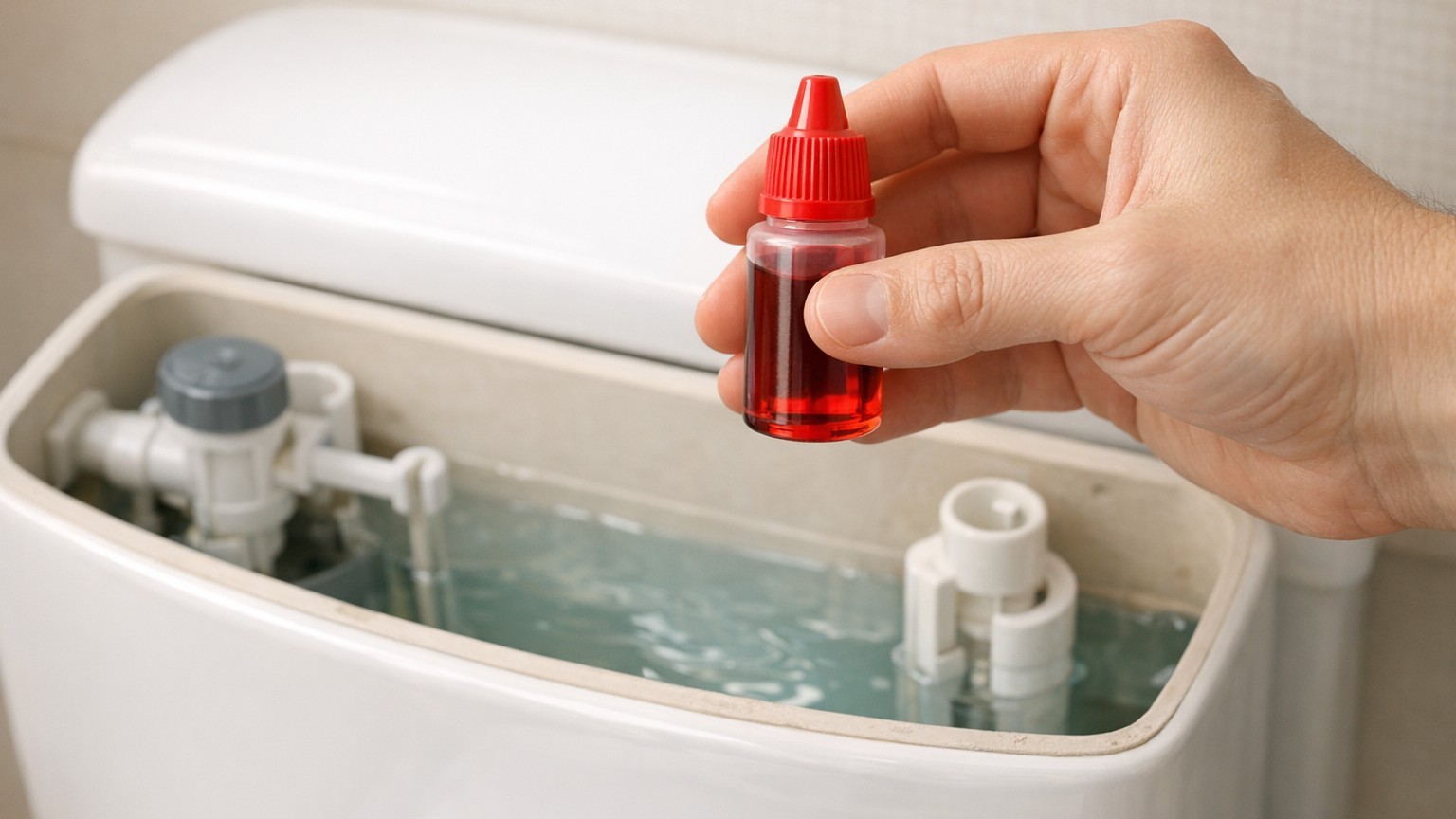
A few drops of food colouring dropped into your toilet cistern, a 20-minute wait, and a glance at the bowl, that is genuinely the first test plumbers reach for when they suspect a hidden leak. No specialist equipment, no call-out fee. Just something from your kitchen cupboard and a little patience. The reason it works is beautifully simple: water flows in one direction, from tank to bowl, and only when you flush. Any colouring that appears in the bowl without a flush tells you water is seeping through uninvited, day and night, entirely undetected.
Key takeaways
- One household’s leaking toilet can waste over 100,000 litres of water in a year — entirely undetected
- The dual-flush toilets installed in the 2000s have a design flaw that makes leaks almost inevitable
- You can diagnose the problem yourself with something from your kitchen cupboard and zero cost
Britain’s quietest water crisis is sitting in your bathroom
In the UK, an estimated 8% of toilets are leaking, wasting up to 400 litres of water per toilet every single day. The problem lies in our increased use of flush valve systems, which are prone to silent, continuous internal leaks, often invisible to the naked eye. That figure deserves a moment to sink in. A leaky loo wastes between 200 and 400 litres of water per day. Over the course of a week, that’s enough water to fill 35 baths. Left unchecked, it could waste over 100,000 litres of water in a year — all from one toilet.
The truly sneaky part is the silence. Leaky loos generally have to be exceeding 600 litres per day before the sound is even audible. So for most households, there is nothing to hear, nothing to see, and nothing to prompt action, only a water bill that creeps upwards and a nagging sense that something isn’t quite right. For the millions of households with a leaking toilet, this can mean an extra £100 on bills every year. A leaking toilet that is constantly running clean water from the cistern into the pan can add around £300 a year to your water bill if left unfixed.
Leaky loos have become a more significant problem in recent years due to a number of factors, including the change in design of toilets from siphon to dual flush drop valves, along with more households replacing their water systems to mains-fed bathrooms. Those push-button dual-flush toilets we all fitted in the noughties thinking we were being terribly eco-conscious? Flush valves rely on a seal which corrodes over time, causing leakage. These leaks are inevitable; the only question is when and not if.
How to do the dye test: step by step
The method takes under half an hour and costs nothing if you already have food colouring in the house. Performing a dye test is an easy, quick, and affordable way to know whether your toilet is leaking. Sometimes a leak makes a hissing sound, but not always. Without performing a dye test, it can be easy to overlook a leak.
Start by lifting the lid off the cistern (that heavy porcelain lid at the back, set it down carefully on a folded towel). Flush the toilet completely. Once it refills, add about 5 drops of food colouring into the tank. Consider using a darker colour, such as red or blue, so it’s easy to see the change. Now put the lid back, walk away, and resist flushing for at least 20 minutes — longer if you can manage it. If the toilet tank is leaking into the bowl, you will see dye appear in the bowl without flushing. The food colouring won’t stain your toilet. Once you’ve finished checking, flush to clear the coloured water from the system.
There is a second, old-fashioned method that works well overnight. Wait until 30 minutes after the last flush, then wipe the back of the pan dry with toilet tissue. Place a new, dry sheet of toilet tissue across the back of the pan and leave it in place for up to three hours without using the toilet (it’s best to do this overnight). If the paper is wet or torn in the morning, you know you have a leaky loo. Some water companies will even send you free dye strips, some water companies offer free leaky loo detection strips, which can help you easily spot a leak; check with your water company to see if they provide these.
What’s causing the leak, and can you fix it yourself?
Coloured water in the bowl points straight at the seal between the cistern and the pan. The cause is often something minor like built-up sediment, rust or dirt on the flapper, which is the seal that covers the opening at the bottom of the tank. In older-style UK cisterns with a siphon mechanism, the equivalent part is the siphon diaphragm, a disc of rubber or plastic that wears thin over time.
Because the rubber can wear out, the flapper should be checked periodically and replaced at least every five years to ensure a good seal and avoid leaks. Before you call anyone, try a simple clean first. Turn off the water supply to the toilet by closing the valve on the water line coming from the wall. Then manually lift the flapper, allowing all the water to drain from the tank. Use a paper towel or sponge to thoroughly clean the edges of the flapper, and open and close it several times to ensure smooth movement. Then reopen the waterline, allow the tank to refill, and try the food colouring test again.
If a clean doesn’t solve it, replacement is the next step, and it is well within reach for most people. Many minor toilet repairs can be tackled by confident DIYers. If you’re comfortable isolating the water supply and using a spanner or screwdriver, jobs like replacing a float valve, flapper, or flush handle are achievable and often cost under £20 in total. That said, there is also a second cause worth checking: the overflow tube. If the water level in the tank is too high, the overflow tube drains the overflow into the toilet bowl. Water level should be adjusted to 1 inch below the top of the overflow tube. This is a simple float adjustment — no parts required at all.
For those who would rather hand the job to a professional, to replace the flush and fill valve on a toilet cistern, a plumber would typically charge between £80 and £120, and the job should take 1–2 hours to complete. Around 70% of leaky loos can be fixed by a plumber on a first visit, and many water companies will provide a free repair, so if you have a leaky loo it is worth giving them a call.
How often should you run this test?
Given how silently and steadily a leaking cistern wastes water, running the dye test once a year is sound household sense, especially in homes with dual-flush toilets fitted in the last decade. Leaks are often silent, so it’s worth checking every few months, especially if your water bill seems unusually high. It costs nothing, takes less time than boiling a kettle twice, and the potential savings are considerable.
One detail worth knowing: if your dye test comes back negative but you are still suspicious (a bill that won’t settle, a faint sound at night), check the water level inside the cistern itself before assuming all is well. If the flush valve seal becomes degraded or blocked with debris, water could be continuously passing. If your flush valve is passing water, you may hear your cistern refilling during the night due to a drop in water level, a sound easy to mistake for pipes settling or the boiler cycling. That nocturnal refill is the cistern quietly confessing to a leak it has been hiding from you all along.
Sources : seswater.co.uk | politics.co.uk