
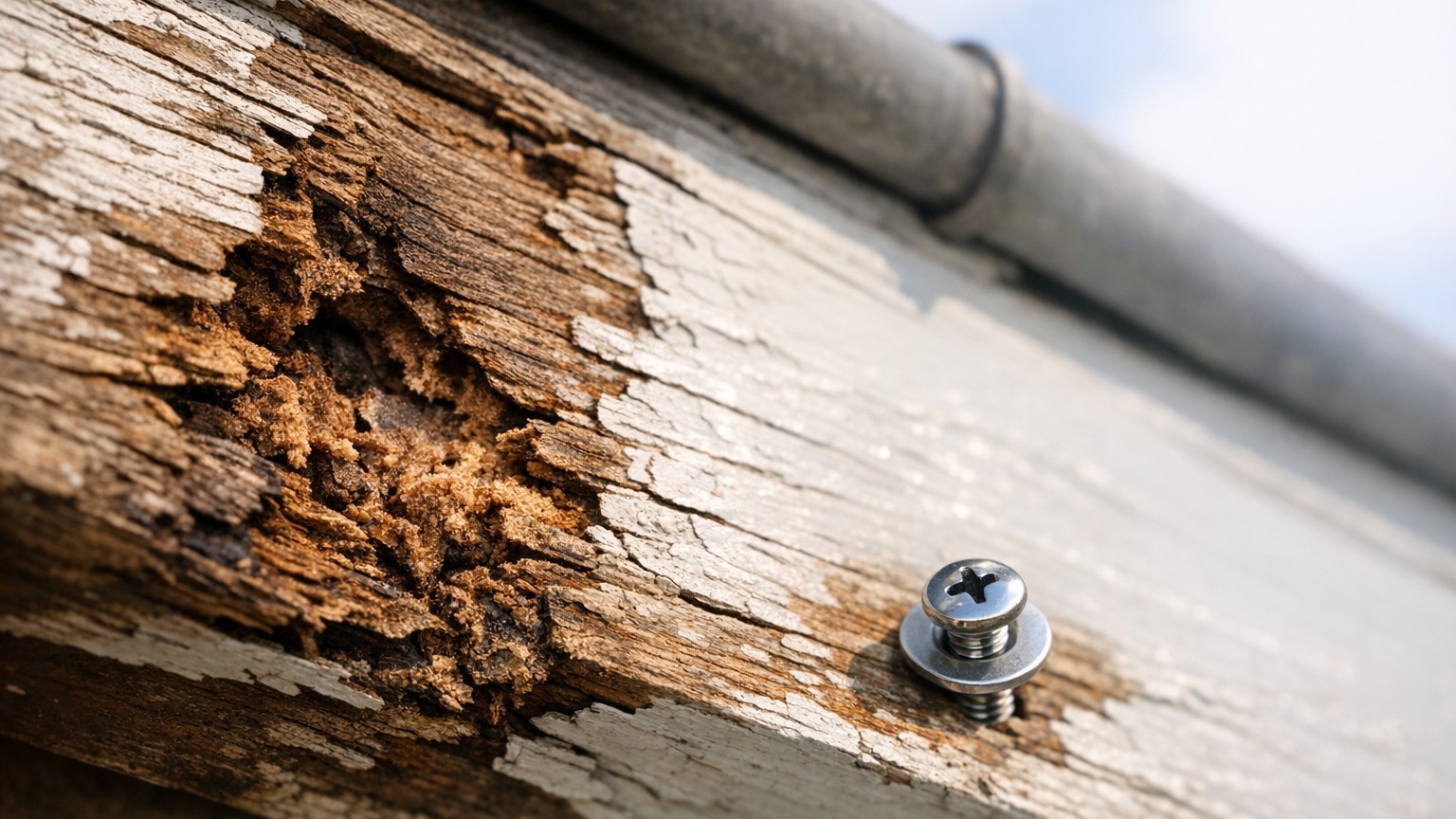
Fascia boards rot from the inside out. That is the cruel part. The painted surface can look perfectly sound, no peeling, no obvious soft patches, no visible damage, while the timber beneath has been quietly turning to pulp for years, fed by trapped moisture and poor ventilation behind the soffit. Screw a gutter bracket into wood in that condition and you will find out the truth the moment a downpour fills the guttering with the weight of accumulated rainwater. The bracket pulls clean away, the gutter sags, and suddenly you have a cascade of water sheeting down the outside wall instead of travelling safely to the downpipe.
This is exactly what happened to me last autumn. Three brackets on the north-facing run of my house, which never sees direct sun and therefore never fully dries out, simply gave way. The screws had found rotten wood and held just long enough for me to feel confident about them. The lesson was expensive, but it is entirely avoidable.
Key takeaways
- Paint conceals what’s underneath—rot can spread for years without visible signs on the surface
- A five-minute test with your thumb and a nail reveals whether timber is sound or soft
- Wrong bracket spacing, poor fastener choice, and missing pilot holes turn a simple job into a waterfall
Why fascia boards are so often worse than they look
Timber fascias on British homes, particularly those built before the 1980s, before uPVC became the dominant material — were often fitted and then painted and largely forgotten. The paint does a reasonable job of keeping direct rain off the face, but moisture still finds its way in from behind, particularly where the soffit meets the fascia and ventilation is poor. Once water is trapped in that junction, the rot begins. Softwoods like redwood pine, which were commonly used, are relatively vulnerable once the protective surface is compromised.
The other factor is that previous owners frequently painted over existing rot rather than dealing with it. A fresh coat of gloss can conceal damage convincingly for several years. If you bought your house without a detailed survey that specifically examined the fascias, you may have inherited a problem you knew nothing about.
A simple test before you do any drilling: press firmly along the fascia with your thumb, particularly near the ends and at the top edge where water collects. Sound timber will feel solid and unyielding. Anything with give, any sponginess at all, is a warning. A more definitive check involves a bradawl or a long nail pressed firmly into the surface, in good wood, it resists; in rotten wood, it sinks with almost no effort. This takes five minutes and can save you an entire afternoon of remedial work.
Getting the repair right before the brackets go back up
If you find rot, the scale of it determines your next step. A small, localised patch, say, around a single old screw hole, can sometimes be treated with a two-part wood hardener and filler, the kind sold in most larger DIY shops. The hardener soaks into the remaining fibres and consolidates them; the filler, once set, can be drilled and screwed into. This approach works reasonably well for cosmetic and minor structural repairs, but it is not a permanent fix for a board that is significantly compromised along its length.
Boards that are rotten across more than a third of their depth, or over a run of more than 30 centimetres or so, really want replacing. This is a job many reasonably confident DIYers can manage on a single-storey property with a decent stepladder and a helper, though working at height carries its own risks that should be taken seriously. On two-storey houses, scaffolding or a hired tower is the sensible choice rather than an extended ladder balanced against a fragile gutter.
When fitting new timber, the species matters. Treated softwood is widely available and perfectly adequate provided it is properly primed on all six faces before fitting, top, bottom, both ends, front and back. The ends are where most people skip a coat, and it is exactly where the timber is most exposed to moisture ingress. Western red cedar, if you can stretch to it, has natural oils that make it genuinely more resistant to rot, and over a decade or more the extra cost often makes sense.
Choosing and fitting gutter brackets properly
Once you have confirmed the fascia is sound, or replaced the sections that were not, bracket choice and fixing position both matter more than most guides suggest. Gutter brackets for a standard half-round or ogee profile should be spaced no more than one metre apart, and closer to 600mm if the run is long or exposed to heavy leaf fall, which adds considerable weight to standing water. The end brackets, particularly at the high point where the gutter begins its fall toward the downpipe, take the most stress and benefit from two fixings rather than one.
The screws themselves should be stainless steel or at least zinc-plated, ordinary steel screws will rust within a couple of years in this application, and a rusted screw is weaker and stains the fascia with orange streaks that are tedious to remove. A 65mm screw gives a good bite into solid timber; if you are fixing into treated replacement board, 50mm is usually sufficient given that the wood is fresh and sound throughout.
Pilot holes are not optional here. They reduce the risk of splitting the fascia, particularly near the ends of the board, and they let you feel the resistance of the timber as you drill, soft, crumbling resistance before you have even reached full depth is a signal to stop and investigate further rather than pressing on and hoping for the best.
One thing worth knowing: gutters are meant to fall slightly toward the downpipe, typically around 3mm for every metre of run. Many people refit brackets at the same height as the old ones without checking whether the fall is actually correct. A string line set with a spirit level, then deliberately dropped by the right amount over the length of the run, takes ten minutes and ensures rainwater actually drains rather than sitting and slowly overflowing at the low points. Standing water in guttering accelerates corrosion in metal systems and promotes the growth of moss and debris build-up in all types.