
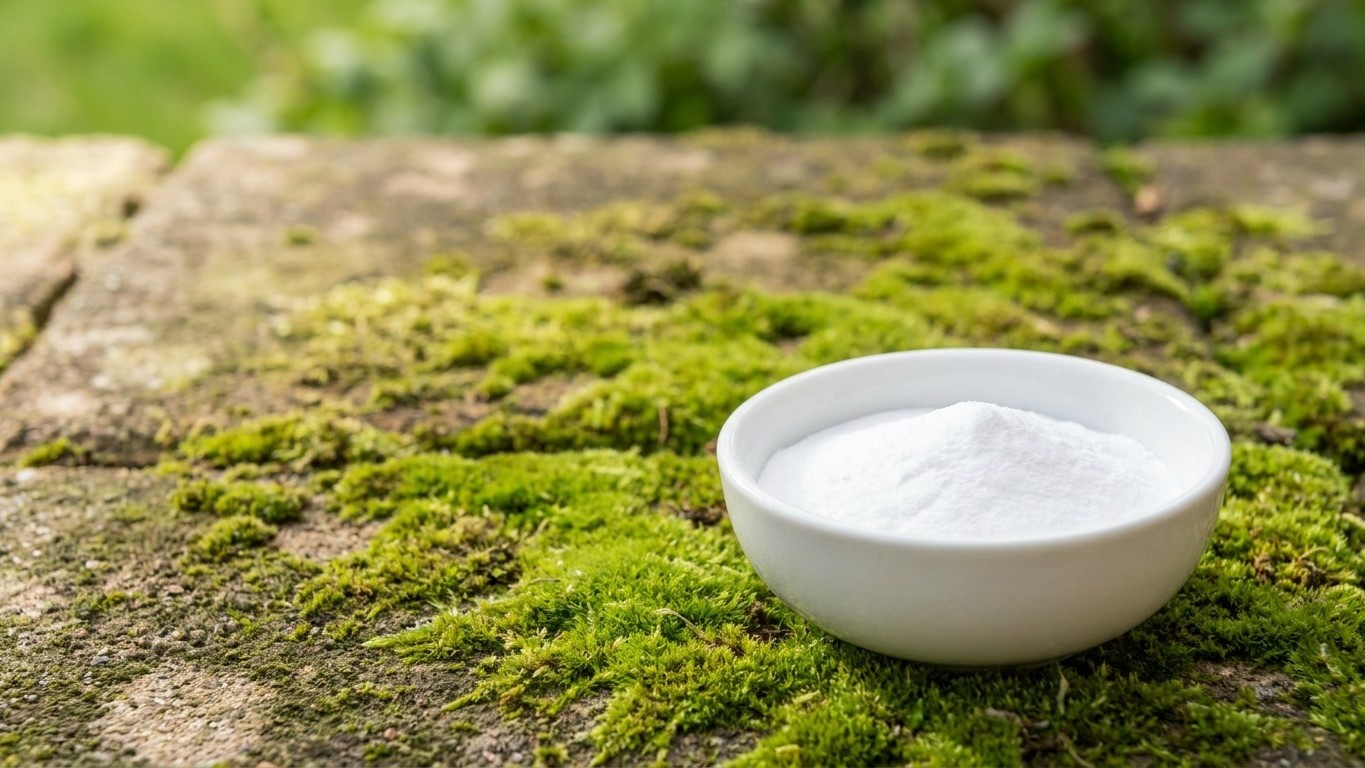
Baking soda, the same humble box sitting next to your flour and bicarbonate of soda in the kitchen cupboard — turns out to be one of the most effective natural treatments for patio moss. No hired equipment, no caustic chemicals, no sore knees from scrubbing. Just sodium bicarbonate, a spray bottle, and a dry afternoon.
If you’ve ever watched a green fuzz creep steadily across your paving slabs each autumn and winter, you’re not alone. Moss growth is a common issue for patio paving, especially in damp, shaded areas, and while it may seem harmless, it can create slippery conditions and ruin the aesthetic of your outdoor space. Once established, mosses hold in moisture that deteriorates surfaces beneath. That slipperiness is no small thing, either, moss makes driveways, sidewalks, and patios slippery, increasing the risk of falls. So it’s worth tackling sooner rather than later.
Key takeaways
- A common kitchen ingredient outperforms industrial moss treatments—but why does moss actually despise it?
- The exact measurements and application methods that make this solution work faster than you’d expect
- Why pressure washers might be making your moss problem dramatically worse, not better
Why Baking Soda Works, and Why Moss Hates It
Baking soda, or sodium bicarbonate, is an effective and natural way to kill moss. It is alkaline, which means it has a high pH, and moss prefers acidic conditions, so when you apply baking soda, it raises the pH and creates an environment where moss cannot thrive. Think of it as pulling the welcome mat out from under the moss’s feet.
The baking soda also helps dry out the moss; without moisture, moss simply cannot survive. Effective moss control works by preventing moss from holding moisture, it dries out, turns black and dies. Baking soda does exactly this, naturally and without a single drop of bleach.
The other reason this solution makes such good sense for British gardens? Baking soda is cheap and available at most grocery stores, safe for nearby plants, pets and wildlife, and you can apply it in different ways, making it versatile for various surfaces. Bleach, by contrast, is harmful to plants and the environment, and can also cause discoloration on your precious paving. Why risk it?
Exactly How to Apply It (Measurements Included)
The simplest method requires almost no effort at all. Simply sprinkle the powder generously over moss-covered areas, leave it for 24 to 48 hours, then sweep away the dead moss. On a calm, dry day with no rain forecast, that’s genuinely all there is to it.
For thicker or more established patches, a spray solution works even better. Once the majority of the moss is gone from the surface, use a spray bottle to apply a solution of at least 3 tablespoons of baking soda to one quart of water. If you’re dealing with a particularly stubborn colony that has taken over a large section of slabs, you can make the mixture more potent, more like 8 tablespoons of baking soda to one quart of water, when dealing with large patches.
Apply the solution to moss on a warm day with no rain in sight, then rake it away gently once it turns a golden brown colour and dispose of it. That colour change is your signal: golden or brown means the moss is dead and ready to go. You’ll need a bit of patience, as it can take several weeks for the moss to be fully eradicated, and with stubborn patches, you may want to spray a second or third time.
You can also make a paste. Mix baking soda with a little water to make a paste and apply it directly where the moss is growing, the baking soda will help to kill the moss. This is particularly useful for getting into the joints between paving slabs, where moss loves to lodge itself.
One timing tip worth keeping in mind: it is best to work on a warm, sunny day, as the heat of the sun will help to dry out the moss quickly. A grey drizzly Tuesday in November is less than ideal. Check the forecast and pick your window.
What to Do About the Moss Coming Back
Mosses prefer shady areas with poor air circulation, where surfaces stay damp and sheltered from drying sun and wind, north-facing walls, covered patios and tree-shaded areas provide ideal conditions for surface mosses to grow and spread. Cracks between patio pavers also invite moss, as dirt and debris collect in cracks, retaining the moisture that moss needs to establish itself. So even after a thorough baking soda treatment, the conditions that allowed moss to thrive in the first place haven’t changed.
A few straightforward measures help keep it at bay. Trim back any trees or bushes that block sunlight, allowing more light to reach your pavers. Applying a sealant can protect your pavers and make it harder for moss to grow. Regular maintenance twice a year is best, with extra care after wet seasons, a quick scatter of baking soda in early spring and again in autumn costs pennies and takes five minutes. Far easier than hauling out a pressure washer.
Speaking of pressure washers: pressure washers can damage surfaces, especially roofs and patios, and can also spread moss spores, making the problem worse. That’s an expensive hire fee for what may ultimately be a counterproductive exercise. Baking soda asks nothing of you except a dry day and a little patience.
What to Do With the Dead Moss
Once your patio looks presentable again, don’t bin the dead moss without a thought. As long as the compost pile contains no more than one-fifth moss, it makes a good addition to the compost heap, and as long as you used baking soda and no other chemicals, it can contribute to your garden in new ways. You might also, rather charmingly, place small piles of the dead moss near trees, as birds and other animals use moss to build their nests. Your garden wildlife will appreciate the gesture.
One thing baking soda won’t do is correct the underlying conditions that draw moss back year after year. While moss won’t necessarily damage your patio, it retains moisture, which can cause cracks over time if left untreated. So the real long-term strategy is two-pronged: treat with baking soda when moss appears, and address drainage or shade issues over time. Even just keeping debris swept off the patio regularly, fallen leaves and dirt are essentially a moss starter kit, makes a meaningful difference between treatments.
Sources : goteamproclean.com | horkans.ie