
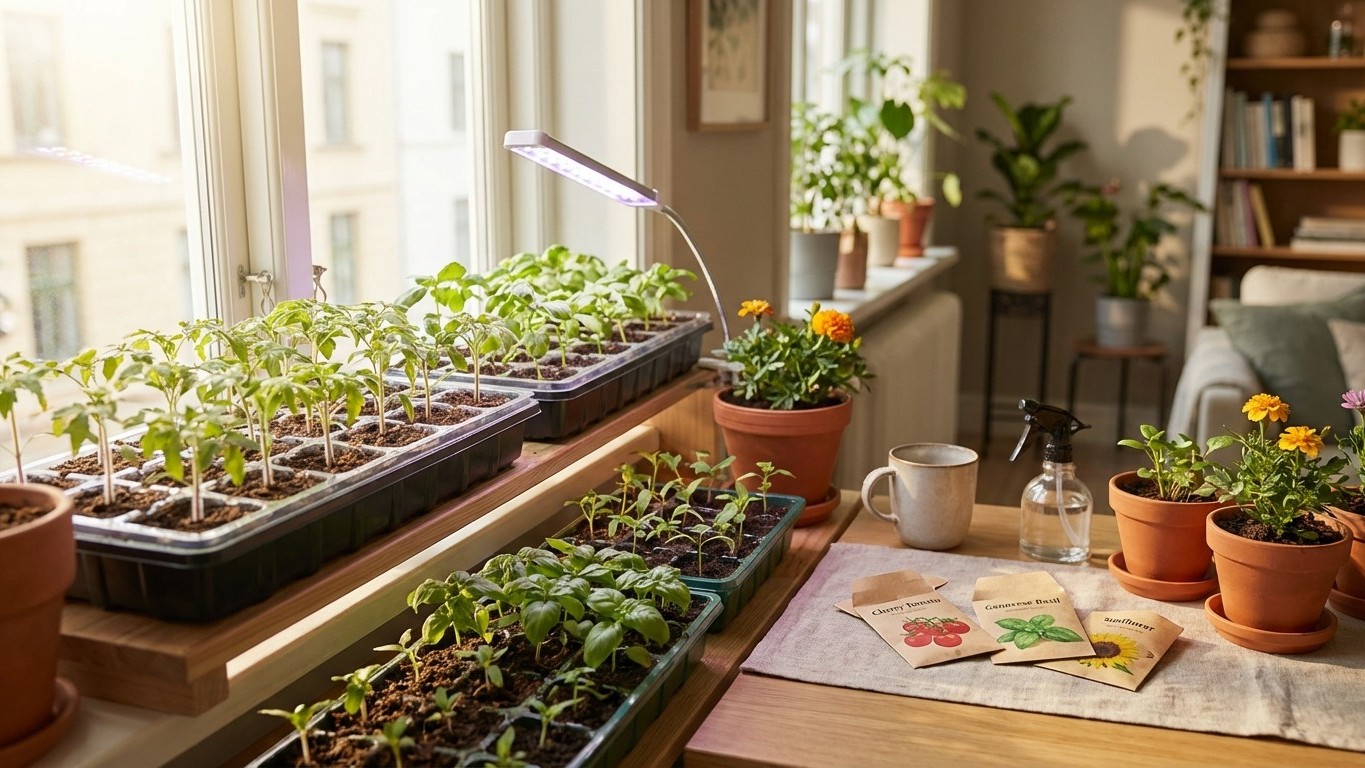
Embarking on the journey of growing plants from seed is a delightful and rewarding endeavour, even without access to a traditional garden. With a bit of planning and some simple techniques, you can cultivate a thriving indoor garden right on your windowsill. Let’s explore how to get started.
Key takeaways
- Unlock the secrets to growing thriving seedlings without a garden.
- Explore innovative indoor methods perfect for limited spaces.
- Master essential steps to nurture your plants from seed to transplant.
Choosing the Right Seeds
Not all plants are suited for indoor cultivation, so selecting the appropriate seeds is crucial. Tender crops like tomatoes, chillies, and courgettes are excellent choices, as they benefit from the warmth and protection indoors. Half-hardy annuals such as cosmos and nasturtiums also thrive when started inside. For a continuous supply of fresh flavours, consider herbs like basil and parsley. Always check the seed packet for specific sowing times and requirements to ensure success.
Setting Up Your Indoor Growing Space
Creating an optimal environment for your seeds is essential. A south-facing windowsill is ideal, providing ample natural light. If natural light is limited, supplement with grow lights to prevent seedlings from becoming leggy. Maintaining a consistent temperature between 18–24°C (65–75°F) encourages healthy germination. To achieve this, you might use a heated propagator or place your seed trays near a warm radiator. Ensure good ventilation to prevent mould and damping-off diseases; opening a window periodically can help maintain airflow.
Sowing Seeds: Step-by-Step
Begin by filling clean seed trays or small pots with a quality, peat-free seed compost. Lightly firm the compost to create a level surface. Sow the seeds according to the depth specified on the packet, typically, this is about twice the seed’s diameter. For seeds requiring light to germinate, such as poppies, simply press them onto the surface without covering them. After sowing, water gently using a fine spray to avoid dislodging the seeds. Cover the trays with a clear lid or plastic wrap to retain moisture and warmth, creating a mini-greenhouse effect.
Innovative Techniques for Small Spaces
For those with limited space, creative methods like the “seed snail” can be particularly effective. This involves spreading a layer of compost over a strip of bubble wrap or polythene, sowing seeds along it, and then rolling it up into a spiral. This compact setup allows multiple seedlings to grow in minimal space on a windowsill. After sprouting, the roll can be carefully unrolled, and the seedlings transplanted outdoors when ready.
Aftercare: Nurturing Your Seedlings
Once seedlings emerge, remove any coverings to prevent excessive humidity. Ensure they receive 12–16 hours of light daily; if natural light is insufficient, continue using grow lights. Water the seedlings when the compost feels dry to the touch, being careful not to overwater, as soggy conditions can lead to root rot. As the seedlings grow, thin them out if they become overcrowded, allowing the strongest to develop fully. When they have at least two sets of true leaves, consider transplanting them into larger pots to encourage robust growth.
Hardening Off: Preparing for the Outdoors
Before moving your plants outside, it’s important to acclimate them to outdoor conditions, a process known as hardening off. Start by placing the seedlings outside in a sheltered spot for a few hours each day, gradually increasing their exposure over 7–10 days. This helps them adjust to variations in temperature and wind, reducing transplant shock when they are finally planted out.
Growing plants from seed indoors is a cost-effective way to fill your home with greenery. Also, a deeply satisfying experience. With patience and care, you’ll soon enjoy the fruits (and vegetables) of your labour, all from the comfort of your own home.