
A draughty door is one of those slow miseries that creeps up on you. You turn the heating up, you pile on an extra cardigan, you blame the British weather, and all the while, a thin gap at the bottom of your door is quietly letting in enough cold air to make the whole effort feel pointless. I know, because I did exactly that for several winters running before someone pointed me toward a Solution so simple and affordable that I nearly laughed out loud.
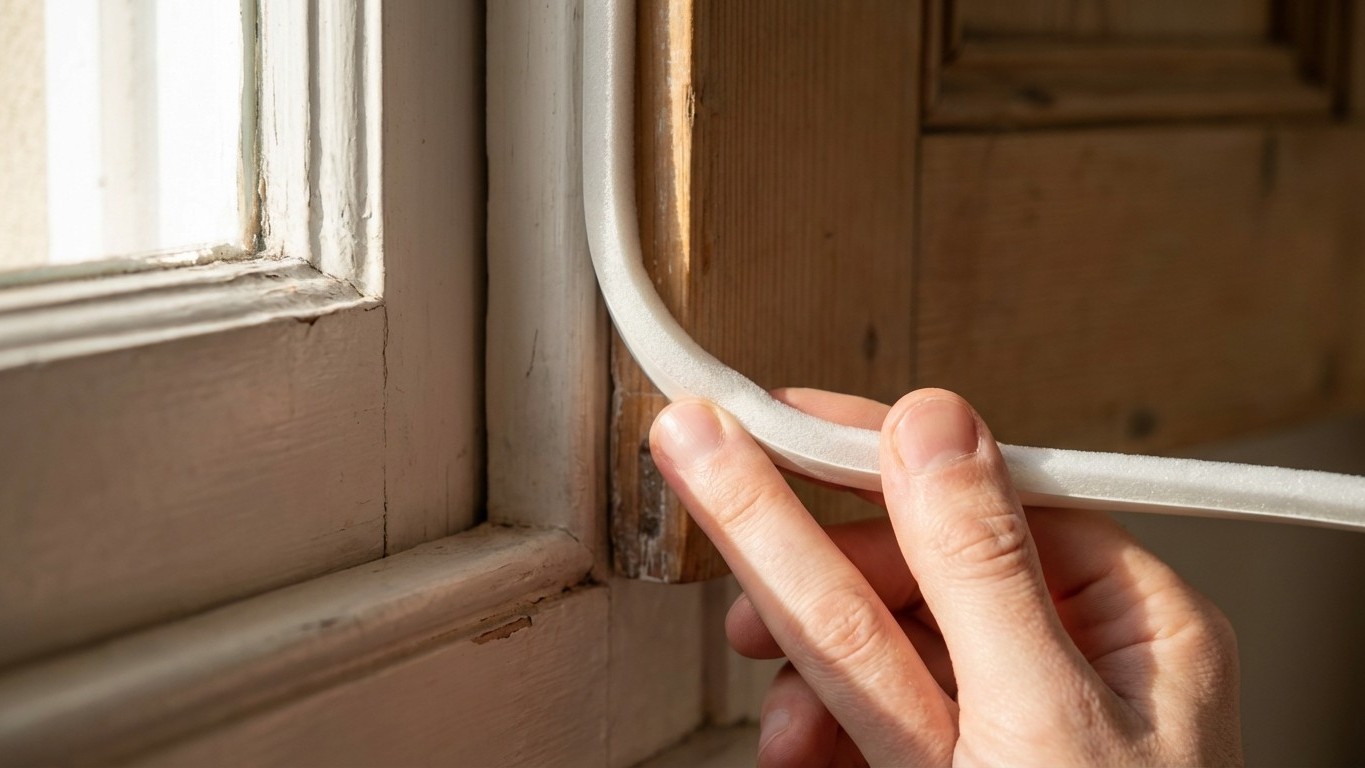
The fix? A self-adhesive foam draught excluder strip. A roll costs around £3 from most hardware shops, and applying it takes roughly ten minutes. No tools, no DIY experience, no fuss. Yet for reasons I still find baffling, it’s the last thing most people think to try, usually because they assume their draughty door must have a more complicated cause requiring a more complicated cure.
Key takeaways
- The real culprit behind draughty doors isn’t always the bottom—gaps along the sides and top are often the worst offenders
- A £3 foam strip solution exists that requires no tools, no expertise, and takes about ten minutes to install
- Properly sealing a draughty door can feel like turning up your heating by a full notch, with measurable savings on energy bills
Where the cold is actually coming from
Most of us picture draughts as floor-level problems, something rushing under the door from the hallway. That’s often true, but the gaps around the sides and top of a door frame can be just as guilty, and they’re far easier to miss. Stand next to your door on a cold evening and run your hand slowly around the entire frame. You may be surprised to find the worst chill isn’t at the bottom at all, but along one side where the frame has warped slightly over the years, or at the top where the door has dropped on its hinges.
Old British housing stock is particularly prone to this. Timber frames breathe and move with the seasons, swelling in wet Weather, shrinking in dry cold, and rarely returning to quite the same position they started in. By the time a house is thirty or forty years old, the gaps around its interior doors can be surprisingly substantial, even if the door looks perfectly fine from a distance.
The £3 solution and how to use it properly
Self-adhesive foam strips come in various profiles, usually described as P-shaped, D-shaped, or E-shaped. For most standard interior and exterior doors, a P-shaped or D-shaped strip works a treat. The key is matching the strip thickness to your gap, most packaging will specify a range, typically between 1mm and 4mm, so bring a small ruler to the shop and measure your gap before you buy. Guessing tends to end in a strip that’s either so thin it makes no difference, or so thick the door won’t close properly.
Before you apply anything, clean the door frame thoroughly with a damp cloth and let it dry completely. The adhesive on cheaper strips is not forgiving of dust or moisture, and if it doesn’t bond well on the first attempt, you’ll end up with a strip that peels away within a fortnight. Once the surface is dry, peel back about 10cm of the backing at a time, pressing the strip firmly into the rebate (that’s the small channel inside the frame that the door closes against) as you go. Work around the top and down both sides, cutting cleanly at the corners with a pair of scissors. The bottom of the door is a separate matter entirely, a door brush or a Draught excluder snake handles that gap better than foam strip, which would simply get torn away by the door’s movement.
Close the door slowly after fitting and you should feel a gentle resistance, a soft compression of the foam as the door seats itself. That compression is what creates the seal. If the door swings shut with no resistance at all, the strip is too thin. If you’re wrestling with the latch, it’s too thick, peel it off and try a slimmer profile.
Why this works better than draught excluder snakes for most gaps
The fabric snake draught excluder is something of a British institution, and it does have its place along the bottom of external doors. But it only sits there when the door is closed and you remember to push it against the gap. It moves when someone walks past, gets kicked aside by children or pets, and does nothing whatsoever for the sides and top of the frame. Foam strip, once fitted, works silently and continuously without anyone having to think about it.
There’s also a surprisingly meaningful impact on heating bills. Gaps around a poorly sealed door can account for a noticeable portion of heat loss in an older home, not as dramatic as uninsulated loft spaces, but real and cumulative across multiple doors. Sealing a draughty external door properly can feel like turning a radiator up a full notch, and it costs a fraction of the price of any other energy-saving measure you could name. My own sitting room felt warmer within the first evening, which was satisfying in a deeply domestic way that I’d recommend to anyone.
One small note of caution: on doors between living areas and garages, always check whether your foam strip is rated for fire resistance before you buy. Standard foam strips are not fire-rated, and building regulations exist for good reason. Intumescent strips, which expand when exposed to heat to seal the gap and slow the spread of fire, are the correct choice for those doors, and they cost only a little more.
There’s something rather pleasing about a fix this unglamorous solving a problem that feels so intractable. The heating industry would quite like you to believe your cold house requires a new boiler, better radiators, or an expensive survey. Sometimes it does. But sometimes the answer is a coil of foam tape and a dry afternoon, and the warmth you feel afterwards is partly from the room and partly from knowing you sorted it yourself for three pounds.