
As the chill of winter recedes and the first signs of spring emerge, it’s the perfect time to give your lawn the attention it deserves. A well-executed pre-spring regimen can set the stage for a lush, vibrant lawn that will be the envy of the neighbourhood come summer. Here’s a tried and tested approach to revitalising your lawn as the seasons change.
Key takeaways
- Learn the essential steps to revive your lawn as winter fades away.
- Discover the secret to tackling moss, thatch, and soil compaction effectively.
- Explore how to nourish, mow, and even naturalize your lawn for summer success.
Clear the Decks: Removing Winter Debris
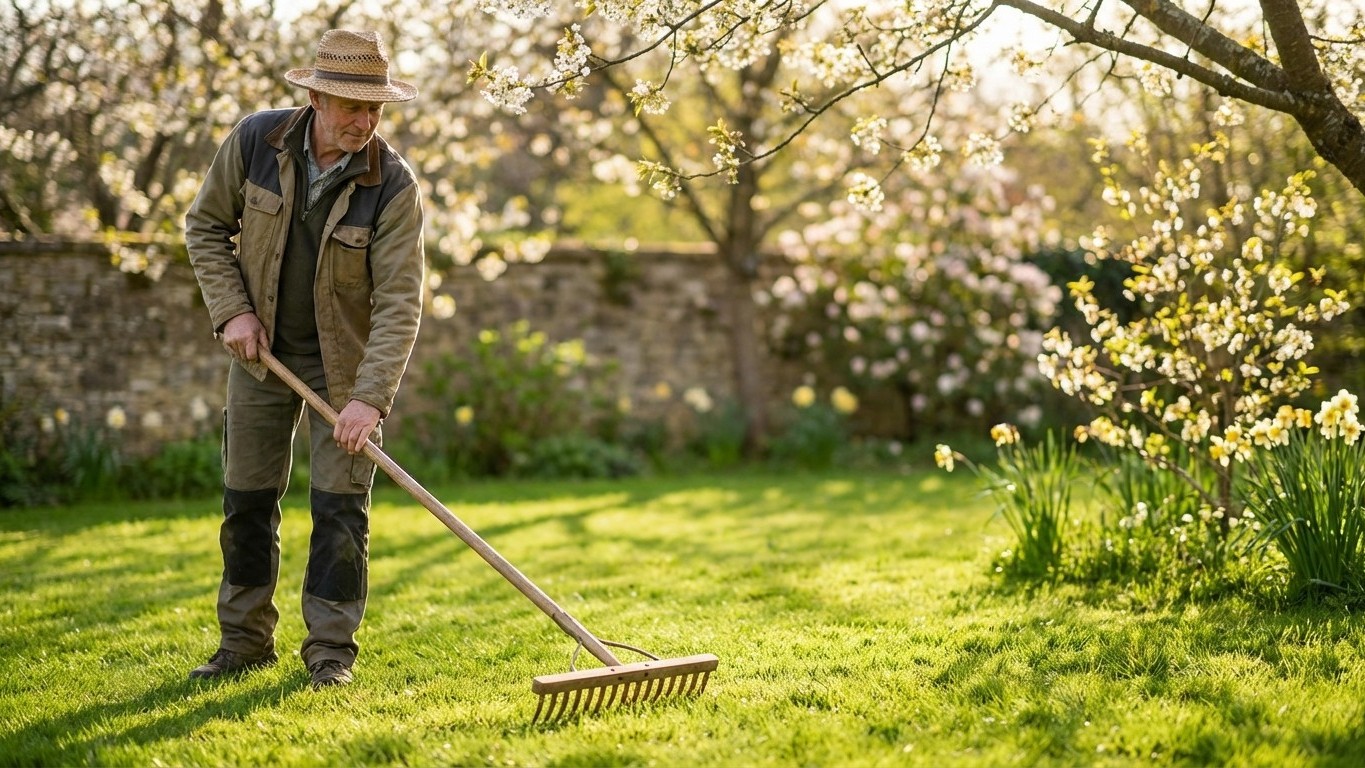
Winter often leaves behind a trail of fallen leaves, twigs, and other debris that can smother your grass and hinder new growth. Begin by gently raking your lawn to clear away this detritus. This tidies up the space. Also, allows sunlight and air to reach the soil, fostering healthy grass development.
Addressing Moss and Thatch
Moss thrives in the damp, shaded conditions typical of winter and can quickly overrun a lawn if left unchecked. To combat this, apply a moss killer containing iron sulphate, which effectively destroys moss while enhancing the grass’s colour. After the moss has turned black and died, rake it out to prevent it from suffocating the grass beneath.
Thatch, a layer of dead grass and roots, can also impede growth by blocking water and nutrients. Light scarification, or raking, helps remove this layer, promoting better air circulation and nutrient absorption. Be cautious not to overdo it; gentle raking is sufficient to prepare the lawn for new growth.
Aeration: Letting Your Lawn Breathe
Over time, soil can become compacted, especially in areas with heavy foot traffic. This compaction restricts the flow of air, water, and nutrients to the grass roots. Aerating your lawn involves perforating the soil with small holes to alleviate compaction. You can use a garden fork, pushing it into the ground at regular intervals and gently rocking it back and forth. This simple task can significantly enhance root development and overall lawn health.
Overseeding: Filling in the Gaps
After aerating and scarifying, your lawn may have bare patches or thin areas. Overseeding, sowing new grass seed over existing turf, helps to thicken the lawn and improve its resilience. Choose a grass seed mix suitable for your lawn’s conditions, whether it’s shaded, sunny, or a mix of both. Spread the seed evenly, lightly rake it in, and water gently to encourage germination. This practice fills in unsightly patches. Also, introduces more robust grass varieties that can better withstand pests and diseases.
Feeding: Nourishing Your Lawn
As your lawn awakens from its winter dormancy, it will benefit from a nutrient boost. Applying a spring-specific lawn fertiliser provides the necessary nutrients to promote vigorous growth. Opt for a fertiliser high in nitrogen to encourage lush, green blades. Apply it evenly across the lawn, ideally when rain is expected, or water it in lightly to ensure the nutrients penetrate the soil.
Mowing: The First Cut
When the grass starts growing in earnest, it’s time for the first mow of the season. Set your mower blades to a higher setting to avoid cutting the grass too short, which can stress the plants. Aim to remove no more than one-third of the grass blade’s height in a single mowing session. Regular mowing encourages denser growth and helps keep weeds at bay.
Embracing a Natural Approach
For those inclined towards a more naturalistic garden, consider adopting the “shaggy lawn” trend. This approach involves reducing mowing frequency and allowing wildflowers and native grasses to flourish. Not only does this create a charming, meadow-like appearance, but it also supports local wildlife, including pollinators like bees and butterflies. Initiatives like “No Mow May” encourage gardeners to let their lawns grow freely for a month, promoting biodiversity and reducing maintenance efforts.
By dedicating time to these pre-spring lawn care tasks, you’re laying the groundwork for a healthy, vibrant lawn that will thrive throughout the summer months. Whether you prefer a neatly manicured lawn or a more relaxed, natural look, these steps will help you achieve a beautiful outdoor space to enjoy all season long.