
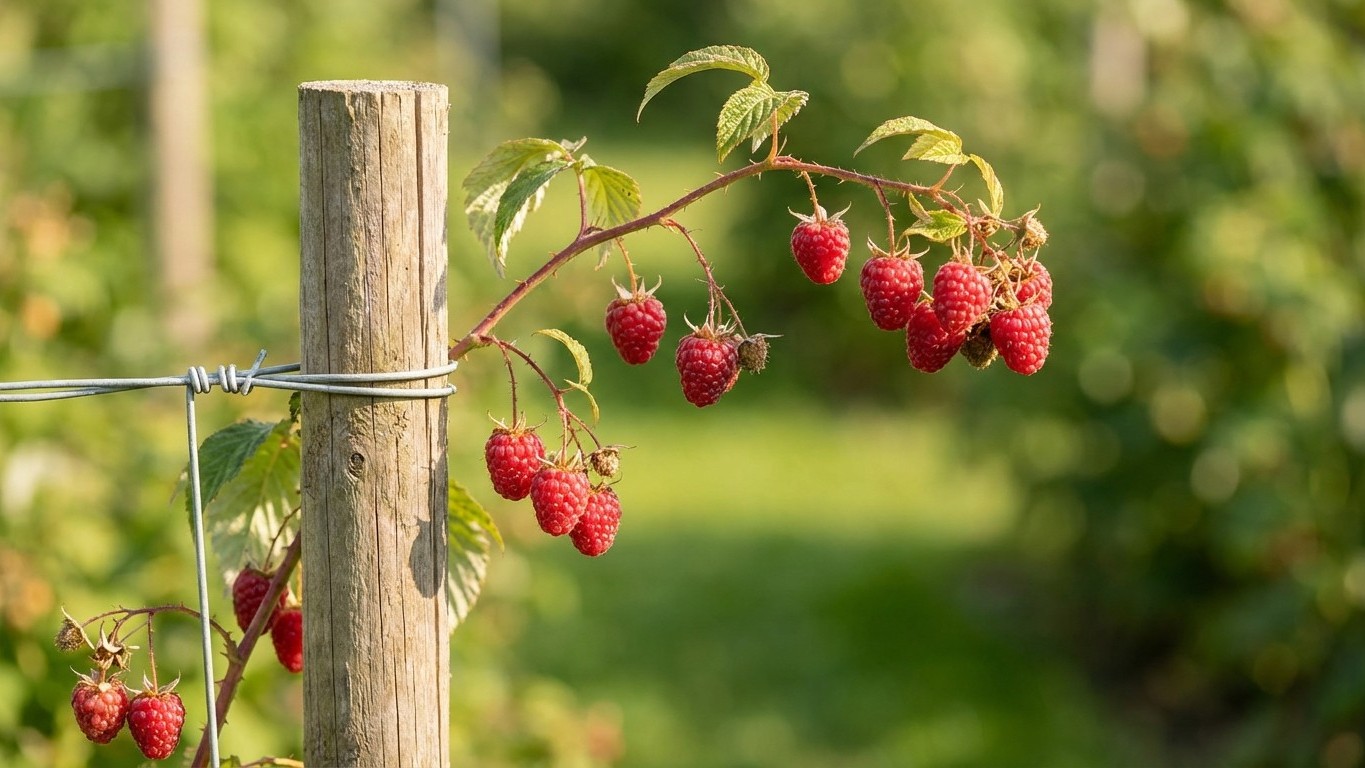
Ah, raspberries! Those delightful, juicy gems that burst with flavour and bring a touch of summer to our tables. If you’ve ever wondered how professional gardeners achieve such bountiful raspberry harvests, the secret lies in a combination of careful planning, diligent care, and a few time-honoured techniques. Let’s delve into the practices that can supercharge your raspberry yields.
Key takeaways
- Which raspberry varieties guarantee a longer harvest season?
- How precise planting and support structures impact growth.
- The crucial maintenance steps pros never skip for bigger yields.
Choosing the Right Varieties
First and foremost, selecting the appropriate raspberry varieties is crucial. In the UK, raspberries are broadly categorised into summer-fruiting and autumn-fruiting types. Summer-fruiting varieties, such as ‘Glen Ample’, typically produce fruit from June to August, while autumn-fruiting varieties, like ‘Autumn Bliss’, bear fruit from August to October. By planting both types, you can enjoy a continuous harvest throughout the growing season.
Optimal Planting Techniques
Timing and method of planting significantly influence raspberry productivity. The ideal period for planting raspberry canes is during their dormant season, from November to March, provided the soil isn’t frozen or waterlogged. This allows the plants to establish strong root systems before the growing season begins.
Raspberries thrive in well-drained, fertile, slightly acidic soils. Before planting, enrich the soil with well-rotted manure or compost to enhance fertility. Space the canes approximately 45–60 cm apart in rows, with about 1.8 m between rows. This spacing ensures adequate air circulation, reducing the risk of disease and promoting healthy growth.
Providing Proper Support
While raspberries aren’t natural climbers, providing support structures is essential for maximising yields. For summer-fruiting varieties, erect a system of posts and horizontal wires. Install sturdy posts at each end of the row, standing about 1.8 m tall, and attach three lengths of strong galvanised wire horizontally between the posts at 60 cm intervals. Tie the canes to these wires as they grow, ensuring they remain upright and well-spaced.
Autumn-fruiting varieties, being shorter, may not require as elaborate a support system. However, a simple post and wire setup can still be beneficial in keeping the canes tidy and accessible.
Regular Maintenance and Care
Consistent care throughout the year is vital for a supercharged harvest. Here are some key practices:
- Watering: Raspberries have shallow root systems and require consistent moisture, especially during dry spells. Aim to provide about 1–2 inches of water per week, ensuring the soil remains moist but not waterlogged.
- Mulching: Apply a 5–7.5 cm layer of organic mulch, such as well-rotted compost, around the base of the plants in late winter or early spring. This helps retain moisture, suppress weeds, and improve soil fertility.
- Feeding: In early spring, apply a balanced fertiliser to support vigorous growth. For container-grown plants, feed fortnightly with a high-potash liquid fertiliser once the fruits start to develop.
- Pruning: Proper pruning is essential for maintaining plant health and productivity. For summer-fruiting raspberries, after harvesting, cut down the old, woody canes that have fruited, leaving the new green canes for next year’s crop. Autumn-fruiting varieties should be pruned in late winter, cutting all canes back to ground level to encourage new growth.
Protecting Your Crop
Birds and other wildlife are often as fond of raspberries as we are. To protect your crop, consider covering the plants with netting, ensuring it’s securely fastened and raised above the fruits to prevent entanglement. Alternatively, growing raspberries inside a fruit cage can offer more robust protection.
By implementing these professional techniques, you can look forward to a raspberry harvest that’s abundant. Also, of exceptional quality. Remember, the key lies in thoughtful planning, regular maintenance, and a touch of patience. Happy gardening!