
That unpleasant whiff rising from a drain, somewhere between rotten eggs and something you’d rather not name — is one of those household problems that sends people straight to the phone to call a plumber. Before you do, there’s a good chance you can sort it yourself in about five minutes, without touching a single pipe joint or reaching for a spanner. The fix is almost embarrassingly simple, and it works more often than not.
Key takeaways
- A dried-out water trap beneath your drain is almost always the culprit behind mysterious sewer smells
- The fix involves pouring water down the drain, but there’s a forgotten plumber’s trick using one kitchen ingredient that extends the solution for weeks
- When simple fixes don’t work, the problem could be hiding somewhere unexpected—and one involves your toilet’s invisible seal
Why Your Drain Smells (And It’s Probably Not What You Think)
Most people assume a sewer smell means a blocked drain or, worse, a cracked pipe somewhere in the wall. Occasionally that’s true, but the far more common culprit is a dry trap. Every sink, bath, shower, and floor drain in your home has a U-shaped section of pipe beneath it, the trap, that holds a small amount of water at all times. That little pool of water acts as a seal, blocking sewer gases from travelling back up through your pipes and into your living space. When a drain sits unused for a few weeks, that water simply evaporates, and the seal disappears with it.
Think of it like a door left ajar. The moment that water barrier goes, every bit of gas from the sewer system has a clear path into your home. A guest bathroom used twice a year, a utility room sink, or a floor drain in the garage, these are the usual offenders. The smell isn’t a sign of damage. It’s just a sign of absence.
The Five-Minute Fix That Actually Works
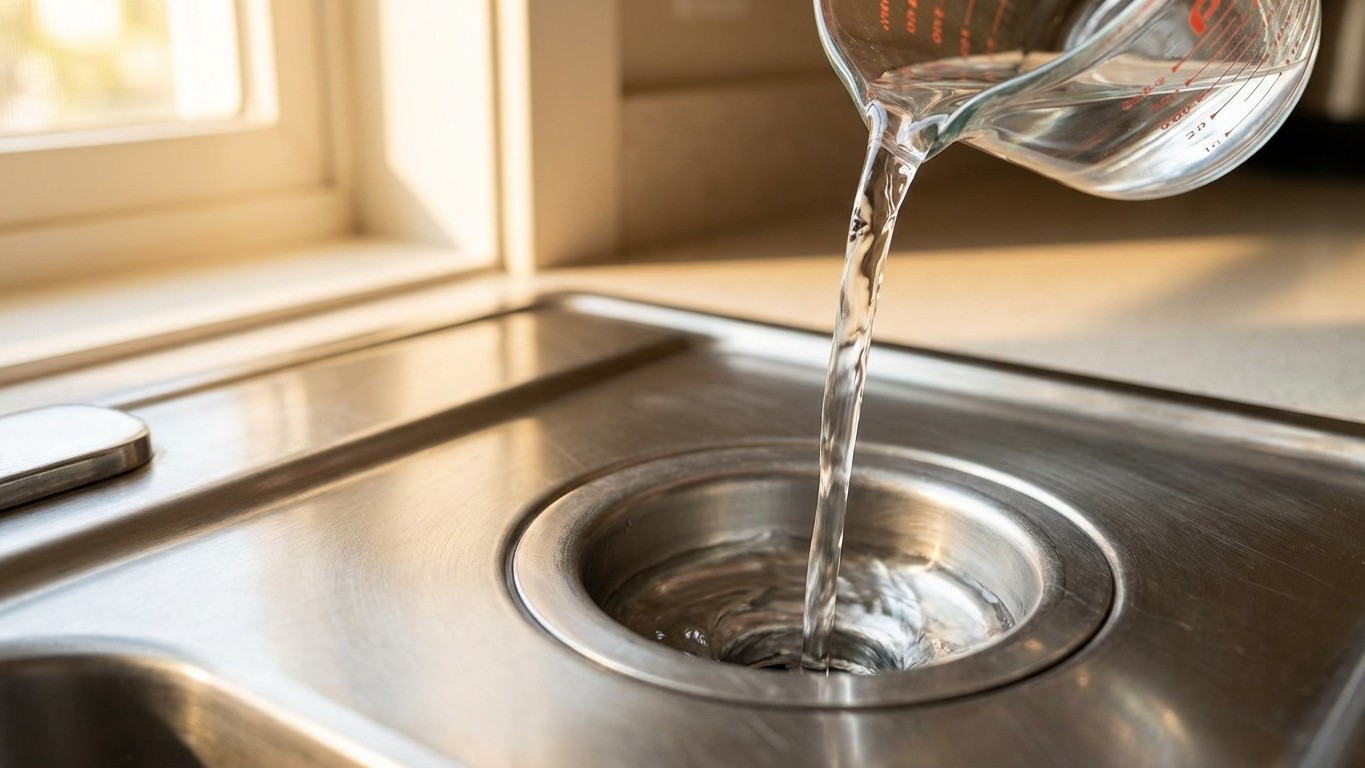
Run the tap. That’s really the heart of it. Pour enough water down the neglected drain to refill the trap, roughly two to three litres should do the job comfortably, and the water seal is restored. Give it a few minutes to settle, and the smell should fade. For floor drains that are rarely used, this is almost always the answer.
If you want to make the fix last a little longer, particularly for drains you know will sit idle again, add a small splash of cooking oil after the water. About a tablespoon is enough. The oil floats on top of the water in the trap and dramatically slows evaporation, giving you weeks rather than days before the seal breaks down again. It’s an old plumber’s trick that’s been passed down through the trade for generations, and it costs practically nothing.
For drains that are used regularly but still smell, the issue is slightly different. Biofilm, a layer of bacteria, soap scum, hair, and organic matter, builds up inside the drain and the trap over time, and it produces that same sulphurous, sewage-like odour even when the trap is perfectly full. Here, the Solution is a good clean rather than simply adding water. Pour a generous kettle of hot (not furiously boiling) water down the drain first, then follow with half a cup of bicarbonate of soda. Let it sit for ten minutes, then chase it with half a cup of white vinegar. The fizzing reaction helps loosen the biofilm from the pipe walls. A final flush with more hot water, and you’re done.
When the Simple Fixes Don’t Quite Cut It
If you’ve refilled the trap and given the drain a thorough clean and the smell persists, the next thing to check is the toilet. The wax ring seal at the base of the toilet pan can deteriorate over time, allowing a small but persistent amount of sewer gas to seep into the bathroom, often mistaken for a drain problem. Gently rock the toilet base. If there’s any movement at all, the seal may well need replacing, and that’s a job worth handing to a professional.
Another possibility, less often talked about, is a blocked or poorly ventilated soil stack. Your home’s drainage system relies on air circulation to work properly. The soil stack, the large vertical pipe that runs through the house, is usually vented through the roof, and if that vent becomes blocked (leaves and bird debris are common offenders), the pressure imbalance can siphon water right out of your traps, even ones that you’ve just refilled. A roof-level blockage is a job for someone with a ladder and a bit of confidence at height.
There’s also the matter of the washing machine drain connection. If the hose isn’t fitted with a proper trap or is pushed too far into the standpipe, it can create what plumbers call a siphoning effect, pulling the water seal from nearby traps. Check that the hose sits correctly in the standpipe without being sealed in so tightly that air can’t circulate around it.
Keeping Smells Away for Good
Prevention takes almost no effort once you’ve got the habit. For any drain that’s used infrequently, a cup of water poured down it once a month is all that’s needed to keep the trap sealed. Mark it on the calendar if you’re likely to forget, a guest bathroom is very easy to Overlook for months at a time.
Regular cleaning of active drains every three to four weeks with the bicarbonate and vinegar method keeps biofilm under control before it has a chance to build up. It costs almost nothing and takes less time than making a cup of tea. A few drops of washing-up liquid swirled around a drain brush and worked into the overflow holes on a sink (those small holes near the top of the basin) can also help, as these are often overlooked and harbour their own impressive collection of bacteria.
Sewer smells have a way of making a home feel less clean than it actually is, which is perhaps why they’re so unsettling. The reassuring thing is that the gap between “frightening problem” and “five-minute fix” is narrower here than in almost any other area of home maintenance. The question worth asking is how many other little household mysteries might have solutions just as simple, if we knew where to look.