
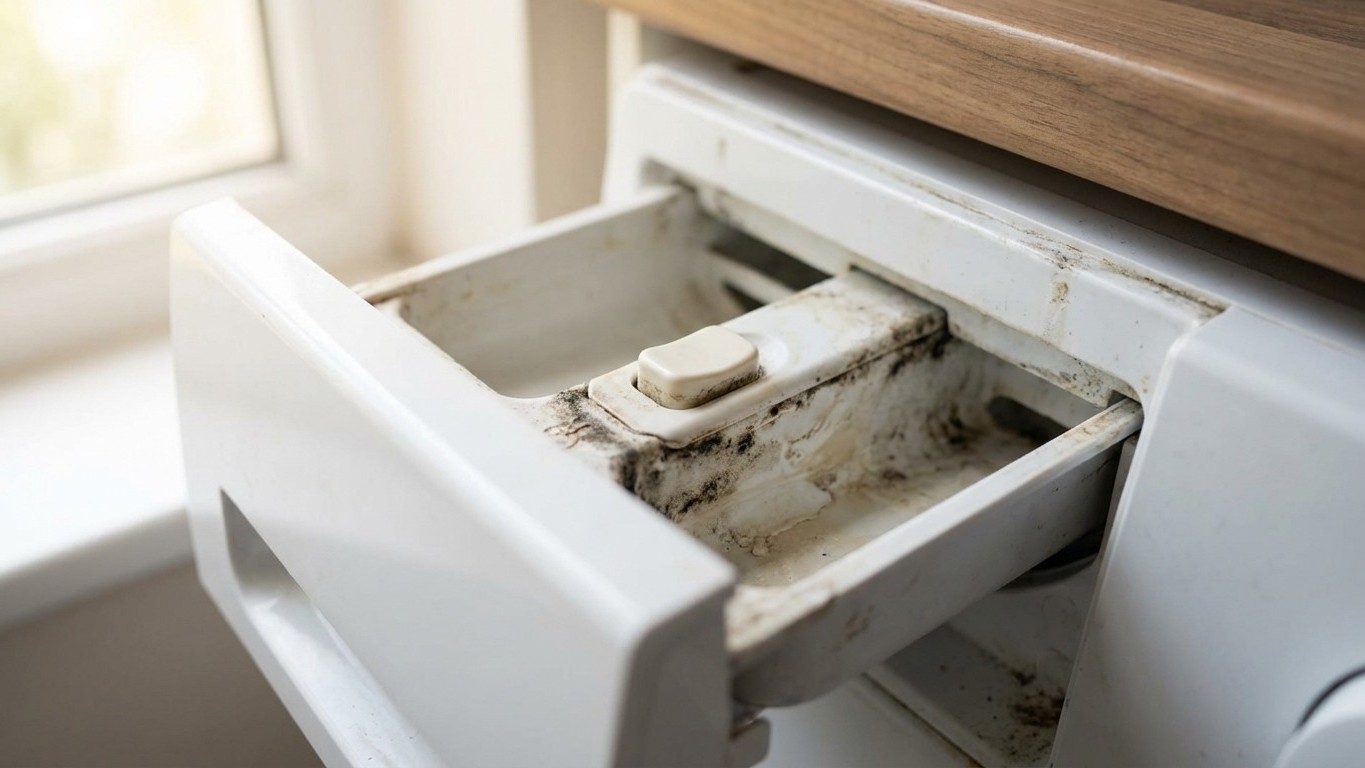
Most of us have spent years dutifully measuring out our detergent, sliding the drawer shut, and pressing start without ever once pulling that little tray all the way out. The detergent drawer on a front-loading washing machine is, for the vast majority of households, one of the most neglected spots in the entire home, and what accumulates inside it would genuinely make your eyes water.
Key takeaways
- There’s a secret release button inside your detergent drawer that almost nobody knows about
- The hidden cavity behind the drawer is often dirtier than the drawer itself and harbours dangerous mould
- A 30-minute soak in white vinegar and water costs virtually nothing and transforms the entire compartment
What’s Actually Living in Your Detergent Drawer
Your washing machine accumulates substantial amounts of grime over time. Detergent residue, fabric softener build-up, and moisture create the perfect breeding ground for mould, mildew, and bacteria, contaminants that don’t just produce unpleasant odours, but can transfer onto your supposedly clean laundry, defeating the entire purpose of washing. That sulphurous, faintly damp smell clinging to your freshly washed towels? The drawer is almost certainly a culprit.
Soap and detergent builds up in the detergent drawer over time, and if you use fabric softener regularly, this will be a particular problem. Fabric softeners are notorious for leaving a slimy residue in the compartment, as most machines fail to adequately flush all of the fabric softener from the compartment. The irony is rather thick: the very products we rely on to make clothes feel fresh are quietly turning a corner of the machine into something resembling a petri dish.
Whether your washing machine is top-loading or front-loading, your detergent drawer can be out of sight and out of mind, meaning people often forget to clean it. Believe it or not, the first time you remove it, it can be quite a shock to see how much residue and mould can accumulate from your regular detergent and fabric softener. One glance at the dark, slippery gunk clinging to the underside of the tray, and you will understand immediately why your laundry hasn’t smelled quite right.
The Hidden Button You’ve Never Noticed
Hidden inside the detergent drawer, there is a small release button that almost nobody knows about. It is usually located at the centre or slightly to one side of the drawer, sometimes tucked beneath a small tab or sticker. Its sole purpose is to allow the complete removal of the detergent drawer from its housing, and without pressing it, you simply cannot pull the drawer out fully. Most people discover this feature only after years of ownership, or after finally reading the user manual. Which, let’s be honest, is most of us.
Press this button firmly while simultaneously pulling the drawer toward you with gentle, steady pressure. The entire Compartment should slide out smoothly, revealing areas previously hidden from view. With the drawer Completely removed, you gain access to both the removable component and the cavity it normally occupies, a dual cleaning opportunity that proves invaluable, as both surfaces harbour different types of contamination.
The cavity itself, the slot the drawer slides into, is frequently worse than the drawer. Pay extra attention to the top part of the compartment, which is full of nooks and crannies and can really get gunky and mouldy. Take a cloth soaked in white vinegar and wipe the cavity behind the drawer, where mould often develops unseen. This is a step most people skip entirely, and it matters enormously.
How to Clean It Properly (Without Spending a Penny on Fancy Products)
Everything you need is already in your kitchen cupboard. White vinegar cuts through mineral deposits, dissolves soap residue, and kills mould spores without harsh chemicals. It is the workhorse of budget-friendly home cleaning, and it earns its keep here. Soak the dispenser drawer in a 50/50 mixture of vinegar and hot water, just plug the sink, fill it up, add the vinegar, and place the drawer in. Rotate it around so the whole thing gets clean, and allow it to soak for at least 30 minutes.
While the drawer soaks, turn your attention to the cavity. Use white vinegar or a basic spray cleaner on the dispenser housing area, then let it soak for about 10 minutes before using an old toothbrush to scrub out any mould or mildew. That old toothbrush is your best friend here, it gets into the nooks and crannies where debris hides. Once the drawer has finished soaking, don’t forget to turn it upside down and clean the underneath, as this is always a place mould builds up. Tackle any tight corners or crevices with the toothbrush, then rinse under warm running water to remove all the mould, dirt, and soap residue.
Before sliding the drawer back in, ensure it is completely dry, as reinserting it damp can encourage further mould growth. Once it’s back in place, run an empty hot cycle at 60°C with a scoop of bicarbonate of soda, or a dedicated machine cleaner, to refresh the internal lines. Your machine will thank you, and so will your nose.
Keeping on Top of It Without Making It a Chore
Clean the drawer once a month, regular use of the washing machine leads to detergent residue build-up that traps moisture and fosters mildew, and a monthly cleaning schedule keeps the area clear of unwanted build-up. If you frequently run wash cycles or notice a film or odour, consider stepping up the frequency — in high-use households, a fortnightly check may be worthwhile.
Between deep cleans, two small habits make an enormous difference. The absence of airflow and moisture together are the primary cause of black mould growth in the drawer. So: leave the drawer slightly open after each wash to allow airflow and help evaporate moisture. And if you suspect you’re using more detergent than necessary, follow the instructions on the packaging and only use the recommended doses, excess detergent is one of the main reasons residue builds up faster than it should.
One thing worth knowing: if you use tablet detergents, put them directly inside the drum together with the laundry rather than in the detergent drawer, as tablets placed in the drawer may leave stubborn residue. A simple switch in habit that saves you a fair amount of scrubbing each month.
Sources : thewestsidejournal.com | diply.com