
Before a single drill bit touches plaster, every experienced electrician runs a quick check that takes less time than brewing a cup of tea, and it’s the one habit that separates a safe job from a trip to A&E. Hidden cables and pipes lurk behind almost every wall in a British home, and the consequences of striking one range from a nasty shock to a fire that starts inside your wall cavity before you even smell smoke. The good news is that you don’t need years of training to adopt this same check yourself.
Key takeaways
- Most walls hide more than you think—and the dangers are deadlier than you’d expect
- There’s a three-step ritual that takes 30 seconds and could prevent cardiac arrest
- Even experienced DIYers make one critical mistake that detectors can’t catch
Why Walls Are More Dangerous Than They Look
Most of us picture a wall as plaster, bricks, and empty space. The reality is rather more crowded. Electrical cables typically run vertically from sockets and switches, or horizontally at standard heights, roughly 150mm from the ceiling and floor, or directly between fittings. Water pipes follow similar logic, often running vertically to radiators and Bathroom fittings. In older properties, especially Victorian terraces and 1930s semis that make up a huge proportion of British housing stock, those routes can be far less predictable because generations of DIY work have layered over the original plan.
The danger with electrical cables is specific and worth understanding clearly. A standard 230-volt domestic circuit can deliver a shock severe enough to cause cardiac arrest. Nicking a live cable doesn’t always trip the consumer unit immediately, there can be a terrifying fraction of a second where current passes through the drill, through your hands, and into your body before any protection kicks in. Residual current devices (RCDs) in modern consumer units reduce this risk considerably, but many homes still have partial or outdated protection.
The 30-Second Check, Step by Step
The check itself has three parts, and every one of them matters. Think of them as a short conversation with the wall before you commit to drilling.
The first step is to switch off the circuit. Before anything else, go to your consumer unit (the fusebox), identify the circuit serving the room you’re working in, and switch it off. Then go back and test the socket or light switch with a plug-in mains tester or a known working lamp to confirm the power is genuinely off. This sounds almost insultingly obvious, but a surprising number of DIY injuries happen because people assumed a circuit was dead without verifying it.
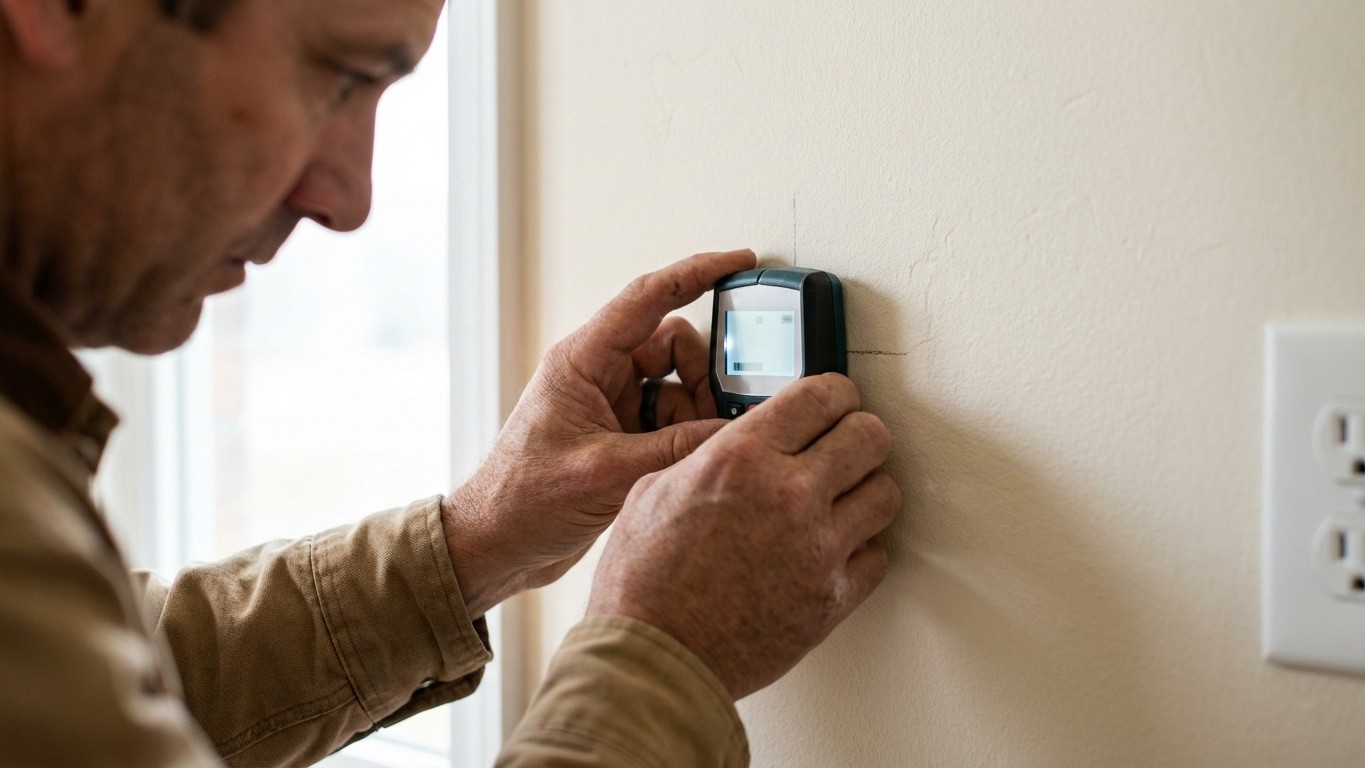
The second step is to use a detector. A cable and pipe detector, sometimes called a stud finder with live wire detection, is one of the most worthwhile small purchases you can make for a home toolkit. Run it slowly and flatly across the wall in a grid pattern: first horizontally, then vertically. Mark any detected cables or pipes with a pencil. Good detectors will distinguish between live wires, de-energised cables, and metal pipes, though it’s worth reading your specific model’s instructions carefully because sensitivity and accuracy vary. Prices for reliable detectors have come down considerably over the years; you can find decent options in most hardware shops without spending a fortune.
The third step is to think logically about what’s behind the wall. A detector is a tool, not an oracle. Look at where your sockets, switches, and radiators sit, and mentally trace the likely cable routes. If you’re drilling near a socket, the cable feeding it almost certainly runs upward to the ceiling zone. If there’s a light switch directly above your planned drill point, a vertical cable is almost guaranteed. Step back, look at the whole wall, and let common sense guide you. This mental map takes about ten seconds and costs nothing.
Common Mistakes That Even Careful DIYers Make
One thing that catches people out is Drilling at an angle. Detectors scan a fairly shallow depth, and if you drill diagonally, even slightly, you can travel further into the wall than you intended and reach a cable that was technically out of the scanned zone. Drill straight, drill slowly, and stop every couple of centimetres to check the depth. A masonry bit doesn’t care what it hits.
Another trap is assuming that a previous owner’s DIY work followed the rules. Chase cables (cables buried in the plaster itself rather than running through the cavity) should by current regulations be installed either vertically or horizontally to the nearest fitting, but older work frequently wasn’t done this way. If your home was built before the 1980s or has had multiple owners, treat every wall as a potential surprise. I’ve heard of cables running diagonally across walls at angles that would make a proper electrician wince.
Overconfidence with battery-powered drills is also worth mentioning. Because cordless drills don’t have a mains cable that can itself be energised, some people feel a false sense of security. The drill is fine, but if the bit hits a live wire, the current will travel back through the conductive body of the tool toward your hands regardless of whether the drill is corded or not.
When to Call a Professional
Some walls simply aren’t worth the risk of DIY drilling. If you’re working near a consumer unit, close to a bathroom (where water and electricity share proximity), or planning to drill into an external wall that also carries heating pipework, a qualified electrician or plumber can often survey and mark a wall quickly and relatively inexpensively. A Building Regulations Compliance Certificate from qualified tradespeople also protects you when you eventually sell the house, which is an entirely practical reason beyond the obvious safety one.
There’s something quietly reassuring about a 30-second habit that costs almost nothing and can prevent catastrophe. The tools are affordable, the logic is straightforward, and the check becomes second nature after the first few times. The question worth sitting with, really, is how many walls in your own home have already been drilled by someone who skipped it.
Sources : quora.com | walabot.com