
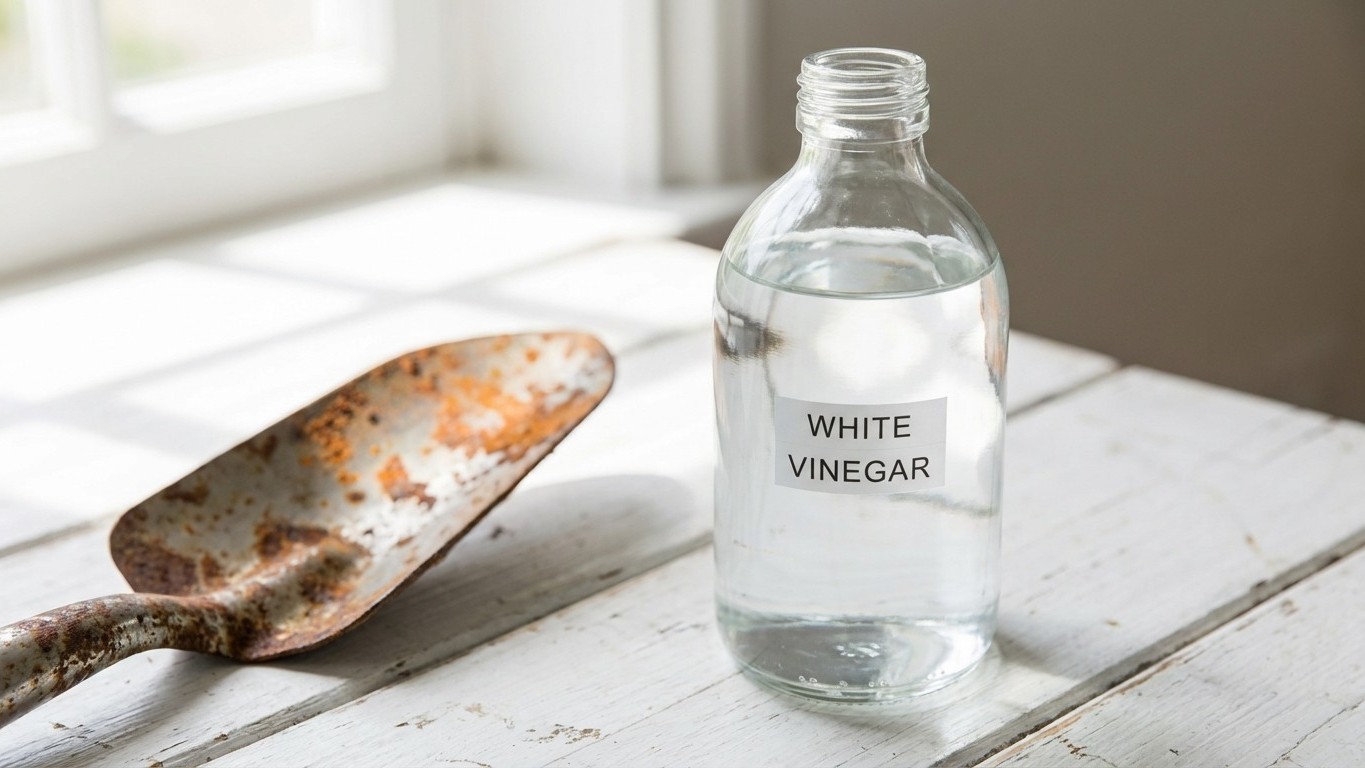
The moment I spotted rust creeping across my favourite garden trowel, my first instinct was to head to the DIY shop for one of those bright orange bottles of rust remover. Then I opened my kitchen cupboard for something else entirely, and there it was, a humble bottle of white vinegar sitting next to the bicarbonate of soda. Between those two things, I had everything I needed. I haven’t bought a chemical rust remover since.
Key takeaways
- A humble kitchen staple outperforms expensive commercial rust removers at a fraction of the cost
- Different household items work for different rust situations—discover which one matches your needs
- The surprising ingredient hiding in your pantry that’s been solving this problem all along
Why White Vinegar Works Better Than You Might Expect
Rust might look like a sure pathway to the trash, but it’s simply the result of iron reacting with moisture and oxygen, something that happens to the best-kept tools over time. A little surface oxidation is no reason to panic, and certainly no reason to spend money on products you likely don’t need.
Vinegar contains acetic acid, which breaks down the rust so it’s easier to remove after it has soaked. The process is wonderfully low-effort. Using vinegar to remove rust from nuts and bolts is known as a “set it and forget it” method, and for good reason. It really is an easy technique for removing rust that you can let sit while it does the work. Pop your rusty item in a bowl, cover it in undiluted white vinegar, go and put the kettle on, and return to the job a few hours later. For heavier rust, increase soaking time up to 24 hours, but check periodically.
There is one thing worth knowing about the vinegar soak: once it has done its job, you really must neutralise the acidity left on the metal. The baking soda will neutralise the acidity of the solution, reducing its corrosive properties. Let it soak for 10 to 15 minutes, then thoroughly dry the object to prevent any future rust formation. Skipping that final drying step is the most common mistake people make, after all the effort of removing the rust, you don’t want it returning within the week.
For particularly stubborn rust, there is a simple way to boost the vinegar’s power. For stubborn rust, the addition of salt to the vinegar enhances its natural acidity, making the solution even more Effective. In a large bucket or tub, pour half a cup of salt into half a gallon of distilled white vinegar. That combination is especially handy when you have a whole set of garden tools or kitchen utensils to tackle at once.
Bicarbonate of Soda: The Gentler Option
White vinegar is not always the right tool for every job. On delicate surfaces, or when you only have a small patch of rust to deal with, bicarbonate of soda (baking soda) is the kinder choice. Baking soda possesses a mildly abrasive quality that makes it Effective in scrubbing away rust without harming the underlying surface. Unlike harsh chemicals, baking soda is safe to use and does not release any harmful fumes. You likely already have it in your kitchen, making it a convenient go-to solution.
Mix a paste of baking soda and warm water. The mixture should be thick and similar to putty. Spread the paste all over the affected metal with your fingers or a clean toothbrush. Allow the paste to sit for at least an hour. Scrub away the rust with a scouring pad, a toothbrush, or a bristled wire brush, then thoroughly rinse and pat the item dry with a dishcloth. This method works particularly well on kitchen knives and smaller utensils where you want a bit of control.
One rather satisfying trick, if the bicarbonate paste alone isn’t quite cutting it, is to combine it with lemon juice instead of water. The natural citric acid in lemon juice will eat away at rust and pairs perfectly with baking soda’s alkalinity, which creates a natural cleaning reaction. The mixture fizzes up nicely, which is always oddly pleasing to watch, and signals that the chemistry is actually doing something useful.
The Surprising Potato Trick (Yes, Really)
I’ll admit this one raised my eyebrows the first time I came across it, but it genuinely works. Raw potato contains oxalic acid, making it a natural rust remover. This method is especially helpful if you’re looking to get rust off cast iron pans. You can even stab the rusty metal blade of a kitchen knife into a potato and let the oxalic acid work its magic for a few hours.
Simply cut your potato in half, or lengthwise if you need a bigger surface area to work with, and pour some baking soda over the rusted area before you start scrubbing away. As the potato surface becomes more tinted with rust, cut off a thin slice then repeat the process until the rust is all gone. It sounds like a recipe rather than a cleaning method, which I suppose is rather fitting.
A Word on Safety and Keeping Rust Away for Good
Synthetic chemical rust removers contain highly acidic ingredients, like sodium hydrosulfite, plus petroleum-based solvents that put off toxic fumes and can easily burn your skin or eyes if not used as directed. The kitchen-cupboard methods above are far gentler on your hands, your lungs, and frankly your purse. A large bottle of white vinegar costs a fraction of what a branded rust remover will set you back, and it has about forty other uses around the house besides.
Do bear one sensible caution in mind: do not soak hardened tempered steel tools, such as chisels or drills, for very long, as prolonged acid exposure can affect heat treatment and surface properties. For those, a shorter soak with regular checks, or the baking-soda paste method, is the wiser approach.
Once you have restored a rusty item, prevention is the real goal. The best way to deal with rust is to prevent it by keeping metal surfaces dry. A light rub of petroleum jelly or a drop of mineral oil on metal tools before storing them away for winter keeps moisture at bay and means you are far less likely to discover that orangey creep next spring. And if you do? Well, now you know exactly what to reach for, and it is already in your cupboard.