
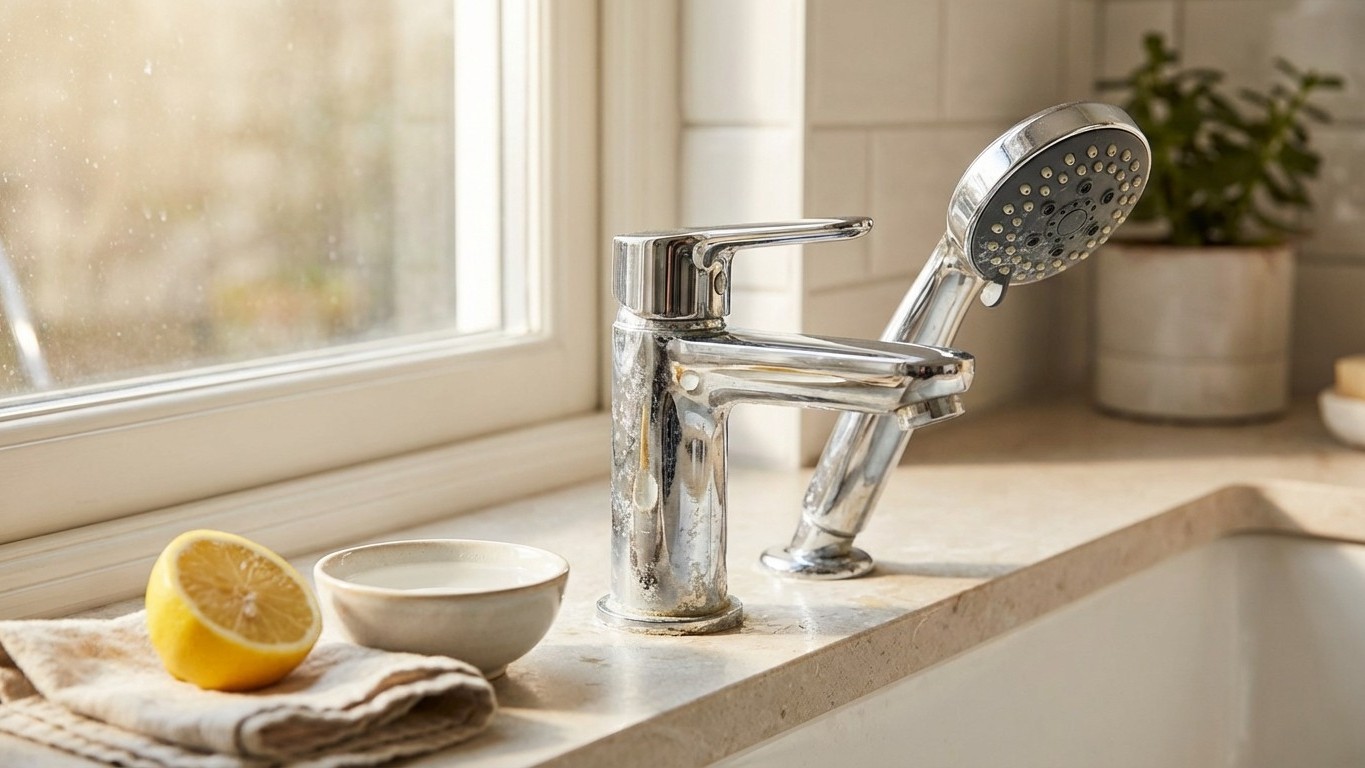
A shiny tap is a happy tap, but limescale has other plans
If your bathroom is in a hard-water area, you will know the story well: taps that never quite sparkle, a shower head that starts spraying sideways like it has a personality, and cloudy marks on glass that make the whole room feel a bit tired. The good news is that you can remove limescale naturally from taps and shower Without harsh fumes, mystery Chemicals, or scrubbing until your wrists complain.
I like natural methods because they are kinder to you, kinder to most bathroom finishes, and kinder to the budget. Still, “natural” does not mean “risk-free”, so we will do this properly: why limescale forms, which ingredient works on which surface, and a step-by-step routine that you can repeat without drama.
Why does limescale build up on taps and the shower?
Understanding limescale formation in the bathroom
Limescale is mainly made of mineral deposits, especially calcium carbonate, left behind when hard water dries. Every splash from the basin, every steamy shower, and every droplet that sits on chrome or glass is a tiny delivery of minerals. Once the water evaporates, the minerals stay put and gradually stack up into a crust.
Bathrooms are perfect limescale factories for three reasons: warm temperatures speed evaporation, surfaces get wet frequently, and many areas never fully dry on their own, especially around tap bases, mixer seams, shower head nozzles, and the lower edges of screens.
Problems caused by limescale: looks, performance, hygiene
- Aesthetics: white chalky marks, dull chrome, cloudy glass, and rough patches that catch the light in all the wrong ways.
- Function: blocked shower head holes, stiff tap handles, reduced water flow, and uneven spray patterns.
- Hygiene and cleaning effort: limescale itself is not “dirt”, but it creates a textured surface where soap scum and grime cling more easily, making routine cleaning feel twice as hard.
Why choose natural methods to remove limescale?
Risks and limits of chemical descalers
Many commercial descalers work by using strong acids. They can be effective, but they also come with a few real-world annoyances: sharp fumes, irritation to skin and eyes, and a tendency to damage certain finishes if left too long. Some can dull chrome, mark natural stone, or weaken older seals if used repeatedly and carelessly. Mixing products is another hazard, especially where bleach is involved, because dangerous gases can form.
Benefits of eco-minded solutions for health and environment
Natural descaling relies on mild acids (like vinegar or lemon) and gentle abrasion (like bicarbonate paste) used with patience. Done well, it is safer for homes with children or pets, and it reduces the need for strong chemicals going down the drain. It is also wonderfully thrifty: most of these ingredients are already in the kitchen cupboard.
Natural and effective methods to eliminate limescale
White vinegar: how to use it, dosages, precautions
White vinegar is a mild acid, and that is why it works: it reacts with calcium carbonate and helps dissolve it. For bathroom limescale, you usually do not need fancy concentrations, just good contact time.
- Standard spray mix: 250 ml white vinegar + 250 ml warm water in a spray bottle.
- For heavier deposits: use neat vinegar on a cloth or paper towel rather than spraying everything.
- Contact time: 10 to 20 minutes for light scale, up to 60 minutes for thicker build-up.
- Finish: rinse well, then dry with a microfibre cloth.
Precautions: avoid vinegar on natural stone (marble, limestone, travertine) and be cautious with delicate finishes. If you are unsure, test a hidden spot for 2 to 3 minutes, rinse, and check for dulling.
Bicarbonate of soda: tips and recipes
Bicarbonate of soda is not an acid, so it does not “melt” limescale on its own the way vinegar can. What it does beautifully is gentle scouring. Think of it as a soft polishing helper for taps and shower fittings, especially when combined with a little washing-up liquid or used after an acid soak.
- Polishing paste: 3 tablespoons bicarbonate of soda + 1 tablespoon water. Mix into a thick paste.
- Application: apply with a damp soft cloth, rub lightly, then rinse and dry.
- For tap bases and seams: use an old soft toothbrush and a very light touch.
Surface note: bicarbonate is mild, but it is still abrasive. Avoid heavy pressure on high-gloss plastic, acrylic, or very shiny “mirror” finishes that scratch easily.
Lemon juice for stubborn limescale
Lemon juice contains citric acid, another limescale-dissolving acid. It is often a good alternative for people who dislike the smell of vinegar, though it can be more expensive per clean. Fresh lemon works, bottled lemon juice works too, as long as it is plain lemon juice without sugary additives.
- Direct method: soak a cloth in lemon juice, wrap it around the limescale area for 15 to 30 minutes, then rinse and dry.
- Half-lemon scrub: for small spots on robust surfaces, rub with a cut lemon, leave 5 minutes, rinse well.
Note: lemon is still an acid. Treat it with the same respect as vinegar, especially around natural stone and sensitive finishes.
Combining ingredients: vinegar + bicarbonate, what works and what does not
This pair is famous, and there is a place for it, but not in the way social media sometimes suggests. When you mix vinegar (acid) and bicarbonate (alkali), they fizz, which looks impressive, then they largely neutralise each other. The fizz can help lift loose grime, but it reduces the descaling power of the acid.
- What works: use them in sequence, not as a fully mixed cocktail. First vinegar to dissolve limescale, then bicarbonate paste to polish away residue.
- What to skip: pouring bicarbonate then vinegar into a shower drain to “remove limescale” is more theatre than treatment for surface scale on fittings.
Gentle alternatives: clay, oxygen-based cleaners, other natural tricks
- Cleaning clay (kaolin-based paste): good for polishing chrome and removing water marks with minimal scratching if used gently. Always rinse thoroughly and buff dry.
- Citric acid powder: a strong natural option in powder form, very handy for soaking shower heads and aerators. Dissolve 1 to 2 tablespoons in 500 ml warm water for a soak. Rinse well after.
- Percarbonate of soda: better for organic stains and general brightening than for pure limescale. Useful if soap scum is mixed in, but it is not a direct substitute for an acid descaler.
Tutorial: remove limescale naturally, step by step
Before you start, gather: microfibre cloths, an old soft toothbrush, a small bowl, a spray bottle, rubber gloves if your skin is sensitive, and a towel to protect the basin or tray.
On taps: techniques, gestures, and mistakes to avoid
- Step 1, quick wipe: dampen a cloth with warm water and wipe the tap to remove loose grime. This stops you rubbing grit into the finish.
- Step 2, vinegar wrap for the worst areas: soak a cloth or paper towel in neat white vinegar. Wrap it around the spout, the base, and any chalky seams. Leave 15 minutes for light scale, 30 minutes for heavier build-up.
- Step 3, detail clean: remove the wrap. Use a soft toothbrush for the join between tap and base, and around the handle. Dip the brush in the vinegar left in your bowl, then use gentle circles.
- Step 4, rinse properly: rinse with warm water, paying attention to crevices where vinegar can sit.
- Step 5, polish: if dull patches remain, use a bicarbonate paste with a very light hand, then rinse again.
- Step 6, dry and buff: dry immediately with a clean microfibre cloth. This one habit reduces new limescale dramatically.
Mistakes to avoid: leaving vinegar on for hours “to be sure”, using green scouring pads, scraping with a knife, or cleaning around plated finishes with gritty powders. A tap can look tough, but the surface can be surprisingly delicate.
On the shower: shower head, screen, hose, practical protocols
Shower limescale is often a mix of mineral deposit and soap residue, so you may need a two-stage clean: dissolve, then wipe.
Shower head (fixed or handheld)
- Step 1, prepare a soak: add 500 ml warm water to a bowl or jug. Add 250 ml white vinegar (or 1 to 2 tablespoons citric acid powder instead of vinegar).
- Step 2, soak: if the shower head detaches, immerse it for 30 to 60 minutes. If it does not detach, fill a plastic bag with the solution, fit it over the shower head, and secure with a rubber band.
- Step 3, clear nozzles: after soaking, rub the rubber nozzles with your fingers or a soft toothbrush. Rinse thoroughly.
- Step 4, flush: run hot water through the shower for 1 to 2 minutes to clear any loosened particles.
Shower screen or tiles (non-stone surfaces)
- Step 1, spray: spray the 50:50 vinegar and warm water mix onto the screen. Avoid metal frames if you know they are sensitive, and do not let liquid pool in corners.
- Step 2, dwell time: wait 5 to 10 minutes. Keep it wet by re-spraying if needed.
- Step 3, wipe: wipe with a soft cloth from top to bottom. For stubborn spots, press a vinegar-soaked cloth against the area for another 10 minutes.
- Step 4, rinse and dry: rinse with clean water, then squeegee or dry with a cloth.
Shower hose and fittings
- Step 1: wipe down with vinegar solution on a cloth rather than spraying directly into joints.
- Step 2: use a toothbrush at the connections, gently.
- Step 3: rinse and dry to prevent fresh rings forming.
Focus on awkward areas: grandmotherly tricks that still hold up
- Cotton wool method: press vinegar-soaked cotton wool onto tight corners, around tap bases, or under the lip of fittings. It clings well and keeps the acid in contact.
- String wrap: wind an old piece of string or thin cloth strip around the base of a tap, then wet it with vinegar. Useful where a full cloth wrap slips off.
- Old toothbrush plus patience: ten gentle passes beat one fierce scrub. Your chrome will thank you.
A quick comparison table: best natural method by surface and build-up
Use this as a fast guide when you are deciding how to remove limescale naturally from taps and shower fixtures without guessing.
- Chrome taps, light limescale: 50:50 vinegar spray, 10 minutes, rinse, dry.
- Chrome taps, heavy rings at base: vinegar wrap 30 minutes, toothbrush detail, rinse, dry, then very gentle bicarbonate polish if needed.
- Shower head, blocked nozzles: vinegar soak 30 to 60 minutes, flush through, rub nozzles, rinse.
- Glass screen, cloudy marks: vinegar spray 5 to 10 minutes, wipe, rinse, squeegee dry.
- Natural stone nearby: avoid vinegar and lemon splashes, use a pH-neutral cleaner and dry well, consider professional advice for stone-safe descaling.
Prevent limescale coming back: simple daily habits
Drying, quick maintenance, and useful tools
- After each shower: squeegee the screen in 20 seconds, then wipe the taps and the shower head with a microfibre cloth.
- Once a week: a light vinegar spray on taps and fittings, leave 2 to 3 minutes, rinse, dry.
- Check the aerator: if your tap has a removable aerator, a quick monthly soak in warm water with a splash of vinegar can keep flow steady. If it is stuck, do not force it.
Accessories worth having are simple: a small squeegee, two microfibre cloths (one for cleaning, one for drying), and an old toothbrush kept just for bathroom detailing.
Homemade natural anti-limescale spray recipes
Label your bottles clearly and keep them out of reach of children, even natural solutions can irritate eyes and skin.
- Everyday anti-limescale spray (for routine use): 300 ml water + 200 ml white vinegar. Optional: 5 to 10 drops of Essential oil if you like a softer smell, but skip this if anyone in the household is sensitive.
- Quick post-shower mist (very mild): 450 ml water + 50 ml white vinegar. Spray lightly on screen and tiles after showering, then rinse next time you shower if you prefer not to leave it sitting.
Frequently asked questions about natural descaling in the bathroom
How do I remove stubborn limescale without damaging taps or the shower?
Go for contact time rather than force. Wrap the area in a vinegar-soaked cloth for 30 minutes, rinse, then repeat once more if needed. Finish with a light bicarbonate paste polish only if the surface can tolerate gentle abrasion. Avoid metal scrapers and harsh pads, they cause permanent dulling far faster than limescale does.
What is the best natural alternative to vinegar for descaling?
Citric acid is my favourite alternative in February 2026 because it is effective, easy to store, and the smell is mild. Lemon juice works too, especially for small jobs, but it can be pricicier and stickier. For very delicate finishes where acids are risky, focus on frequent drying and mild, non-acid cleaners to slow build-up, then treat the limescale carefully in small patches.
How often should I clean to stop limescale building up?
- Daily: quick dry of taps and a squeegee on the screen.
- Weekly: a light vinegar spray and rinse on taps and shower fittings.
- Monthly: soak the shower head if your water is very hard, and check aerators.
If your water is extremely hard, you may need the weekly step twice a week. The routine should feel easy, not like a second job.
Does lemon really work on thick limescale deposits?
Lemon can soften and reduce limescale, but very thick deposits often need either repeated lemon applications or a stronger citric acid soak. Lemon is excellent for maintenance and moderate scale, and it is pleasant to use. For a shower head that is properly crusted, a soak with vinegar or dissolved citric acid usually gets you there with less effort.
Will vinegar or bicarbonate damage grout, seals, or chrome?
Chrome is generally fine with short vinegar contact times and thorough rinsing, but leaving acid sitting for too long can dull finishes over time. Grout and seals vary: brief exposure, rinse, and dry is typically fine, while repeated soaking of rubbery seals in acid is not a habit I would keep. Bicarbonate can scratch if you scrub hard, so treat it like a polishing dusting, not sandpaper.
If you are battling limescale alongside mould, grimy seals, or tired-looking joints, the broader routines in natural bathroom cleaning hacks can help you organise the whole bathroom without reaching for harsh products.
A small “do not do this” box for safer natural cleaning
- Do not use vinegar or lemon on natural stone, including marble and limestone.
- Do not mix household cleaners at random, especially anything containing bleach.
- Do not leave acidic solutions to dry on metal finishes, always rinse and buff dry.
- Do not use abrasive pads or metal tools on taps, shower heads, or glass screens.
Make it printable: two mini fiches for your cleaning cupboard
Fiche 1: 10-minute tap refresh
- Spray 50:50 vinegar and warm water.
- Wait 10 minutes, keep it damp.
- Wipe, rinse, dry and buff.
Fiche 2: Monthly shower head rescue
- Soak 30 to 60 minutes in 500 ml warm water + 250 ml vinegar.
- Brush nozzles gently.
- Rinse, then flush through for 1 to 2 minutes.
Your eco anti-limescale plan, tied into the rest of the bathroom
If you have got into the habit of removing limescale naturally from taps and shower fittings, you will often find the rest of the bathroom becomes easier too, because less mineral crust means less soap scum clinging on for dear life. When you are ready, you can extend the same approach to the places that quietly set the tone for the whole room, like the grout lines and the loo. The guides how to clean grout naturally and natural way to clean toilet bowl fit neatly alongside this routine, and the bigger collection in natural cleaning hacks can help you build a whole-house plan without overbuying products.
Try the daily dry-and-buff habit for one week and see what changes in your bathroom mood. If you had to pick just one small improvement to make tomorrow morning easier, would it be a squeegee by the shower, or a vinegar spray under the sink ready to go?