
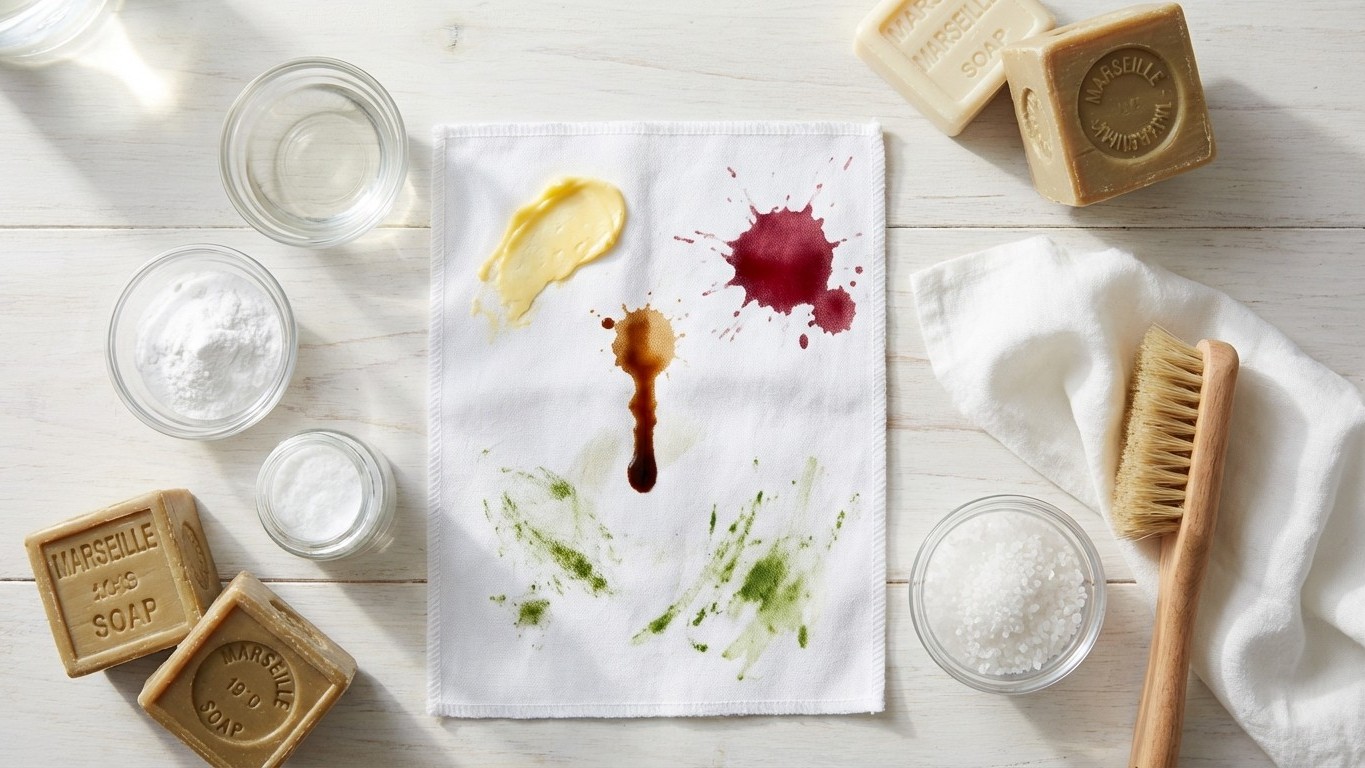
A butter smear on a white blouse, a splash of red wine across the tablecloth, a coffee drip down your favourite shirt before you’ve even left the house, these are the small disasters that make up ordinary life. The good news? Your kitchen cupboard already holds most of what you need to sort them out, without reaching for harsh chemical sprays. Learning to remove common stains naturally from clothes is one of those practical skills that saves money, protects your fabrics, and quietly does right by the planet at the same time.
Why Choose Natural Stain Removal?
Health and Safety at Home
Many commercial stain removers rely on chlorine compounds, optical brighteners, and synthetic solvents that can irritate skin, particularly for anyone with eczema or sensitive skin in the household. Children who press their faces into freshly laundered bedding, or babies whose sleepsuits go straight from a soak to their skin, are especially worth considering. Natural alternatives, bicarbonate of soda, white vinegar, Marseille soap, carry no such worries. They have been used safely in homes for generations, and the science behind them is well understood.
The Environmental Argument
Every bottle of chemical stain remover that goes down the drain carries its contents into the water system. Phosphates, synthetic fragrances, and surfactants are slow to break down and can affect aquatic life. Natural ingredients, by contrast, are biodegradable. They come without plastic packaging when bought in bulk (bicarbonate and percarbonate of soda are often sold loose or in cardboard boxes), and they serve multiple purposes around the home, reducing both waste and spending. You can explore this broader eco-cleaning philosophy further in our guide to natural cleaning hacks for every room.
The Foundations of Natural Stain Removal
Speed Matters More Than Anything
Here is the one rule that overrides all others: act fast. A fresh stain is sitting on top of the fabric fibres. An old stain has bonded with them. Within the first five minutes of a spill, a simple cold rinse or a pinch of salt can prevent a stain from becoming a permanent fixture. After an hour, you are already dealing with something more stubborn. After a day, you are fighting the fabric itself.
Never rub a fresh stain, blotting from the outside inwards stops it spreading. And always use cold water first on protein-based stains (blood, egg, grass, sweat), since heat sets them into the fibres almost irreversibly.
Your Natural Stain-Fighting Toolkit
A handful of pantry staples will handle the vast majority of household stains. White wine vinegar (the distilled, clear sort) is mildly acidic and cuts through many water-based stains. Bicarbonate of soda absorbs grease and deodorises at the same time. Marseille soap, that dense olive-oil based French bar, is gentle enough for silk yet effective on most everyday marks. Lemon juice provides gentle bleaching action on white and light fabrics, never use it on colours without testing first. Salt draws moisture out of a fresh stain before it can set. Terre de Sommières (a natural clay mineral, available in health food shops and some garden centres) is the traditional French secret for grease, extraordinarily absorbent. Percarbonate of soda is the powerhouse of the group: an oxygen-based whitener and disinfectant that tackles wine, coffee, and food stains on whites and coloureds alike, dissolved in warm water.
Removing Greasy Stains: Butter, Oil, Salad Dressing
Step by Step
Grease is probably the most common clothing casualty after a meal. The moment you notice it, resist the urge to dab with a wet cloth, water and grease do not mix, and you will only push the oil deeper. Instead, sprinkle a generous layer of terre de Sommières or bicarbonate of soda directly onto the stain. Let it sit for at least 20 minutes (longer for a heavier stain, up to an hour for a big patch of butter). The powder will draw the oil out of the fibres through absorption. Brush it away gently, then apply a small amount of Marseille soap worked into a lather with a soft nail brush or your fingertips. Rinse in cool water. If the stain persists, repeat before machine washing — heat in the dryer will permanently fix any remaining grease.
A Simple Homemade Pre-Treatment Paste
For stubborn old grease stains (the ones you only notice after the garment has been through the wash), mix one tablespoon of bicarbonate of soda with a few drops of washing-up liquid and enough white vinegar to form a paste. Apply to the stain, leave for 30 minutes, then rinse and wash as normal. The combination of alkali (bicarbonate), mild detergent, and acid (vinegar) creates a gentle effervescence that lifts embedded grease rather well.
Delicate Fabrics: Precautions
Silk and wool need a lighter touch. Skip the bicarbonate scrub and opt instead for terre de Sommières alone (it is the gentlest absorbent), followed by a diluted Marseille soap solution (one teaspoon of soap flakes dissolved in 500ml of cool water). Never rub; dab carefully. Dry cleaning may be the safest option for heavily soiled delicate pieces.
Red Wine Stains: Dealing with the Most Dreaded Spill
Red wine has a near-mythical reputation as a destroyer of tablecloths and party outfits, but it responds well to natural treatment if you move quickly. The moment of the spill, cover the stain completely with coarse salt. It will begin absorbing the wine immediately, you can almost watch it happen. Leave for two to three minutes, then brush away and rinse with cold water.
For a slightly older stain (an hour or two), dissolve one tablespoon of percarbonate of soda in 500ml of warm water (not boiling, around 40°C). Submerge the stained area and leave to soak for 30 to 60 minutes. Percarbonate releases active oxygen that breaks down the tannins responsible for red wine’s stubborn colour. This method works beautifully on cotton and linen. Rinse thoroughly after soaking.
White vinegar is an alternative for coloured fabrics where you might be cautious about percarbonate: apply undiluted to the stain, leave for ten minutes, then rinse and wash. It will not bleach, but it does neutralise the wine’s acidity and helps lift the pigment. For coton specifically, which is the most forgiving fabric, you can combine a salt pre-treatment with a percarbonate soak for a two-stage approach that handles even a dried stain with surprising success.
Coffee Stains: Catching Them Before They Dry
First Responses
Coffee stains are tannin-based, much like red wine, and share the same golden rule: cold water first, fast. Flush the back of the stain under a cold running tap to push the coffee out rather than in. Then blot (never rub) with a clean cloth. For a fresh stain on cotton or polyester, this alone, followed by a normal machine wash, is often sufficient.
When a Little More Is Needed
Sparkling water poured directly onto a fresh coffee stain creates a gentle bubbling action that helps lift the tannins before they bond, it sounds almost too simple, but it genuinely works. For a more established stain, make a paste of bicarbonate of soda and a squeeze of lemon juice, apply for 15 minutes, then rinse. The lemon’s citric acid targets the tannins while the bicarbonate lifts and deodorises. Marseille soap, worked in gently with a soft brush, is another reliable step before machine washing. On white fabrics, a 30-minute soak in diluted percarbonate (one teaspoon per litre of 40°C water) will restore brightness without the harshness of chlorine bleach. For more on keeping whites bright the natural way, our article on how to whiten clothes naturally without bleach covers this in detail.
Grass Stains: The Outdoor Nemesis
Natural Solutions That Work
Grass stains are a combination of chlorophyll, proteins, and other plant compounds, which is why they can be so persistent on cotton and synthetic sportswear alike. White vinegar, applied undiluted and left for 15 minutes before rinsing, is a good first treatment. Lemon juice works similarly, with the added advantage of mild bleaching on white fabrics. For synthetic fabrics (polyester, nylon), a solution of one part white vinegar to two parts water, applied and left for 20 minutes, is effective without risking damage to the fibres.
Rubbing alcohol (surgical spirit, available from any pharmacy) is the strongest natural option for grass stains, dab it on with a cotton wool ball, working from the outside of the stain inwards, then rinse. It is particularly useful on stubborn old stains.
Fabric Considerations
Cotton handles most of these treatments without issue. Wool and silk are more vulnerable: avoid lemon juice on wool (the acidity can damage the fibres over time) and skip rubbing alcohol on silk. For both, a diluted Marseille soap solution, applied gently and rinsed well in cool water, is the safest route. Synthetic fabrics tend to be resilient, but always test any treatment on an inconspicuous seam first.
Frequently Asked Questions
What if the stain doesn’t completely disappear?
Patience and repetition are your friends. Re-treating a faded stain (rather than a completely fresh one) often works, the first treatment breaks down the stain partially, making the second application more effective. The key is never to machine dry or iron a garment while any trace of the stain remains, as heat will permanently set whatever is left.
Are natural methods safe for delicate fabrics?
Generally yes, provided you match the treatment to the fabric. Terre de Sommières and diluted Marseille soap solution are the safest options across almost all fabric types. Percarbonate should be avoided on wool and silk. Lemon juice and vinegar should be patch-tested on colours and avoided on protein fibres like wool over extended periods. When in doubt, hand wash in cool water with a tiny amount of Marseille soap and rinse thoroughly.
Which natural detergents work best after stain treatment?
After pre-treating a stain, a wash with a natural or eco-certified laundry detergent at the appropriate temperature will complete the job. Plant-based liquid detergents, soap nut preparations, and homemade washing powders based on percarbonate and washing soda are all good choices. Our guide to natural laundry hacks covers a whole range of options for different fabrics and water types.
Quick Reference: Methods by Stain and Fabric Type
- Grease (cotton/linen): Terre de Sommières or bicarbonate, then Marseille soap, cool rinse
- Grease (wool/silk): Terre de Sommières only, then diluted Marseille soap solution, cool water
- Red wine (cotton): Salt immediately, then percarbonate soak at 40°C
- Red wine (colours/synthetics): Salt, then white vinegar undiluted, rinse
- Coffee (all fabrics): Cold water flush, then bicarbonate and lemon paste or Marseille soap
- Grass (cotton/synthetics): White vinegar or rubbing alcohol, rinse, then machine wash
- Grass (wool/silk): Diluted Marseille soap solution, gentle dabbing, cool rinse
Building a Natural Laundry Routine
Stain treatment is really just one part of a broader approach to caring for clothes without harsh chemistry. Once you have the basics in your cupboard, bicarbonate, white vinegar, Marseille soap, percarbonate, and a bar of terre de Sommières — you will find yourself reaching for them far more often than the chemical alternatives. They handle not just stains but sweat stains, odours, and general freshening remarkably well.
The satisfaction of sorting a difficult stain with a handful of salt and a bottle of vinegar that costs less than a pound is not nothing. There is something reassuring about the simplicity of it, methods that your grandmother’s generation used before the supermarket shelves filled up with brightly labelled sprays. Whether you are treating a grass-stained knee on school trousers or rescuing a linen tablecloth the morning after a dinner party, the same small toolkit will see you through. And once you start thinking this way about laundry, it tends to spread to the rest of the cleaning cupboard too.