
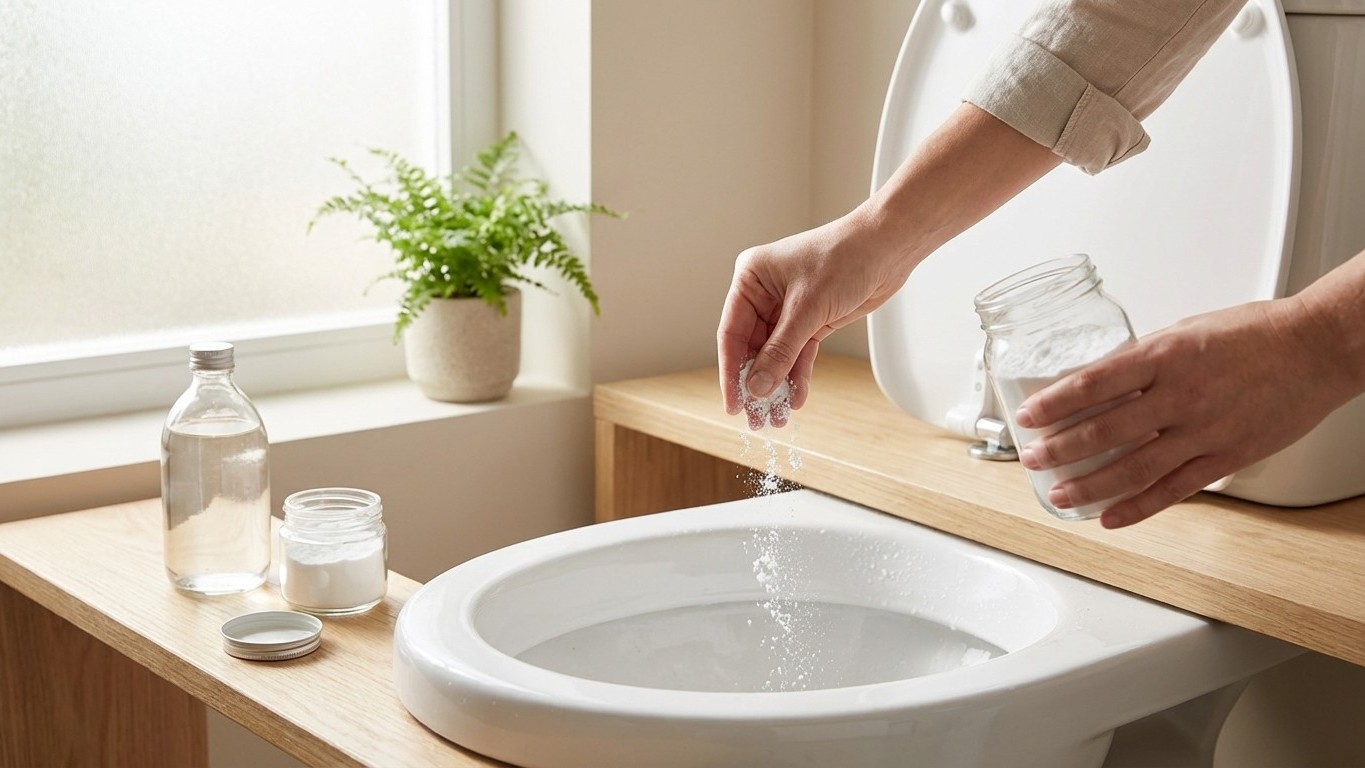
A calmer, cleaner loo, without the chemical fog
Toilet bowls have a talent for looking grubby the moment you turn your back. Limescale rings, dull patches, and that lingering “bathroom smell” can make even a tidy home feel less fresh. The good news is that a natural way to clean toilet bowl can be genuinely effective when you use the right ingredients, the right contact time, and a few sensible habits that prevent the build-up returning.
In February 2026, plenty of households are choosing gentler cleaning routines for health and environmental reasons, and also because budgets are tight. You do not need a cupboard full of products. A small kit of everyday staples, used well, will keep the bowl bright, reduce odours, and tackle limescale before it becomes a weekend-long job.
Why choose natural methods for toilets?
Health, environment, and real-world effectiveness
Strong toilet cleaners often rely on harsh acids, chlorine bleach, or heavy fragrance. They can work quickly, but they may also irritate skin and lungs, especially in small bathrooms with limited ventilation. Natural routines tend to be kinder to you and to the air in your home, while still doing the main jobs a toilet cleaner must do: remove mineral deposits, shift grime, and reduce odours.
From an environmental angle, using simple ingredients like bicarbonate of soda, vinegar, and citric acid usually means fewer persistent chemicals going down the drain. Another practical benefit is control. When you mix your own paste or tablets, you can adjust strength for light maintenance versus a stubborn limescale ring, without paying for specialist formulations.
My grandmotherly opinion, for what it is worth, is that “natural” only works when you treat it like proper cleaning, not wishful thinking. Give the ingredients time to sit, scrub with purpose, and repeat little and often rather than waiting for the bowl to look like a geology exhibit.
The most effective natural ingredients for the toilet bowl
Bicarbonate of soda: properties and best uses
Bicarbonate of soda (baking soda) is mildly alkaline and gently abrasive. In a toilet bowl, it helps in three ways:
- Deodorising: it neutralises some odour-causing compounds rather than masking them with perfume.
- Light scrubbing: the fine powder helps lift grime without scratching glazed porcelain when used sensibly.
- Foaming reaction: when combined with an acid such as vinegar or citric acid, the fizz helps loosen dirt and distribute the mixture around the bowl.
Keep bicarbonate dry and sealed. If it clumps, it still works, but measuring becomes a nuisance.
White vinegar: descaler, deodoriser, and everyday helper
White vinegar is a mild acid. That makes it useful against limescale (calcium carbonate) and urine scale, which are common culprits behind rough, yellowed areas and persistent smells. It also has some antimicrobial action, though it is not a steriliser in the way very strong disinfectants can be.
For most homes, vinegar is a very reasonable option for routine toilet cleaning and limescale prevention. If you are dealing with illness in the household, you may choose a stronger disinfecting approach for high-touch areas, but for the bowl itself vinegar is a solid workhorse when paired with scrubbing and contact time.
Citric acid, lemon juice, and essential oils: helpful reinforcements
- Citric acid: a strong natural descaler, often more effective than vinegar on heavy mineral deposits. Sold as a powder, it stores well and is budget-friendly because you use small amounts.
- Lemon juice: mildly acidic and pleasantly fresh, but typically weaker and more expensive than citric acid powder, so I treat it as a “nice to have”, not your main tool.
- Essential oils: optional for scent. If you use them, keep it minimal and be mindful of pets and sensitive skin. They do not replace scrubbing or descaling.
If your water is very hard, citric acid will likely become your best friend. If it is soft, vinegar and bicarbonate may be plenty for regular upkeep.
Homemade recipes to clean the toilet bowl naturally
Before any recipe, do this first: put on gloves, open a window if you have one, and flush once. If you can, reduce the water level in the bowl so the cleaner touches the ring. The easy way is to pour a bucket (about 2 to 3 litres) of water quickly into the bowl to trigger a siphon flush, which lowers the water line for a short while.
Recipe #1: Descaling paste with bicarbonate + vinegar
This is the classic, and it works well for moderate limescale and dullness.
- Ingredients
- 150 g bicarbonate of soda (about 3/4 cup)
- 60 ml white vinegar (about 1/4 cup)
- Optional: 1 teaspoon fine salt for extra gentle abrasion
- Method
- In an old bowl, add the bicarbonate first.
- Pour in the vinegar slowly. It will fizz, that is normal.
- Stir into a thick paste. Add 1 to 2 teaspoons of water only if it is too dry to spread.
- Apply the paste under the rim and on any visible scale ring. A silicone spatula or an old sponge works nicely.
- Leave for 20 to 30 minutes for light scale, or up to 60 minutes for a stubborn ring.
- Scrub with a toilet brush, paying attention under the rim.
- Flush. If needed, repeat on the ring only.
Budget tip: do not waste paste in the water at the bottom. Focus on the rim, the ring line, and any rough patches.
Recipe #2: DIY effervescent toilet tablets
These are handy for weekly maintenance. They fizz, freshen, and help keep mineral deposits from taking hold. They are not magic stones, but they do encourage regular habits, and that is half the battle.
- Ingredients (makes about 10 to 12 small tablets)
- 200 g bicarbonate of soda (about 1 cup)
- 100 g citric acid powder (about 1/2 cup)
- 1 tablespoon cornflour (optional, helps bind)
- 1 to 2 teaspoons water in a spray bottle
- Optional: 10 to 15 drops essential oil for scent
- Method
- Mix the dry ingredients in a bowl.
- If using essential oil, rub it in with a spoon so it distributes evenly.
- Lightly mist the mixture with water, 2 to 3 sprays at a time, stirring constantly. You want it to hold shape when squeezed, not fizz in the bowl.
- Press firmly into silicone moulds or an ice cube tray lined with a little baking paper.
- Leave to dry for 12 to 24 hours, then store in an airtight jar away from moisture.
- How to use
- Drop 1 tablet into the bowl at night.
- Leave for 15 to 30 minutes, brush, then flush in the morning.
Safety note: keep tablets out of reach of children and pets. They look innocent enough to be tempting.
Recipe #3: Natural daily maintenance spray (for quick freshening)
This is for regular upkeep, not for heavy limescale. It helps keep the bowl smelling fresh and reduces the “film” that can form, especially in warm bathrooms.
- Ingredients
- 300 ml warm water
- 200 ml white vinegar
- 1 tablespoon bicarbonate of soda
- Optional: 5 to 10 drops essential oil
- Method
- Add the warm water and vinegar to a spray bottle first.
- Add the bicarbonate slowly. Expect bubbling, so leave a little space in the bottle.
- Swirl gently until it settles. Do not tighten the lid while it is still fizzing, let the pressure dissipate.
- Spray around the inside of the bowl and under the rim.
- Leave 5 to 10 minutes, brush, then flush.
Small practical note: because vinegar and bicarbonate neutralise each other over time, this spray is best mixed in smaller batches and used within a week or two.
Effective gestures for a truly clean bowl
Application method and an ideal frequency
Most toilet bowls stay pleasant with a rhythm rather than a heroic clean once a month. A simple routine looks like this:
- Daily or every other day: quick brush around the bowl after a short spray (or even just hot water). This takes 30 seconds and prevents a grime line forming.
- Weekly: use Recipe #1 paste or one DIY tablet, scrub thoroughly under the rim, and wipe the outside surfaces with a separate cloth.
- Monthly: tackle early limescale with a citric acid soak (see below), especially in hard-water areas.
For a citric acid soak, dissolve 2 tablespoons (about 30 g) of citric acid powder in 500 ml warm water and pour it around the bowl, focusing under the rim. Leave 30 to 60 minutes, then brush and flush. If the ring is stubborn, repeat rather than scratching at it.
Precautions and mistakes that can damage the bowl
- Avoid scratching tools: metal scourers, abrasive stones, and anything harder than the glaze can leave micro-scratches. Those scratches then hold dirt and scale, making future cleaning harder.
- Do not mix bleach with acids: if anyone in the household uses bleach-based cleaners, rinse and flush thoroughly before using vinegar or citric acid. Mixing can release harmful gases.
- Do not overdo essential oils: a few drops are plenty. Too much can irritate skin, and strong scent does not equal cleanliness.
- Watch your surfaces: vinegar and citric acid can dull natural stone, some metals, and certain finishes if splashed and left. Wipe drips promptly.
- Mind the toilet brush: a brush that lives in dirty water becomes a little biology experiment. Rinse it with clean water after use, shake off excess, and let it dry as much as possible.
Results: what to expect from natural toilet cleaning
Where natural methods shine, and what to do for extreme build-up
With regular use, natural cleaners handle day-to-day grime, reduce odours, and keep limescale at bay. You should expect:
- A smoother, less chalky bowl surface over time, because scale is removed before it hardens.
- Less “toilet smell” between cleans, especially if urine scale is addressed under the rim.
- Fewer harsh fumes in the bathroom, which makes the whole job feel less like punishment.
There are limits. If the bowl has years of thick limescale, especially below the waterline, you may need repeated treatments and a longer soak. For extreme cases, try this stepped approach over a weekend:
- Step 1: Lower the water level with a quick bucket flush (2 to 3 litres).
- Step 2: Apply a citric acid solution (3 tablespoons in 500 ml warm water) under the rim and onto the scale line.
- Step 3: Leave 60 to 90 minutes. Brush well.
- Step 4: Repeat once more the same day if the ring remains.
- Step 5: Maintain weekly with a tablet or paste to stop it returning.
If you still see rough, brownish deposits that do not shift, it may be iron staining or very compacted scale. Natural methods can improve it, but it can take several cycles. Patience is cheaper than replacing a toilet, and less dramatic than attacking it with anything sharp.
FAQ: common questions, answered plainly
How do I clean the toilet bowl with bicarbonate and vinegar?
Use a paste rather than tipping both into the water and hoping for the best. Mix 150 g bicarbonate with 60 ml vinegar into a spreadable paste, apply under the rim and on the ring, leave 20 to 60 minutes, scrub, then flush. Lowering the water level first helps the mixture contact the limescale line properly.
Is vinegar effective for disinfecting toilets?
Vinegar has antimicrobial properties and is useful for routine hygiene, odour control, and descaling, which removes the deposits where germs can cling. It does not sterilise. For everyday household cleaning, vinegar plus scrubbing and regular frequency usually provides a clean, pleasant bowl. If you need a higher level of disinfection because of illness, focus on high-touch points such as the flush handle, seat, and lid with an appropriate disinfecting approach, and keep good ventilation.
What is the best natural recipe for a heavily limescaled bowl?
Citric acid is typically the strongest natural descaler that is still easy to use at home. Dissolve 2 to 3 tablespoons (30 to 45 g) in 500 ml warm water, pour around the bowl and under the rim, leave 60 to 90 minutes, then scrub. Repeat rather than scraping. After the heavy work, switch to weekly tablets or a vinegar and bicarbonate paste to maintain the result.
How do I remove limescale under the rim naturally?
Under-rim scale often causes the worst odours. Soak paper towel strips in vinegar or a citric acid solution, tuck them under the rim so they cling, and leave 30 to 60 minutes. Remove, brush thoroughly, then flush. It is a simple trick, but it reaches where a brush sometimes cannot.
How can I keep toilets smelling fresh without strong fragrance?
Odour usually comes from scale and residue under the rim rather than the water in the bowl. Brush under the rim regularly, use a weekly tablet, and ensure the brush itself is clean and drying. A small amount of essential oil can add a fresh note, but cleanliness does the heavy lifting.
Links to other natural bathroom cleaning hacks
If you are building a truly low-chemical bathroom routine, it helps to tackle the whole room with the same calm, consistent approach. These guides pair beautifully with a natural way to clean toilet bowl because limescale and mould tend to travel as a group in busy bathrooms:
- natural bathroom cleaning hacks, for a broader plan that covers limescale, mould, and everyday bathroom grime.
- remove limescale naturally from taps and shower, especially useful if your water is hard and you are fighting chalky marks everywhere.
- how to clean grout naturally, because clean tiles and a grubby grout line make the whole room look tired.
- natural cleaning hacks, if you want a room-by-room set of simple recipes that will not drain your purse.
A gentle nudge to make it a habit
Pick one recipe that suits your home, paste for weekly scrubs or tablets for maintenance, and keep the ingredients together in a small box so you are not hunting for them with one glove on and the other hand holding a toilet brush. Give it a fortnight of steady routine and you will likely find the bowl stays cleaner with less effort. After that, it becomes almost automatic, and it does make you wonder, which other “nasty jobs” in the house could be tamed with the same steady little rhythm?