
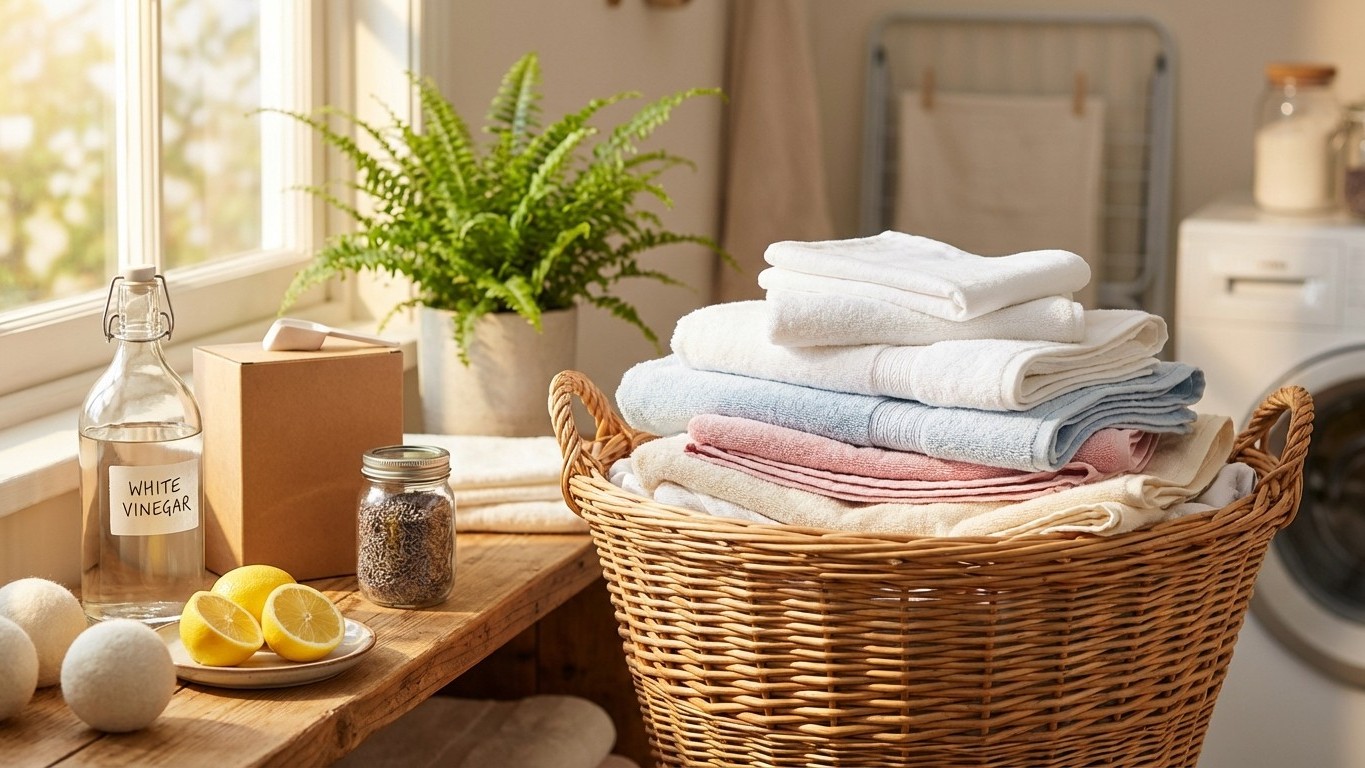
Softening your laundry without reaching for a plastic bottle of synthetic conditioner is entirely possible, and the results can be just as pleasing as anything you’d find on a supermarket shelf. Whether you’re dealing with sensitive skin in the family, trying to cut your monthly household spend, or simply tired of that overpowering artificial fragrance clinging to your towels, switching to a natural fabric softener alternative makes a great deal of sense. The good news is that several options genuinely work. The less good news? A few popular ideas doing the rounds on Pinterest are, frankly, a waste of your time and your wash.
Why Move Away from Conventional Fabric Softener?
Health and Environmental Concerns
Conventional fabric softeners typically work by coating fibres with a thin layer of chemical compounds, some of which are derived from quaternary ammonium (often called “quats”). These substances have raised eyebrows among researchers studying skin sensitisation and respiratory irritation, particularly for people with eczema, asthma, or allergies. For anyone washing a baby’s clothing or dealing with a family member prone to skin reactions, this matters enormously.
The environmental picture is also worth pausing over. Many conventional softeners are poorly biodegradable, meaning they pass through wastewater treatment relatively unchanged and accumulate in rivers and aquatic environments. The plastic packaging adds another layer of waste. A 2021 survey by a UK environmental charity found that laundry products were among the top sources of synthetic chemical contamination in household grey water, a figure that has prompted many households to quietly reassess their linen cupboard habits.
The Everyday Frustrations People Don’t Talk About
Beyond the bigger picture, conventional softener has some surprisingly annoying practical drawbacks. It reduces the absorbency of towels and sports fabrics over time, leaving them feeling plush but actually rather useless at their job. It can also clog your machine’s drum and dispenser drawer with a waxy residue, and in hard-water areas it tends to react with minerals and leave a slightly greasy coating on darker fabrics. If you’ve ever wondered why your black leggings look a bit dull after several washes, softener residue is often the culprit.
Natural Alternatives That Actually Deliver Results
White Vinegar: Myth or Genuine Solution?
White vinegar is genuinely effective as a fabric softener, and the science behind it is straightforward. Its mild acidity (around 5% acetic acid in standard household distilled malt vinegar) neutralises the alkaline residue left by most laundry detergents, which is precisely what causes fibres to feel stiff after drying. Softer fibres, fewer static issues. It also helps dissolve mineral deposits in both the fabric and the machine drum, which is a real bonus in hard-water regions like much of southern England.
The question everyone asks: will your laundry smell like a chip shop? No, and here’s why. Acetic acid evaporates almost entirely during the spin and dry cycle. Unless you’re bundling wet washing into a drawer immediately, there’s no lingering vinegar smell on dried clothes. The scent disappears. This is one of those cases where personal experience aligns neatly with chemistry.
One important caution: do not pour white vinegar directly into the drum alongside your clothes, and never mix it with bleach (the combination produces chlorine gas). Use it in the fabric softener dispenser compartment only. Also, if your washing machine has rubber drum seals, frequent high-concentration vinegar use can, over years, cause some degradation, keep it diluted and occasional rather than making it every single wash.
Bicarbonate of Soda: How to Use It and When Not To
Bicarbonate of soda works rather differently from vinegar. Where vinegar cuts through alkaline residue, bicarb (being mildly alkaline itself) helps to boost detergent action, neutralise odours, and soften water, which in turn allows fibres to relax more fully during the wash. It’s particularly useful in hard-water areas where mineral content actively works against detergent performance.
Add roughly two tablespoons (about 30g) directly to the drum at the start of a wash, not to the dispenser. For a full load in a hard-water region, you can go up to 50g without any adverse effects. The limits? Bicarb is not brilliant at reducing static cling, and it adds essentially no fragrance. Used on every single wash over a long period, there’s a theoretical concern about mild abrasion on very delicate natural fibres like silk or fine wool, though in normal domestic quantities this is unlikely to cause noticeable damage. For those delicate items, err on the side of caution and use it occasionally rather than every cycle.
Washing Balls and Mechanical Alternatives
Laundry washing balls, those spiky plastic or rubber spheres you drop into the drum, agitate fabric more effectively during the wash cycle, which does create a degree of softness through physical action rather than chemistry. The evidence for their softening effect is modest but real, and they have the considerable advantage of being reusable for hundreds of washes. They’re worth considering if you’re looking to reduce both chemical use and single-use packaging entirely.
Dryer balls, usually made from dense wool or rubber, serve a similar mechanical purpose in the tumble dryer. They separate laundry as it tumbles, allowing hot air to circulate more freely, which reduces drying time (a genuine energy saving) and leaves fabrics feeling noticeably less stiff. You can add a couple of drops of essential oil to wool dryer balls before use to introduce a light natural scent, though do allow the oil to absorb for a few minutes before running the dryer.
Precise Recipes and Dosages for Home Use
The White Vinegar Softener Method
Pour 100ml of plain white distilled vinegar into the fabric softener compartment of your machine’s dispenser drawer before each wash. That’s it. There’s no need to dilute it further for a standard cycle. For very large loads or particularly hard water, you can increase this to 150ml. Use it on cottons, linens, and synthetic blends with confidence. For wool or silk, use half the quantity and opt for a cool cycle.
Bicarbonate Wash Boost for Delicate Fabrics
For a delicate-friendly wash, combine one tablespoon of bicarbonate of soda (roughly 15g) with your usual gentle detergent and add it directly to the drum before loading your items. This works beautifully on muslin cloths, cotton nightwear, and baby garments. Avoid using bicarb on items labelled “dry clean only” or on silk, where even mild alkalinity can affect the lustre of the fibre over time.
Dryer Balls with Essential Oil Scent
Place two or three wool dryer balls in your tumble dryer alongside your damp laundry. If you’d like a light fragrance, add three to four drops of lavender or eucalyptus essential oil to each ball and let them sit for five minutes before starting the dryer. This is enough to impart a gentle scent without the overpowering sweetness of synthetic softener. A word of caution: some essential oils can cause skin reactions in people with sensitivities, so if washing for young children or allergy sufferers, skip the oil entirely or use a single drop of lavender, which tends to be well-tolerated.
Should You Add Essential Oils, and What Does the Research Actually Say?
Essential oils have genuine antibacterial and antifungal properties (tea tree oil in particular has been studied in this context), but their effectiveness during a standard washing machine cycle is limited. Temperatures, dilution from water, and the short contact time mean that most of the antimicrobial benefit is lost in the wash. Where they do earn their place is in the dryer, applied to dryer balls as described above, where the fragrance can cling lightly to dry fabric.
Pregnant women, young babies, and anyone with respiratory sensitivities should approach essential oils with care. Eucalyptus and peppermint, in particular, are not recommended for use around small children. If in doubt, leaving the oils out entirely is the safest and perfectly effective choice, your laundry will be soft without them.
Common Questions About Natural Fabric Softener Alternatives
What’s the best natural option for people with allergies? Plain white vinegar in the softener dispenser is generally the safest choice. It leaves no residue on fabric and introduces no additional fragrance compounds. Unscented wool dryer balls are an excellent complement, particularly for anyone sensitive to synthetic chemicals.
Can you use bicarbonate of soda every single wash without damaging the machine? In the quantities recommended here, 30 to 50g per load, bicarb poses no credible risk to a modern washing machine. It’s mildly alkaline and dissolves cleanly in water. The main thing to avoid is combining it with vinegar in the same wash cycle, as the two neutralise each other and you lose the benefit of both.
How do you get soft laundry without any vinegar smell? As explained above, the smell genuinely does not remain on dried clothing. If you’re still wary, try it once on a small load of tea towels and smell them after drying. You’ll be converted.
Building a Genuinely Natural Laundry Routine
Switching your softener is a satisfying first step, but it sits within a broader shift in how you approach laundry altogether. Pairing these softening methods with a good eco-friendly detergent, washing at lower temperatures, and tackling stains with targeted natural treatments will produce results that feel coherent rather than piecemeal. Our guide to natural laundry hacks covers everything from stubborn food stains to protecting delicate fibres, and is a natural next read after this one.
If yellowing or sweat staining is your particular concern, the technique for how to remove sweat stains naturally explains exactly which treatments work on protein-based staining without damaging the fabric. For keeping whites bright without a drop of chlorine bleach, the detailed methods on how to whiten clothes naturally without bleach are genuinely useful, particularly for cotton shirts and pillowcases that take the brunt of regular wear.
And if the natural cleaning habit is growing beyond the laundry room (as it tends to), the comprehensive collection of natural cleaning hacks covers every room in the house with the same philosophy: simple ingredients, honest results, and nothing you’d need to worry about having under the sink near curious small hands.
The simplest way to think about all of this is that your laundry doesn’t need a complex cocktail of synthetic compounds to come out soft and fresh. A bottle of white vinegar, a box of bicarbonate, and a set of wool dryer balls cost very little and last a remarkably long time. The real question, once you’ve tried it, is why it took so long to make the switch.