
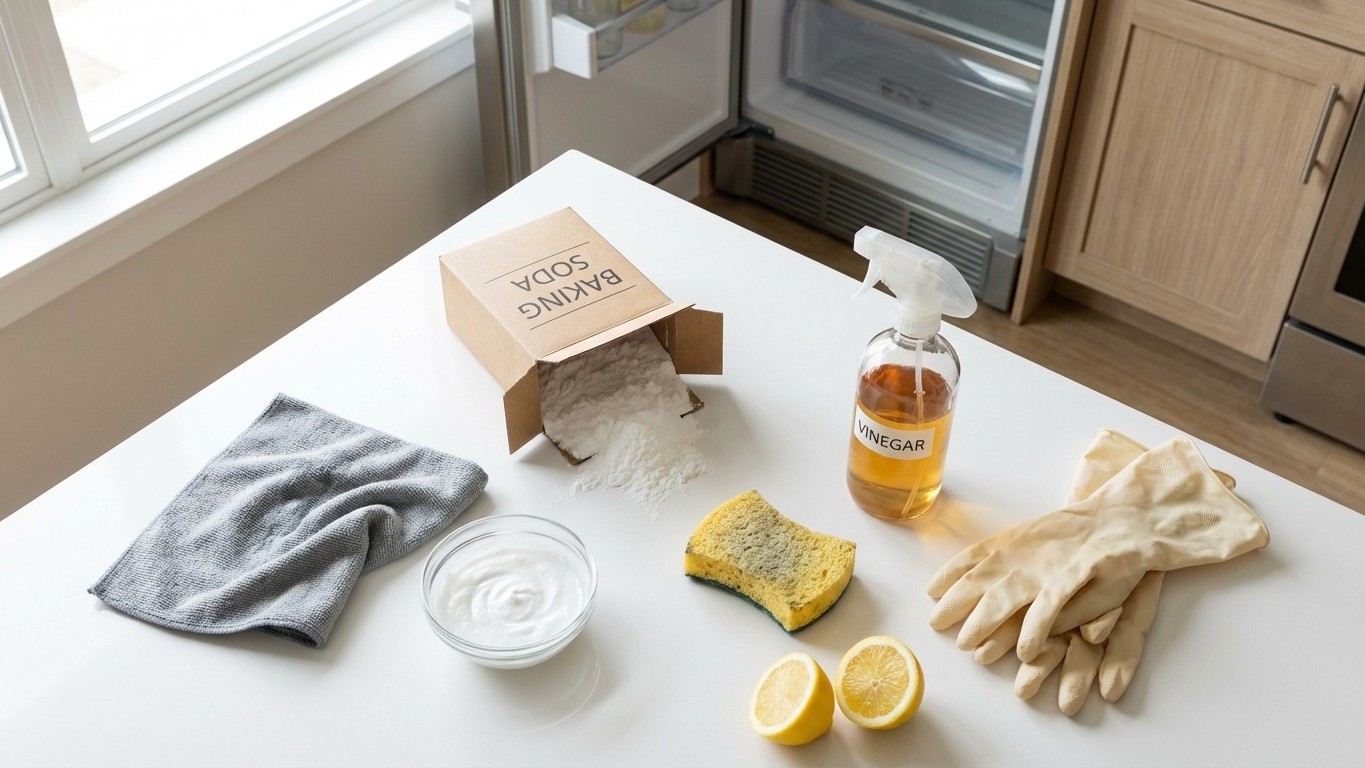
A box of baking soda costs very little and sits quietly at the back of most kitchen cupboards. Yet this unassuming white powder has been scrubbing, deodorising, and lifting stains from British homes for well over a century. The renewed interest in natural cleaning hacks with baking soda is no accident: as households grow more conscious of what goes down the drain and onto their children’s hands, simple, proven ingredients are coming back into their own.
These fifteen hacks are the ones that genuinely deliver. No exaggerated claims, no mystical transformations. Just practical, room-by-room methods that work because of the chemistry behind the ingredient.
Pourquoi le bicarbonate est l’ingrédient phare du nettoyage naturel ?
Les principes d’action du bicarbonate de soude
Baking soda, known formally as sodium bicarbonate, sits at a pH of around 8.3, making it mildly alkaline. That alkalinity is what allows it to break down greasy, acidic residues, the kind that build up in ovens, on hob rings, and inside the refrigerator. At the same time, its fine crystalline structure gives it gentle abrasive properties, enough to scrub without scratching most surfaces.
What many people overlook is its neutralising action on odours. Rather than masking smells with fragrance, baking soda reacts with both acidic and basic odour molecules, converting them into neutral compounds that simply stop smelling. That is why it works on everything from trainers to bin liners, where perfumed sprays only offer a temporary cover.
Sécurité et précautions d’emploi à la maison
Baking soda is food-grade and genuinely safe around children and pets when used as directed. That said, a few surfaces deserve caution. Raw aluminium can oxidise and discolour with prolonged baking soda contact. Untreated wood, natural stone like marble or limestone, and delicate silk should all be approached carefully, as the mild alkalinity can dull finishes or damage fibres over time. When in doubt, test a small hidden area first and rinse thoroughly afterwards.
15 natural cleaning hacks with baking soda : astuces concrètes et testées
1. Nettoyer les surfaces de cuisine sans produits toxiques
Sprinkle baking soda generously over your worktop, then dampen a cloth and scrub in small circles. Leave for two minutes on stubborn spots before rinsing. This removes grease films and light staining without leaving chemical residues near your food preparation area.
2. Désodoriser le frigo, les poubelles et les placards
Place an open dish or shallow bowl containing 3 to 4 tablespoons of baking soda in the fridge. Replace every four to six weeks. For bins, sprinkle roughly a tablespoon directly into the bottom before inserting a new liner. Inside cupboards, a small open jar works well over a couple of months.
3. Raviver l’éclat des éviers inox et cuvettes de WC
Wet the sink, sprinkle a generous layer of baking soda, and scrub with a damp cloth or soft brush using circular movements. Rinse with warm water. For the toilet bowl, add half a cup, leave for fifteen minutes, scrub with the toilet brush, and flush. The mild abrasion lifts limescale deposits without scratching porcelain.
4. Blanchir le linge et enlever les odeurs tenaces
Add half a cup of baking soda directly to the drum alongside your usual detergent. It softens water slightly, which helps detergent perform better, and neutralises the built-up sourness that synthetic fabrics sometimes retain even after washing. For whites, it helps maintain brightness over repeated washes rather than offering a dramatic one-time bleach.
5. Détacher les tapis et moquettes en profondeur
For deodorising carpets, sprinkle baking soda across the surface, work it in gently with a soft brush, and leave for at least thirty minutes (an hour is better). Vacuum thoroughly. For a fresh stain, blot first with a clean cloth, then apply a paste of baking soda and a little water, leave to dry completely, and vacuum up the residue.
6. Nettoyer les joints de carrelage et enlever la moisissure
Mix baking soda with just enough water to form a thick paste. Apply to grout lines with an old toothbrush and scrub firmly. Leave for ten minutes before rinsing. For early-stage mildew, this method is effective; for deep-set black mould, you may need to repeat the process or combine with a diluted vinegar rinse applied separately.
7. Redonner brillance aux casseroles brûlées et à la vaisselle
Fill the burnt pan with water, add two tablespoons of baking soda, and bring to a gentle simmer for ten to fifteen minutes. Remove from heat, leave to cool, then scrub. Most burnt-on residue will lift with minimal effort. For baking trays, make a paste with baking soda and a little washing-up liquid, apply, and leave overnight before scrubbing.
8. Lutter contre les odeurs de chaussures et de textiles
Sprinkle a tablespoon of baking soda inside each shoe and leave overnight. Tip out before wearing. For musty-smelling gym bags or reusable shopping bags, place a few tablespoons in a small cotton pouch inside the bag between uses. Refresh the baking soda monthly.
9. Désinfecter les jouets et accessoires pour enfants
Dissolve four tablespoons of baking soda in one litre of warm water. Wipe down hard plastic toys with a cloth dipped in this solution, then rinse with clean water. This removes grime and sticky residues without leaving behind the chemical film that some commercial sprays produce, which matters a great deal when toys end up in small mouths.
10. Nettoyer les matelas, désodoriser et lutter contre les acariens
Strip the bed, sprinkle baking soda evenly over the mattress, and leave for a minimum of one hour (longer on a dry day with the window open). Vacuum with an upholstery attachment, working slowly and methodically. This reduces surface moisture and organic residues that dust mites feed on. Repeat every one to two months for best results.
11. Éliminer les taches de transpiration sur les vêtements
Mix one tablespoon of baking soda with enough water to form a paste, and apply directly to underarm stains. Leave for thirty minutes, then brush off the dried paste and wash the garment as usual. For older, set-in staining, you may need two or three treatments. This is particularly useful for white cotton shirts where yellow deodorant residue has built up over time.
12. Décoller les résidus alimentaires dans le four ou le micro-ondes
For the oven, spread a paste of baking soda and water (roughly three tablespoons of soda to one tablespoon of water) over the interior, avoiding heating elements. Leave overnight. The next morning, wipe away with a damp cloth. Residue will come away with far less elbow grease than with a cold, untreated oven. For the microwave, place a bowl of water with a tablespoon of baking soda inside, heat for three minutes, then wipe down while the steam has loosened everything.
13. Nettoyer la salle de bain : douche, baignoire, vasque
Wet the surface, sprinkle baking soda, and scrub with a damp cloth or sponge. It removes soap scum and hard water marks effectively on ceramic and enamel. Rinse well. Avoid using it on acrylic shower trays without testing first, as repeated abrasive cleaning can gradually dull the surface finish.
14. Astuces pour les canalisations : éviter les bouchons et les odeurs
Once a fortnight, pour half a cup of baking soda down the plughole, followed immediately by half a cup of white vinegar. The fizzing reaction shifts grease and soap buildup from the pipe walls. Leave for fifteen minutes, then flush through with a full kettle of hot water. This is maintenance, not a cure for a serious blockage, but used regularly it keeps pipes smelling clean and flowing freely.
15. Utiliser le bicarbonate pour laver les fruits et légumes
Fill a bowl with cold water and add one teaspoon of baking soda. Soak fruits and vegetables for two to three minutes, swishing them around, then rinse under running water. Research published in recent years has indicated that this method is more effective at reducing certain pesticide residues on skin than water alone, particularly on apples and other produce with waxy coatings. Pat dry before storing.
Faut-il associer le bicarbonate avec d’autres ingrédients naturels ?
Quand combiner avec vinaigre, citron ou huiles essentielles ?
Baking soda and vinegar used together make a satisfying fizz and work well for drain maintenance, as described above. For general cleaning, however, they largely neutralise each other when mixed in a spray bottle, leaving you with slightly salty water and reduced effectiveness from both. The smarter approach is to use them sequentially: baking soda to scrub and lift residue, then a rinse with a diluted vinegar solution to tackle limescale and add shine.
Lemon juice behaves similarly to vinegar as it is acidic, and the same logic applies. A squeeze of lemon over a baking soda paste on a chopping board, left for a few minutes, works well for deodorising and lightening surface staining. For more inspiration on combining these staple ingredients into effective formulas, the natural cleaning hacks guide covers the foundational principles clearly.
Essential oils such as tea tree or lavender can be added to baking soda mixtures for fragrance and mild antimicrobial properties. A few drops mixed into a baking soda carpet treatment makes the whole process rather pleasant. You’ll find a ready-to-use formula in this DIY all purpose natural cleaner recipe.
Situations à éviter : les mélanges dangereux ou inefficaces
Combining baking soda with bleach is not recommended. The reaction can produce chlorine gas in an enclosed space, which is genuinely hazardous. Similarly, mixing baking soda with hydrogen peroxide creates a short-lived cleaning boost but can also be irritating to skin in higher concentrations. Stick to the combinations that have a track record: soda with vinegar (sequentially), soda with lemon, soda with a few drops of dish soap for stubborn grease.
Questions fréquentes sur le nettoyage naturel avec le bicarbonate
- What stains can baking soda remove most effectively? It performs best on grease-based stains, coffee and tea marks on ceramics, perspiration residue on fabric, and surface mildew on grout. It is less effective on ink, rust, or oil-based paint.
- Can I mix baking soda with vinegar or lemon safely? Both are safe in terms of toxicity. The question is really one of efficacy: mixed together, they cancel each other out. Use them one after the other for the best of both worlds. More detail on vinegar-based cleaning can be found in this guide to homemade natural cleaning spray vinegar and water.
- How do I use baking soda to deodorise carpets and fabrics? Sprinkle generously, leave for thirty minutes to an hour, then vacuum thoroughly. For fabrics that can be washed, add half a cup to the drum with detergent.
- Is baking soda safe for all surfaces and materials? Not quite. Avoid raw aluminium, natural stone (marble, limestone, travertine), and delicate silk. Always rinse thoroughly after use to prevent any residue build-up.
- How often should I clean with baking soda for best results? For maintenance tasks like drains and fridge deodorising, every two to four weeks is a sensible routine. For surface cleaning in kitchens and bathrooms, use it as needed rather than on a fixed schedule.
Le mot de la fin : pourquoi adopter les cleaning hacks naturels au quotidien
There is something reassuring about a cleaning routine built on ingredients you can pronounce. In March 2026, with the price of commercial cleaning products still considerably higher than a few years ago, the appeal of baking soda is also very much a practical one. A standard bag costs a fraction of a specialist bathroom spray, covers a dozen different tasks, and doesn’t come with a list of warnings about ventilation and skin contact.
Building these habits gradually works better than overhauling everything at once. Pick two or three hacks from this list that address your most common household frustrations, try them consistently for a month, and see how they fit into your routine. Once the results speak for themselves, adding more feels natural rather than effortful.
The broader world of eco-friendly cleaning offers so much more beyond baking soda, from castile soap to washing soda and beyond. If you’d like to explore the full range of methods and ingredients, the comprehensive natural cleaning hacks collection is a wonderful starting point for building a genuinely green cleaning cupboard. You might find yourself wondering why it took this long to simplify things.
Ressources complémentaires et pages à explorer
Recettes associées et lectures complémentaires
- Pour aller plus loin avec les nettoyants maison multi-surfaces : DIY all purpose natural cleaner recipe
- Tout savoir sur le spray vinaigre et eau, ses dosages et les surfaces compatibles : homemade natural cleaning spray vinegar and water
- Les bases des ingrédients naturels pour un ménage écologique efficace : natural cleaning hacks
- Quarante astuces classées par pièce et par type de saleté : natural cleaning hacks