
Those plug-in air fresheners and aerosol sprays promise a home that smells of ocean breezes or fresh linen, but what they actually deliver is a cocktail of synthetic fragrance chemicals, propellants, and compounds that linger in your indoor air long after the scent fades. Switching to a natural air freshener cleaning hack for home use isn’t just a nice idea, it’s one of the most straightforward improvements you can make for your family’s health, your budget, and the planet, and the results genuinely smell better.
Why commercial air fresheners deserve a second look
The hidden cost of synthetic fragrance
Conventional air fresheners rarely eliminate odours. Most work by coating your nasal receptors with a numbing chemical or by burying bad smells under layers of synthetic fragrance. The packaging is cheerful, the scent familiar, but the ingredients list reads like a chemistry exam. Many commercial sprays contain volatile organic compounds (VOCs) that contribute to indoor air pollution, which UK health authorities have flagged as a growing concern given how much time we spend indoors, particularly during winter months.
Families with young children, asthmatic members, or pets face an even greater risk of respiratory irritation. And then there’s the cost: a decent aerosol air freshener disappears within a few weeks and needs constant replacing. Over a year, the household spending adds up to a surprising amount for what is, essentially, a masking agent.
What natural solutions actually offer
Natural alternatives work differently. Bicarbonate of soda, for example, doesn’t mask acidic odour molecules, it neutralises them chemically. Activated charcoal physically absorbs odour compounds from the air. Certain essential oils carry genuine antibacterial properties that address the microbial source of many household smells. You’re not covering the problem; you’re resolving it. The ingredients cost a fraction of branded products, they’re widely available in UK supermarkets and health shops, and most packaging is minimal or recyclable. A jar of bicarbonate of soda and a small bottle of lavender essential oil can do the work of half a dozen commercial products.
Understanding where household odours actually come from
Before reaching for any spray, it helps to understand what you’re dealing with. Kitchen smells are often a combination of food residue, cooking fats, and the bacteria that happily colonise damp sponges and bin liners. The bathroom presents a different challenge: humidity encourages mould spores and bacterial growth on grout, behind the toilet, and in the folds of shower curtains. Living rooms tend to trap odours in soft furnishings, curtains, sofas, and rugs absorb everything from pet dander to takeaway smells. Wardrobes and shoe cupboards develop that particular musty character from trapped moisture and the organic compounds released by leather and rubber.
Drainage smells are a separate category altogether, creeping up through sink waste pipes especially in warm weather. If your home has a persistent background smell that no air freshener seems to touch, the culprit is almost certainly a surface that needs cleaning rather than freshening, and that’s where natural disinfecting cleaning hacks become the more powerful tool.
Seven natural air freshener hacks for every room
Lemon and bicarbonate spray for everyday use
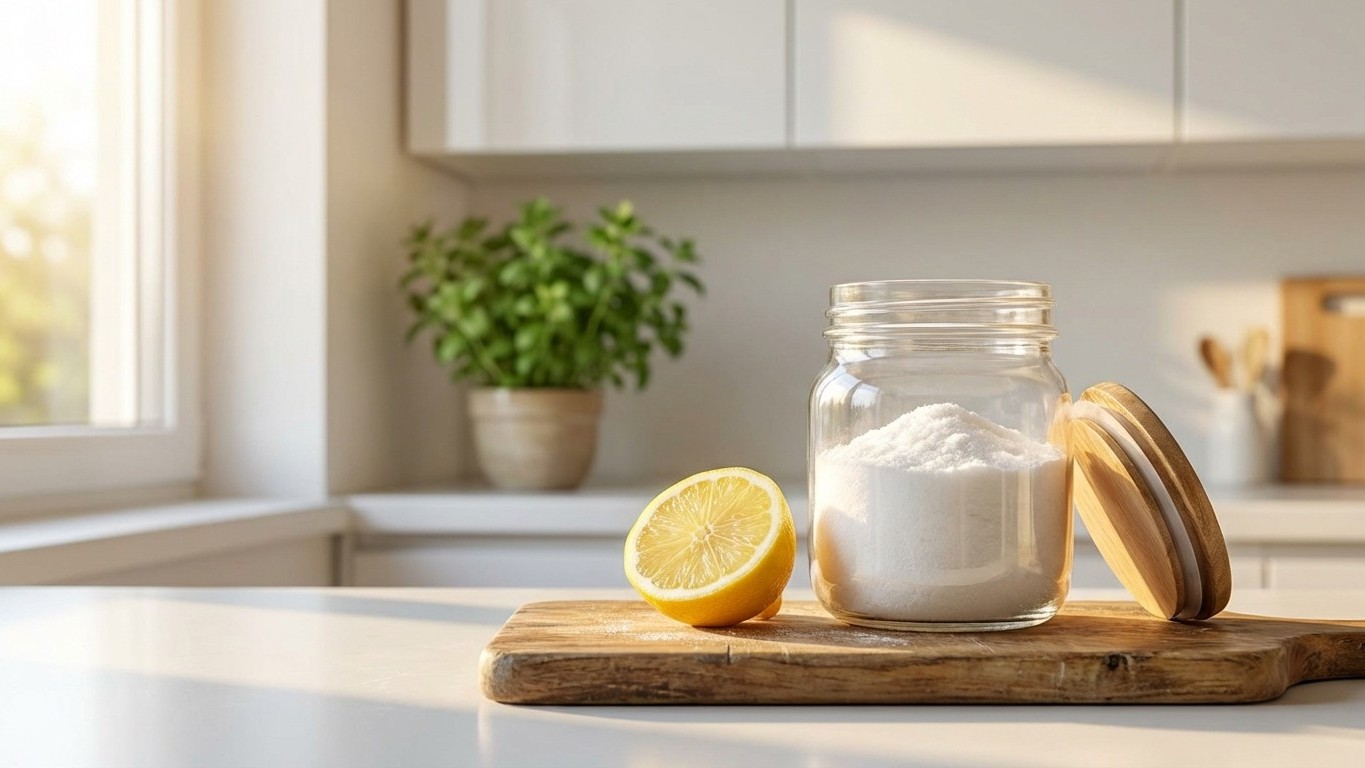
Fill a 500ml spray bottle with 400ml of cooled boiled water, two tablespoons of bicarbonate of soda, and the juice of half a lemon (strained so no pulp blocks the nozzle). Shake gently before each use. Spray into the air, onto fabric, or directly onto hard surfaces like kitchen worktops and bathroom tiles. The bicarb neutralises alkaline and acidic odour compounds while the lemon provides a brief, clean top note. This mixture keeps for about a week in the fridge before the lemon starts to turn.
Anti-odour sachets for wardrobes and shoes
Cut a square of breathable fabric (old muslin squares or loosely woven cotton work well), fill with a handful of bicarbonate of soda, a few dried lavender heads or cedar chips, and a couple of drops of tea tree essential oil. Tie with a ribbon or rubber band. Tuck these into shoes overnight and hang them in wardrobes. The bicarb absorbs moisture, the cedar repels moths, and the tea tree addresses any fungal element. Refresh the bicarb every month by spreading it on a baking tray in a low oven for twenty minutes, then reassemble the sachet.
Fridge odour absorbers
Place a small open jar of bicarbonate of soda at the back of the fridge, changing it every six to eight weeks. For more stubborn odours, particularly after a forgotten item has turned, activated charcoal granules (sold in small bags for aquarium or kitchen use) are more powerful. A tablespoon in a small open container works quietly for three months. Both methods absorb rather than mask, which means your fridge smells genuinely neutral rather than artificially fresh.
Homemade gel air freshener
This one is a particular favourite of mine for hallways and utility rooms. Dissolve two teaspoons of agar-agar powder (available in health food shops as a plant-based gelling agent) in 250ml of hot water. Stir in a teaspoon of salt (which prevents mould in the gel), 15 to 20 drops of your chosen essential oil, and a splash of witch hazel. Pour into small glass jars and allow to set. The gel releases fragrance slowly as it evaporates, lasting two to three weeks. When it runs low, simply add a little more hot water and a few drops of oil to revive it.
Fabric spray for textiles, curtains, and sofas
Combine 200ml of water, three tablespoons of white distilled vinegar, and 15 drops of essential oil (lavender, eucalyptus, or sweet orange all work well) in a spray bottle. The vinegar smell dissipates as it dries, taking trapped odours with it. Test a small hidden area of fabric first, as very delicate fabrics may mark. Spray lightly from about 30cm away and allow to air dry. For pet households, this spray is transformative on soft furnishings and is worth applying weekly between deeper cleans.
Long-lasting pot pourri
A bowl of dried rose petals, orange slices, cinnamon sticks, star anise, and a few drops of essential oil on cotton wool balls makes a centrepiece that does genuine aromatic work. To fix the scent and make it last, add a tablespoon of orris root powder (from herbalist suppliers), which acts as a natural fixative. Every week or so, stir the pot pourri and refresh with a couple more drops of oil. A well-made bowl can hold its fragrance for six months or more, which makes it extraordinarily good value.
Quick bathroom refresh
For the bathroom, speed matters. Keep a small spray bottle of water mixed with five drops of eucalyptus oil and five drops of peppermint oil by the loo. A quick spritz before and after use neutralises odours almost instantly. Alternatively, a few drops of essential oil placed directly onto the inside of the cardboard toilet roll tube releases fragrance with each spin. It takes about five seconds and lasts days.
Using essential oils safely
Choosing the right oils
Tea tree, eucalyptus, lavender, lemon, and peppermint are the workhorses of natural home fragrance. Tea tree and eucalyptus have well-documented antibacterial properties, making them genuinely useful rather than merely decorative. Lavender has a mild calming quality and is widely tolerated. Sweet orange and lemon provide uplifting, clean top notes perfect for kitchens. Cinnamon and clove oils are powerful but can irritate skin and mucous membranes at higher concentrations, so use sparingly.
Precautions for children, animals, and those with allergies
This section matters, and I won’t gloss over it. Many essential oils are toxic to cats, whose livers cannot process certain compounds found in citrus, tea tree, and eucalyptus oils. With cats in the house, restrict diffusion, ensure good ventilation, and avoid applying sprays directly to surfaces your cat walks across and then grooms. Dogs are more tolerant but can be sensitive to very strong concentrations.
For babies and children under two, avoid using essential oils in diffusers in their rooms. Children between two and ten should only be exposed to low concentrations and well-diluted sprays. Anyone with a known fragrance allergy should patch-test any DIY spray on their inner wrist before using it throughout the home, and some individuals sensitive to birch pollen may react to tea tree oil.
Building a lasting anti-odour routine
Prevention is the real hack
The most effective natural air freshener is a home that generates fewer odours in the first place. Empty the kitchen bin every day or two rather than waiting until it’s full. Leave a window open for ten minutes after cooking. Dry laundry outdoors when possible rather than allowing damp clothes to drape across radiators (a genuine mould risk in British winters). Wipe down the inside of the microwave weekly. These habits cost nothing and reduce the workload of any freshening product, natural or otherwise.
For surfaces that harbour odours at a bacterial level, bin lids, sink surrounds, chopping boards, freshening alone won’t solve the problem. Explore natural ways to disinfect surfaces at home alongside your freshening routine for a more complete result. Similarly, the kitchen bin itself deserves a dedicated clean at least fortnightly; there’s a thorough guide on how to clean bin naturally and remove smell that covers everything from liner choices to deep-scrub methods.
Tackling drains, carpets, and upholstery
Carpets benefit from a bicarb treatment every couple of months: sprinkle generously, leave for 30 minutes (or overnight for deep-set smells), then vacuum thoroughly. Drains respond well to a monthly flush of boiling water followed by a handful of bicarbonate of soda and a splash of white vinegar, then a second kettle of boiling water. It bubbles dramatically and clears the fatty residue that bacteria love to colonise. For a broader range of ideas across every room in the house, the collection of natural cleaning hacks covers methods from the kitchen to the garden shed.
Questions worth answering before you start
How long do homemade air fresheners last?
Water-based sprays keep for one to two weeks at room temperature, longer in the fridge. Gel fresheners last two to three weeks. Dry sachets last one to three months depending on humidity. Pot pourri with a fixative can last six months. None require preservatives if used within these windows, which is rather the point.
Natural fresheners versus electric diffusers
Electric ultrasonic diffusers are popular and work well for consistent fragrance, but they do require electricity and a regular supply of essential oils. The spray and gel recipes above cost pennies per use once you have the base ingredients in your cupboard, and they don’t hum or require descaling. For rooms where you want fragrance while you’re present, a diffuser is pleasant. For continuous background odour control in a bin cupboard, wardrobe, or under the sink, the passive methods (sachets, bicarb jars, gel pots) are more practical and significantly cheaper over time.
The real shift is in thinking about your home’s air quality as something to maintain rather than periodically mask. Once the bicarb is in the fridge, the sachets are in the shoes, and the fabric spray is on the shelf, the whole question of “what’s that smell?” becomes far less urgent, and your home starts to smell like itself, at its best, rather than like a factory approximation of a flower meadow.