
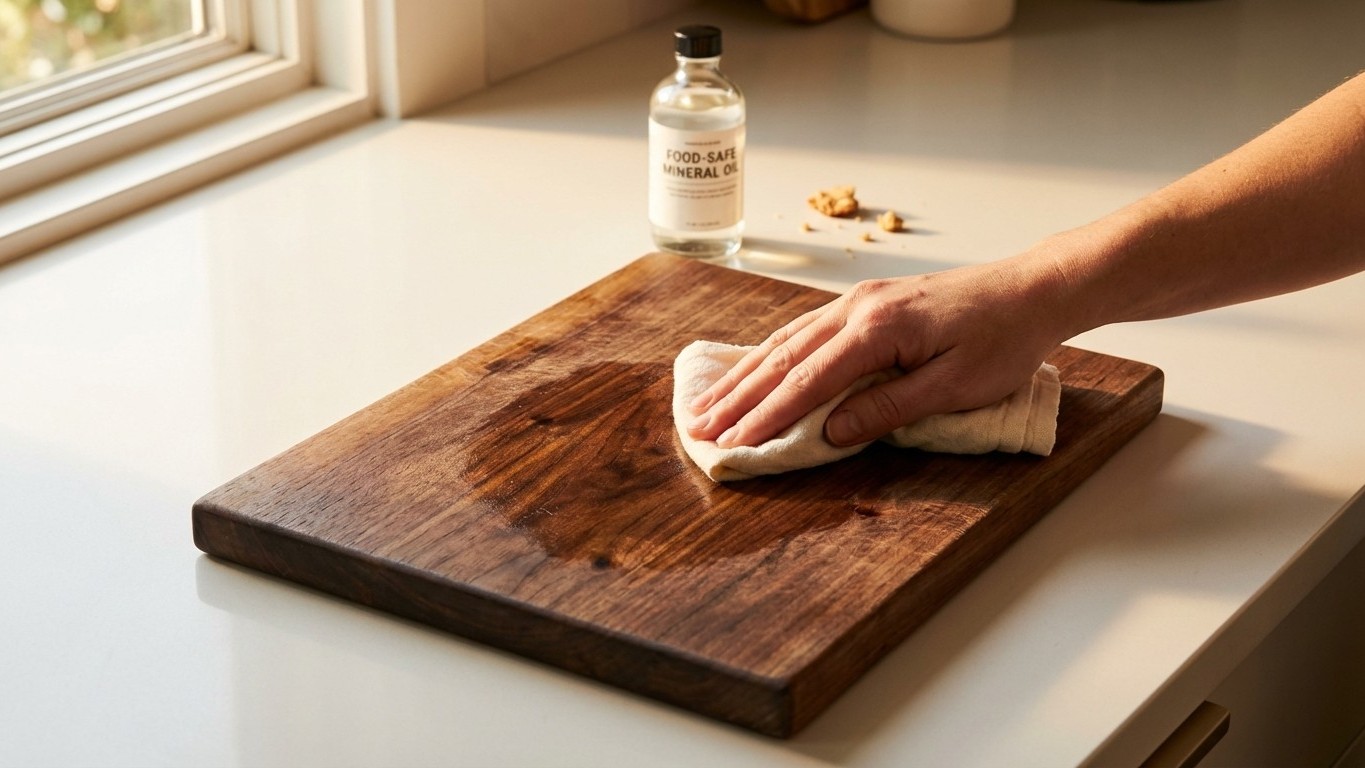
You’d think a wooden chopping board would be indestructible, wouldn’t you? I certainly did, once. After all, my grandmother’s ancient oak board crowned her kitchen counter for decades, glowing with the patina of honest use. I thought a quick rinse and a scrub now and then was ample care. How wrong I was! My boards warped, sported suspicious dark spots, even developed tiny splinters. My attempts at rescuing them, soaking in hot water, blasting them with bleach, did more harm than good. The boards ended up looking like relics from a shipwreck. That is, until a friendly chef, rolling her eyes in mild despair, shared a secret that changed everything.
Key takeaways
- Why common cleaning methods can damage your wooden chopping boards.
- The surprising secret a chef revealed that saved my boards.
- How simple, regular maintenance can restore and protect your wood.
The Hidden Dangers of Neglect (and Enthusiastic Over-Cleaning)
Poor wooden boards. Few kitchen tools are taken so for granted. Of course, they bear our sharpest knives and most colourful feast preparations, but how often do we really pay attention to their upkeep? An all-too-common mistake: dousing your wooden board under scalding tap water or soaking it after a session with smelly onions and raw chicken. Wood, however, is far more delicate than it appears, soaks and strong detergents drive water deep into the grain, making it swell, crack, and warp.
Yet even worse is ignoring your board’s screams for moisture between uses. Those dry spells? That’s when cracks creep in, and food bits get trapped, inviting mould and bacteria to settle. Harsh bleach, once my weapon of choice when paranoia struck, only dried the wood further. No wonder the centre split last winter, and my trusty board found itself perched precariously above the bin, one more casualty in the age-old battle of convenience versus care.
The Chef’s Trick: Food-Safe Oil, Not Magic Spells
Now, the chef’s advice wasn’t a secret potion, but a tradition so wonderfully simple I felt sheepish for missing it. “Just oil it. But use the right oil,” she said, sliding her favourite board across the counter. That’s it. No overnight soaks, no fancy gadgets, no mystical charms from food television. Turns out, all my wooden boards needed was a gentle massage with a good food-safe oil every few weeks. This forms a barrier that locks in the wood’s natural moisture, making it less likely to warp, split, or absorb food odours. No more black spots or fuzzy patches. Simple, but far too easy to overlook amid the promise of quick fixes.
Here’s where you mustn’t improvise wildly, though. Kitchen cupboard vegetable oil will spoil, trust me, you don’t want a sour-smelling board inviting guests in for sandwiches. Instead, look for mineral oil marketed for cutting boards, or (for a slightly more luxurious treatment) choose a blend with beeswax. These are tasteless, non-allergenic, and most importantly, don’t go rancid. A 250ml bottle lasts months, even if you have a small fleet of chopping boards.
How to Pamper Your Wood Properly
Caring for your board isn’t arduous. In fact, I now consider it one of life’s small, soothing pleasures, like polishing shoes on a rainy afternoon, or folding freshly washed tea towels. After the evening’s meal is sorted and washing-up has dulled my ambition for anything too fiddly, I follow a quiet ritual:
1. Wipe your board immediately after use with a damp, never dripping wet, cloth. Warm water is gentler than hot, unless you’re keen on warping.
2. For a stubborn stain or a whiff of garlic, sprinkle coarse salt over the surface and rub it gently with half a lemon. The salt scrubs, the lemon deodorises and brightens. Rinse quickly under running water, then pat dry.
3. Leave the board upright or on its edge, never flat, so air circulates freely.
4. Once the wood feels dry to the touch but not bone-dry, drizzle a teaspoon or so of food-safe mineral oil onto the surface. Using a soft, lint-free cloth (an old cotton tea towel or odd sock will do), rub the oil in small circles, covering every nook and edge.
5. Wait at least six hours if you have the patience, overnight is even better. Wipe off any excess oil in the morning. Admire the rich, renewed gleam, just as my grandmother’s board did in its heyday.
Repeat this every three to four weeks, or anytime your board looks thirsty, when it loses its gentle shine or feels rough. No need for calendars or alarms. Your hands and eyes will soon recognise the signs, a quiet testament to old-fashioned know-how.
When Boards Go Bad: When to Say Goodbye
Despite your best efforts, a day may come when partings must be made. Deep gouges, persistent blackening (especially near seams), or a board that warps so dramatically it rocks rather than rests, these indicate that bacteria may have taken up residence, and the wood’s structure is too compromised to mend. Sometimes, a beloved board’s history is best honoured by turning it into a rustic serving platter or garden kneeling pad, rather than risking food safety.
Interestingly, recent research has highlighted that wooden chopping boards, when cared for, have natural antibacterial properties, wood absorbs bacteria, trapping and eventually killing them, unlike plastic boards, which can harbour life in their knife scars. A touch of respect and maintenance only improves these odds. If only I’d realised this before dispatching that first battered old board to the dustbin: it probably needed less rescue than I thought, and more regular attention.
Just last week, though, I caught myself running my fingertips over a board’s smooth, newly-oiled surface and marvelling at its mellow glow. Every mark told a story, chopping parsley as a newlywed, slices for children’s lunchboxes, birthday feasts and solitary late suppers. Now, with a bottle of oil kept in the cupboard and a cloth in easy reach, even this humble routine feels like treasuring a little bit of domestic history.
So, perhaps the question lingers: what other Everyday household items are we quietly ruining through neglect, or through fixes that are more frantic than wise? The answer might be hiding in plain sight, waiting for a sprinkle of tradition and a dab of common sense, just as with those faithful, wooden chopping boards.