
Your kitchen, bathroom, hallway, and sitting room floors see everything, muddy boots, spilt tea, pet accidents, and the general business of a lived-in home. The good news is that a handful of inexpensive, natural ingredients sitting in your kitchen cupboard right now can handle nearly all of it, without exposing your children, pets, or the environment to a cocktail of synthetic chemicals. This guide covers every surface, every stain type, and every odour problem you’re likely to encounter — with precise recipes and honest advice on what actually works.
Why natural methods make sense for floors and carpets
Walk down the cleaning aisle of any supermarket and you’ll find dozens of products promising miracles on carpets and floors. Many of them work reasonably well. But a growing number of households are quietly stepping back from them, and not just for environmental reasons. Conventional carpet cleaners, floor polishes, and stain removers often contain surfactants and fragrances that linger in soft furnishings long after the bottle is closed. For a home with toddlers crawling on carpets or cats sleeping on rugs, that residue matters.
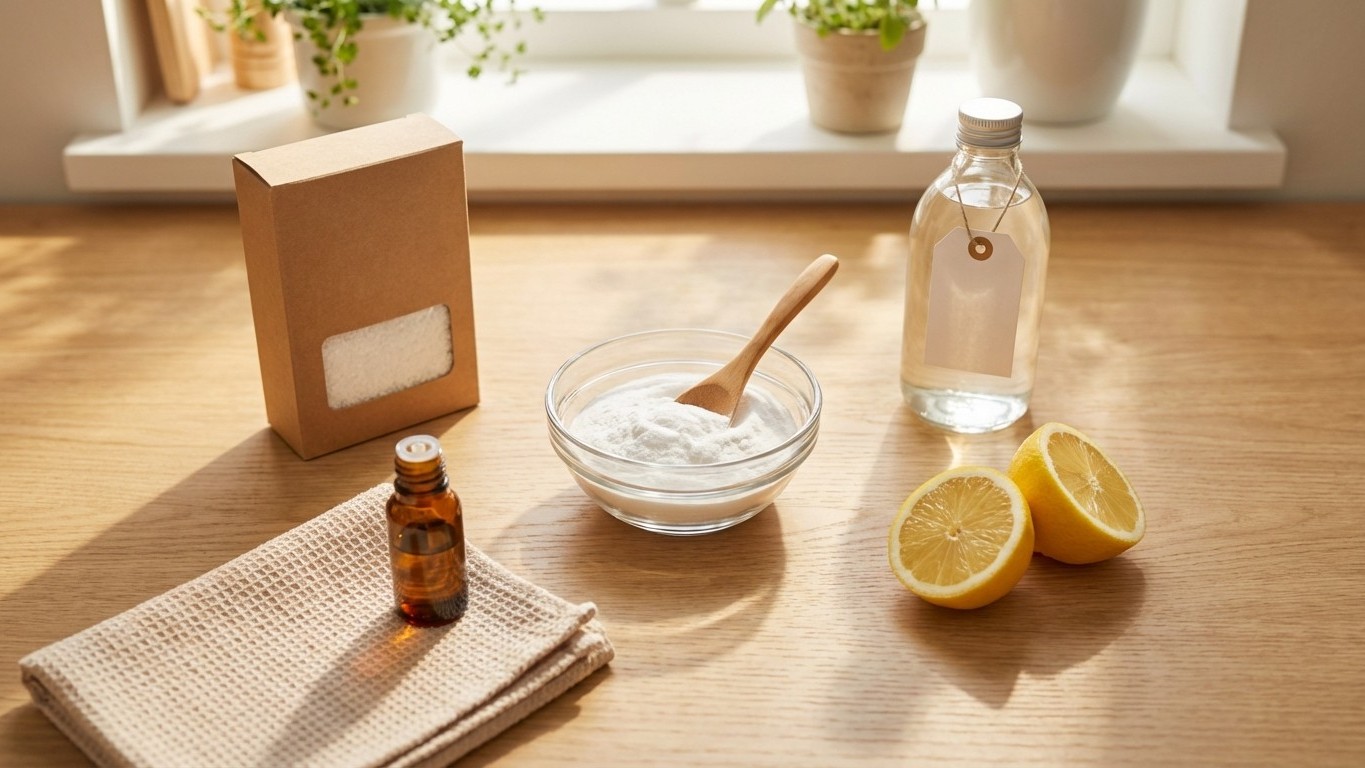
Natural alternatives, white vinegar, bicarbonate of soda, lemon juice, washing soda crystals, and a few well-chosen essential oils — have been used in British homes for generations, and modern understanding of their chemistry helps explain why they’re effective. Bicarbonate is a mild alkali that neutralises acidic odours and lifts dried stains, making it particularly effective when you need to remove carpet stains naturally baking soda. Vinegar’s acidity cuts through grease and acts as a mild disinfectant. Lemon juice works similarly and leaves a genuinely pleasant scent rather than a synthetic one. None of these will harm a child who crawls across a freshly cleaned carpet, and none will upset a cat who decides to nap on the bathroom floor tiles.
There’s a budget argument too. A one-litre bottle of white wine vinegar costs a fraction of a specialist floor cleaner, and a large tub of bicarbonate of soda handles everything from carpets to grout. Once you have the basics in your cleaning cupboard, the recipes below cost pennies per use.
For a broader overview of how these ingredients work across every room in the house, the natural cleaning hacks hub is a wonderful place to explore, it covers forty recipes and techniques that complement everything discussed here.
The natural cleaning essentials: what you need and how to use them
The four indispensable ingredients
White wine vinegar is the workhorse. Diluted roughly 50/50 with water, it cleans most hard floors effectively and deodorises carpets when spritzed lightly before blotting. It’s particularly effective as a natural tile floor cleaner homemade solution. For wooden surfaces specifically, you can clean wooden floors naturally using similar gentle methods. If you’re looking for a comprehensive natural way to deodorise carpet, this approach works particularly well. Buy the cheapest own-brand version, the acetic acid content is what matters, not the label.
Bicarbonate of soda (baking soda) is your soft furnishings friend. It absorbs moisture and neutralises odours rather than masking them, and its mildly abrasive texture helps loosen dried-on matter from carpet fibres. For grout and tile, it doubles as a gentle scrub.
Lemon juice, fresh or bottled, brings a mild bleaching quality useful for light-coloured carpets and a genuinely fresh scent. A few drops of lemon essential oil in a spray bottle extends this considerably.
Washing soda crystals (not to be confused with bicarbonate) are a stronger alkali, excellent for degreasing tiled floors and refreshing mop heads. They’re inexpensive and widely available in supermarkets. Do wear rubber gloves when using them, as they can irritate skin with prolonged contact.
Equipment that makes everything easier
You don’t need much: a good vacuum cleaner (emptied regularly, because a half-full bag loses significant suction), a flat microfibre mop with a washable head, a spray bottle or two, and a supply of clean white cloths for blotting. White cloths matter for carpet work, coloured ones can transfer dye to pale fibres. A soft scrubbing brush and an old toothbrush for grout lines round things off nicely.
Natural carpet cleaning hacks: tackling stains properly
The single most useful thing anyone can tell you about carpet stains is this: act fast and blot, never rub. Rubbing drives the substance deeper into the pile and spreads it sideways. Blotting, pressing a cloth firmly, lifting it, and repeating, draws it upward. Get that habit right and you’ll remove twice as many stains as before, regardless of which cleaning method you use.
Stain-by-stain solutions
Red wine is every carpet’s nemesis. Blot as much as possible immediately, then sprinkle bicarbonate of soda generously over the damp area and leave for five minutes. Brush away the powder, then apply a mixture of one tablespoon of white wine vinegar, one tablespoon of washing-up liquid, and two cups of warm water. Blot repeatedly with a clean cloth. Rinse lightly with cold water and blot dry. Repeat if any colour remains. For older, dried stains, soak the area with warm (not hot) water first to rehydrate the stain before treating.
Coffee responds very well to cold water first, hot water sets the tannins. Blot the fresh spill immediately, then apply a solution of one tablespoon of white vinegar, one tablespoon of washing-up liquid, and two cups of cold water. Work from the outside of the stain inward to prevent spreading. Blot until the colour transfers to the cloth, then rinse with cold water and blot dry.
Pet accidents require a two-stage approach: remove the stain and then eliminate the odour, which are different problems. Blot up as much liquid as possible with an old towel. Mix 50ml white wine vinegar with 50ml cold water and apply generously, then blot. Follow with a sprinkle of bicarbonate of soda and leave for at least two hours, overnight is better. Vacuum thoroughly. The vinegar neutralises the ammonia in urine; the bicarbonate absorbs residual moisture and odour. A fuller treatment guide lives in our article on remove carpet stains naturally baking soda, which covers dried stains and old accidents in particular detail.
Grease and cooking fat on a carpet (dropped butter, fallen chip, that sort of thing) should be tackled with cornflour or bicarbonate of soda first. Cover the stain, leave for fifteen minutes to absorb the fat, then vacuum up. Follow with a small amount of neat washing-up liquid worked gently into the fibres with a soft brush, then blot with cold water repeatedly until clear.
Mud — and in a British household, there’s always mud, should be left to dry completely before you do anything. Brushing wet mud spreads it dramatically. Once dry, vacuum the residue, then treat any remaining mark with the vinegar and washing-up liquid solution described above.
For a comprehensive routine covering all these scenarios plus drying techniques, the dedicated natural carpet cleaning hacks guide is well worth bookmarking.
Shifting deep-set odours: damp, urine, and pets
Odours embedded in carpet pile are stubborn because they’ve worked their way past the surface fibres into the backing and sometimes the underlay. Surface treatments only go so far. The approach that consistently works is a generous bicarbonate application, left for several hours (not just twenty minutes as many guides suggest), combined with thorough ventilation. Open windows, create airflow, and let the room breathe while the bicarb does its work.
For pet odours specifically, an enzyme-based approach helps, and you can approximate this naturally with a mixture of warm water, a tablespoon of white wine vinegar, a teaspoon of bicarbonate, and a few drops of tea tree essential oil. Spray, leave for thirty minutes, then blot and dry. Tea tree has documented antimicrobial properties and helps with the bacterial component of animal odours. Our article on the natural way to deodorise carpet goes into considerably more depth on persistent odours from animals, damp basements, and cooking smells that have seeped into floor coverings over time.
Maintaining carpets and rugs long-term
Regular maintenance prevents the deep-cleaning crises that require intensive treatment. The routine doesn’t need to be elaborate. Vacuum at least once a week, twice in high-traffic areas, and pay attention to the edges and corners where debris accumulates and is often missed. Every month or so, sprinkle the whole carpet lightly with bicarbonate of soda, leave it for thirty minutes before vacuuming, and the fibres will smell noticeably fresher.
For a monthly refresh spray, combine 200ml water, 50ml white wine vinegar, and ten drops of lavender or eucalyptus essential oil in a spray bottle. Mist lightly over the carpet surface, let it dry completely with good ventilation, and you’ll extend the time between deep cleans considerably. Lavender has the useful bonus of being a mild insect deterrent, relevant if you’ve ever had a moth problem in a wool rug.
Rotate rugs every few months where possible. Sunlight fades and weakens fibres over time, and even distribution of foot traffic prevents uneven wear. Shake smaller rugs outdoors when the weather permits, it removes deeply embedded dust that vacuuming misses.
Natural floor cleaning by surface type
Understanding what each surface needs
Hard floors are not all the same, and the wrong cleaner can cause lasting damage. Ceramic and porcelain tiles are robust and tolerate a wider range of treatments. Natural stone (slate, limestone, terracotta) is porous and reacts badly to acidic cleaners, vinegar, lemon, and anything containing citric acid should be kept well away from it. Sealed hardwood floors need minimal moisture and gentle alkaline cleaners. Laminate and vinyl floors are vulnerable to water pooling and should be cleaned with a barely damp mop rather than a wet one.
Recipes for each floor type
For ceramic tiles and grout, a general floor cleaner of 500ml warm water, 100ml white wine vinegar, and a few drops of lemon essential oil in a spray bottle handles everyday cleaning beautifully. For grout that has darkened, make a paste of bicarbonate of soda and a small amount of water, apply with an old toothbrush, leave for ten minutes, then scrub and rinse. Washing soda crystals dissolved in hot water (roughly two tablespoons per litre) make an excellent degreasing mop solution for kitchen tiles.
For hardwood and engineered wood floors, the golden rule is moisture minimisation. A microfibre mop dampened (not soaked) with a solution of warm water and a small amount of washing-up liquid handles most everyday dirt. For a gentle clean with a pleasant finish, a few drops of white wine vinegar in a bucket of warm water, about 50ml per five litres, works on sealed floors. Go easy; too much vinegar over time can dull some lacquer finishes. The detailed guide on clean wooden floors naturally covers different finishes including oiled wood, which requires a completely different approach, and is worth reading before you treat a floor you’re unsure about.
For vinyl, lino, and laminate, a barely damp mop with warm water and a few drops of washing-up liquid is usually sufficient. Avoid steam mops on laminate, which can cause the boards to warp or delaminate over time. Bicarbonate paste can lift scuff marks from vinyl without scratching, apply, leave a moment, then wipe with a damp cloth.
Common mistakes that undo all your good work
Using too much water is the error that causes the most problems. Oversaturating a carpet can soak the backing and underlay, leading to mould, permanent odour, and in extreme cases, rotting. Always use the minimum effective amount of liquid and dry thoroughly, open windows, use a fan if you have one, and never walk on a damp carpet until it’s fully dry.
Mixing bicarbonate and vinegar directly together is a popular idea that doesn’t deliver what people hope. The fizzing reaction looks satisfying, but it neutralises both ingredients, leaving you with mostly water. Use them sequentially, bicarb first to absorb and lift, vinegar solution second to clean and deodorise.
Assuming all natural ingredients are safe on all surfaces is another common misstep. As mentioned above, vinegar and citrus on natural stone is a recipe for etching and permanent dullness. And concentrated tea tree essential oil should never be left to pool on any surface where a pet might walk and then groom themselves, a few drops in a diluted spray is fine, but it should dry completely before animals have access to the area.
Finally, skipping the patch test. Before using any new cleaning solution, natural or otherwise, on a carpet or floor you care about, test it in an inconspicuous area and wait twenty-four hours. Dyes in carpet fibres vary wildly in their stability, and a solution that’s perfectly safe on most carpets might lift the colour in yours.
Quick answers to the questions that come up most often
Can bicarbonate of soda be used on all floor types? As a dry powder, it’s generally safe on carpets, tiles, and vinyl. As a paste, keep it away from polished stone and lacquered wood surfaces. On grout, it’s excellent.
What’s the safest natural cleaner if you have young children and pets? Plain white wine vinegar diluted 50/50 with water, or a mild solution of washing soda crystals in warm water. Both are effective, and once dry, neither poses a risk to curious small beings.
How do you remove a stain that has already dried and set? Rehydrate it first with cold water, leave for five to ten minutes, then treat as if fresh. It takes more patience, but the same methods apply.
Does lemon juice bleach carpets? It can have a very mild lightening effect on natural fibres, which is useful for light-coloured wool rugs but best avoided on dark or vibrant ones. Always patch-test first.
If you want to extend these habits beyond floors and carpets to the rest of your home, the main natural cleaning hacks resource brings together recipes for every room, kitchen, bathroom, laundry, and more, in one place. A clean home made with ingredients your grandmother would recognise is, I’d argue, a rather satisfying thing to achieve.