
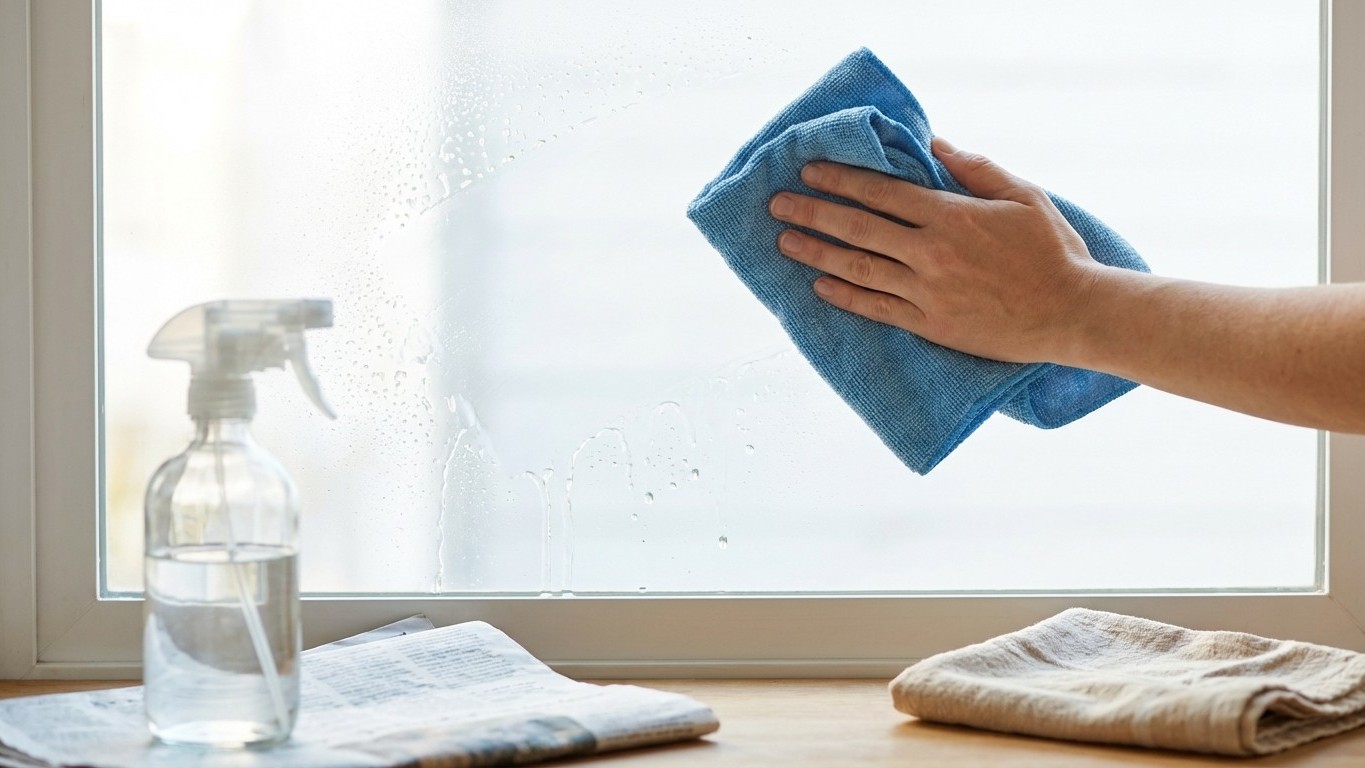
The cloth you wipe with matters just as much as the solution you spray. Many people spend time mixing the perfect homemade glass cleaner vinegar and alcohol recipe, then ruin everything by grabbing a random tea towel from the drawer. The result? Smears, fibres, and that maddening haze that catches every ray of morning light. Getting truly streak-free windows without resorting to chemical sprays comes down, more than anything, to choosing the right cloth for the job.
Why Do Windows Streak After Cleaning?
The Real Culprits: Water, Products, and the Wrong Fabric
Streaks rarely come from just one thing. Hard water leaves mineral deposits as it evaporates, particularly in areas where tap water is calcium-rich (a familiar frustration for anyone living in London, Kent, or the East Midlands). Cleaning solutions that aren’t fully rinsed away leave a thin film. And the cloth itself? If it sheds fibres, holds onto soap residue from previous washes, or simply doesn’t absorb moisture efficiently, you’re essentially redistributing grime rather than removing it.
Fabric texture plays a surprisingly large role. A loosely woven cotton cloth, for instance, might feel soft and harmless, but it drags moisture across the glass instead of lifting it. The same goes for anything with a worn, fuzzy surface. Those loose fibres cling to glass with an almost magnetic determination.
Why Natural Cleaning Makes This Even More Critical
When you switch to natural cleaning solutions, white vinegar, diluted rubbing alcohol, or plain water with a squeeze of lemon — you’re already removing a layer of complexity. No surfactants, no synthetic solvents. That’s genuinely good news for your home and the environment. But it also means your cloth needs to work harder, because natural solutions have less “slip” than commercial glass sprays. The cloth becomes the primary tool, not just the finishing touch.
For anyone exploring the broader world of natural cleaning hacks, windows often prove the trickiest surface to master. Floors forgive a mediocre mop. Glass does not.
The Best Cloth for Streak-Free Natural Glass Cleaning
Microfibre: Still the Clear Winner
If you want one definitive answer, here it is: a good quality microfibre cloth, used correctly, will outperform everything else on glass. The science behind it is straightforward. Microfibre is made of synthetic fibres split into tiny wedges, each one capable of trapping particles far smaller than what a regular cotton thread can grab. The result is a cloth that actually lifts grease and dust rather than smearing it sideways.
The critical word there is “quality.” Not all microfibre cloths are created equal, and this is where many people go wrong. A cheap multipack from a pound shop might technically be microfibre, but the fibre density and weave are often too loose to be genuinely effective on glass.
What to Look for When Comparing Microfibre Cloths
Three things matter most: the GSM (grams per square metre, which indicates thickness and density), the weave type, and how you’ve been washing them.
For glass specifically, a waffle-weave or flat-weave microfibre with a GSM between 300 and 400 tends to give the best results. Thicker “plush” cloths (often used for polishing cars) are too fluffy for windows and will leave a pattern of fine lint. You want something with a smooth, tight surface that glides across glass without dragging.
Washing is where many people unknowingly sabotage their cloths. Fabric softener is the enemy. It coats those tiny split fibres with a waxy residue that dramatically reduces their ability to absorb, leaving your windows looking worse than before you started. Wash microfibre cloths at 40°C with a small amount of plain washing powder, no conditioner, no dryer sheets. Air-dry them whenever possible.
Newspaper: Old-Fashioned Wisdom, Honest Assessment
The newspaper method has genuine fans, and not without reason. The slightly abrasive texture of newsprint does polish glass to a decent shine, and the ink (now largely soy-based in most British publications) was historically thought to repel moisture. In practice, newspaper works reasonably well as a finishing cloth after you’ve cleaned with a damp microfibre, particularly on smaller panes.
The drawbacks are real, though. Modern newspaper is thinner and less absorbent than it used to be, which means it can disintegrate mid-wipe on a wet surface. It also leaves a faint grey residue on window frames, fine on uPVC, less welcome on pale wooden sills. And if you’re wearing light-coloured sleeves while doing this, you’ll know about it afterwards. Newspaper is a handy backup, not a first choice.
Natural Alternatives Worth Trying
Recycled Cotton, Old Sheets, and Chamois-Style Cloths
A well-worn cotton t-shirt, cut into squares, can work surprisingly well on glass, provided it’s been washed dozens of times and is genuinely lint-free. The key is that cotton becomes smoother with repeated washing, shedding its loose surface fibres over time. A brand-new cotton cloth is actually worse for windows than an ancient one.
Old pillowcases from a high thread-count set are another household staple worth repurposing. The tighter the weave, the less likely they are to leave fibres behind. Fold them into quarters so you have a fresh surface to work with as you move around the window.
Chamois leather (or the plant-based synthetic alternatives now widely available) has long been used by window cleaners. The natural version is genuinely excellent at absorbing water without leaving streaks, but it requires proper care, it needs to be kept moist between uses and dried slowly, away from direct heat. Synthetic chamois cloths are more forgiving and give a respectable result, though they don’t quite match the real thing for absorbency.
Cloths to Avoid
Terry cloth towels are too thick and fluffy, they hold moisture in their loops rather than transferring it away from the glass. Paper kitchen roll, despite being a common instinct, is too fragile when wet and invariably leaves tiny paper fibres stuck to the surface. Regular cotton dusters, particularly old ones, shed consistently. And anything that’s been washed with fabric softener recently should be retired from window duty entirely until it’s been through several plain washes.
Practical Technique: Making It All Work Together
Preparing Your Cloths
Before any cleaning session, give your microfibre cloths a quick rinse under warm water and wring them out firmly. A slightly damp cloth picks up dust and light grime without needing any solution at all. For heavier cleaning, apply your chosen solution directly to the cloth (not the glass), which gives you much better control and avoids over-saturating the surface.
Have at least two cloths ready: one slightly damp for the initial clean, one completely dry for the final buff. This two-cloth method is the single most effective change most people can make to their window-cleaning routine.
The Right Wiping Technique
Work from top to bottom, always. Horizontal strokes on one side of the glass, vertical strokes on the other, this way, if you spot a streak, you immediately know which side it’s on. Use firm, overlapping strokes rather than circular motions, which tend to redistribute moisture in an uneven pattern.
For the final buff, use a dry cloth in straight lines with light pressure. If you’re seeing hazing rather than clear streaks, the cloth is probably still holding residue from a previous clean, this is the moment to swap to a fresh one. A full guide to technique for every type of glass surface is covered in our natural window cleaning hacks article, which is worth reading alongside this one.
FAQ: Common Mistakes and Misconceptions
Natural Solutions That Can Still Cause Streaks
Undiluted white vinegar is a common culprit. It’s acidic enough to cut through grime effectively, but if used at full strength and not buffed away promptly, it can leave its own faint residue. Dilute it: one part vinegar to four or five parts water is the right ratio for most windows. Lemon juice presents a similar issue, its natural sugars leave a slight stickiness if not removed completely. Always finish with a clean, dry cloth.
Essential oils added to cleaning solutions sometimes leave an oily film on glass, particularly around the edges. They smell wonderful, but they’re better suited to surface cleaners than glass solutions.
Can You Really Get Spotless Windows Without Chemicals?
Genuinely, yes. The combination of a diluted white vinegar solution and a quality microfibre cloth, used with proper technique, consistently produces results that rival commercial glass cleaners. Anyone who’s tried it carefully and still struggled has usually been let down by the cloth rather than the solution. For mirrors specifically, where streaks are even more visible, the same principles apply, and the approach is covered in detail in the article on how to clean mirrors naturally without streaks.
The satisfaction of a perfectly clear window, achieved with nothing more than a splash of vinegar and a well-chosen cloth, is one of those small domestic pleasures that never quite gets old. Once you’ve found the microfibre cloth that works for your windows, you’ll be guarding it carefully and probably buying two more as backup. Which, if you ask me, is exactly the right response.