
If you’ve ever peered into your cutlery drawer and felt a twinge of embarrassment at those dull, blotchy teaspoons or patchy knives, you’re not alone. I was once positively convinced my old set had reached the end of its days, years of service and a million cuppas had left it mottled and uninviting. But just before they met their fate in the bin, my Nan called by, saw my sorry spoons, and tutted kindly. “A waste, love! You needn’t lift a finger to have them sparkling again.” She disappeared into the cupboard, muttering something about a “bizarre hands-free trick.” I was all ears. Curious? You will be.
Key takeaways
- Dull, tarnished cutlery isn’t hopeless—there’s an old, forgotten method that requires almost no effort.
- This strange trick uses common kitchen staples and a simple soak to get your spoons sparkling again.
- No scrubbing, no chemicals, just a bit of kitchen chemistry and patience.
The Magic of the Hands-Free “Soak”
What Nan swears by isn’t elbow grease or expensive specialist potions, but a nearly forgotten soaking method, as likely passed around after rationing as it is today. Here’s the trick: let a couple of clever household staples (think baking soda and aluminium foil) do the hard work, while you put the kettle on. No frenzied scrubbing. No harsh chemicals. And, this is the strange bit, you hardly touch the cutlery until it’s time for the rinse.
Now, the sciencey bit (don’t worry, I’ll keep it snappy), tarnish on cutlery isn’t pure dirt but a chemical reaction, often between silver alloy and sulphur in the air, which leaves a blackish sheen. Stainless steel can pick up tea and water stains just as badly. Shop-bought cleaners work, of course, but often contain nasties you wouldn’t want near a sandwich, and those little tubes cost more per ounce than a decent cheese. Why bother when the same result comes from the foil in your kitchen drawer?
Step-by-Step to Gleaming Cutlery (No Scrubbing)
First, you’ll need:
- A roasting tin or deep, heatproof dish big enough for your cutlery
- Ordinary aluminium foil (enough to line the bottom)
- 2 tablespoons of bicarbonate of soda (baking soda)
- Boiling water (enough to cover the cutlery)
- Your sad, tarnished cutlery, stainless steel or silver-plated welcome
Nan’s way is comfortingly old-fashioned. Put the kettle on and make yourself a brew while the process works its “magic”. Here’s how:
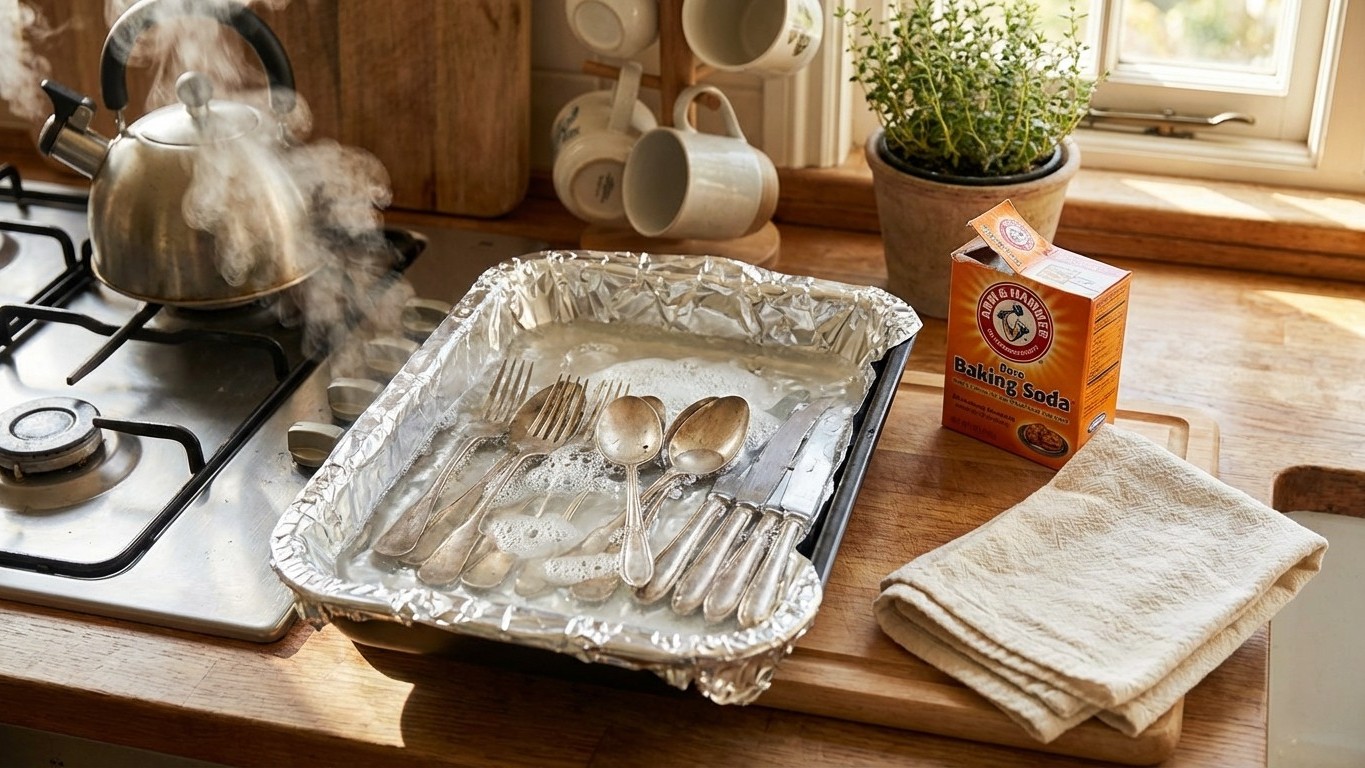
Line your roasting tin with foil, shiny side up. Lay the cutlery on top, making sure each piece touches the foil somewhere, this is important, as it completes the chemical circuit. Sprinkle the baking soda evenly over everything. Pour on enough freshly boiled water to cover all the items, and listen for that gentle fizz (a tiny bit of science in action). Don’t poke about or stir; just leave it be for 5-10 minutes.
You might notice the water turning a tad murky or see flecks of tarnish lifting away, very satisfying, if you’re partial to a transformation. After the wait, fish the cutlery out (use tongs or a slotted spoon if you prefer not to brave the heat), rinse in cold water, and dry thoroughly with a soft tea towel. They don’t always sing with newness after a single go, but it’s usually enough to restore a decent sparkle—even the blackest tea stains show signs of defeat. That’s it. You barely did more than wait for your tea to brew.
Why Does This Odd Method Work?
It’s quite poetic, really. The method mimics a school science experiment, where the tarnish leaps off your silver thanks to an exchange of ions, think of it as your baking soda coaxing off the old coat, while the foil acts as a willing receiver. The result? The tarnish moves from your spoons onto the foil, and you’re left with shimmering cutlery ready for any unexpected guest, however particular. Stainless steel fares well too—baking soda is gentle enough not to scratch, but still has a knack for shifting stains and old grease.
There’s a cheerful thriftiness to this hands-off approach. Not a penny wasted on chemical polishes, nor hours rubbed away in vain. No mystery smells to linger on lunchtime sandwiches. And nobody will spot the difference between cutlery that’s spent half an hour in branded polish and your foiled-up fork “spa”.
Beyond Cutlery: A Sprinkling of Wisdom
Old family fixes like this one always seem to have a story hiding in the folds. My Nan reminisced about rationing years, when every scrap was salvaged and not a bit wasted, silver polish was an extravagance, but ingenuity was free. Odd jobs around the house often relied on harmless kitchen ingredients, with a bit of patience thrown in for luck.
Of course, some things change. Modern dishwashers don’t always play nicely with fancy finishes or inherited teaspoons, and certain delicate items need hand-washing regardless, always check if your cutlery is solid silver, silver-plated, or steel before getting carried away. If you have heirloom treasures, a spot test in a discreet place might save future tears.
If you find yourself tempted to banish battered spoons or streaky butter knives again, give this soaking trick a go. You’ll stretch your pennies and still lay a table worth admiring. Who knows? You might find other neglected treasures in the back of your kitchen drawer just begging for their own spa day. And what of those who never knew about Nan’s method? They’ll wonder how your teaspoons gleam at every family gathering.
So next time you’re ready to say goodbye to well-worn cutlery, pause a moment. Is there another bit of domestic magic nearby, just waiting for you to rediscover it? Sometimes, the gentlest solutions, like a square of foil and a sprinkle of soda, bring results that remind us why old wisdom sticks around for generations. After all, what else might you rescue from the brink, if you ask the right question at the right time?