
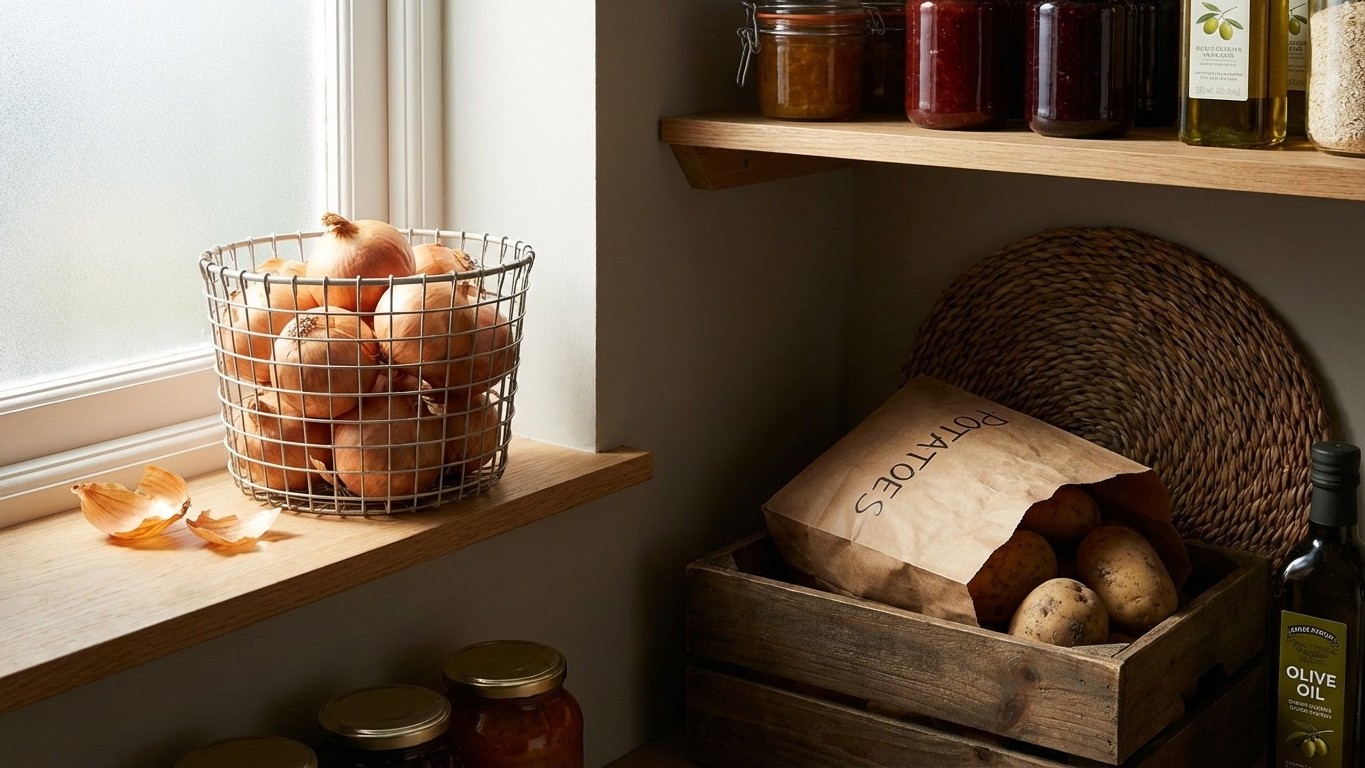
Up until a few years ago, I kept my onions and potatoes tucked side by side in the same old cupboard. It felt perfectly logical: hearty British staples, both arrived in earth-dusted paper sacks, both lasted for ages, both needed darkness and a nice, cool spot. Job done, or so I thought. My wake-up call came one Saturday at the local market, when a grower eyed my shopping bags and offered me some hard-earned wisdom that promptly saved me money, and no end of soggy, sprouting vegetables.
Key takeaways
- Why your onions soften and potatoes sprout prematurely might surprise you.
- These everyday staples actually sabotage each other when stored together.
- Simple storage changes can keep your vegetables fresher and save money.
How onions and potatoes undermine each other
You might, like me, have wondered why your supposedly long-lasting onions sometimes turn soft and my potatoes develop muddy shoots after just a fortnight. I blamed age, the supermarket, even my own memory, perhaps they’d just been sitting there for longer than I realised. The true culprit, as my farmer friend explained, isn’t time or dodgy produce, but rather the invisible conversation happening between the onions and potatoes stored shoulder to shoulder.
These vegetables each breathe out natural gases as they ripen. Onions, in particular, release a fair amount of moisture and a gas called ethylene. Potatoes are extremely sensitive to ethylene. When exposed to it, they speed up their own ripening process. Have you ever wondered why your spuds grow those ghostly shoots or turn soft and wrinkly despite a cool cupboard? The onions are hastening their demise. Meanwhile, potatoes exude their own moisture, which encourages onions to soften and turn mouldy before their time.
This secret sabotage is so well-known among those who grow or store vegetables for a living that many professional kitchens and market vendors keep these two stalwarts in entirely separate bins or baskets. When I first heard, I’ll admit, a tiny bit of my thrifty heart was crushed, thinking of all those wasted trugs of veg over the years.
Clever storage tips for each vegetable
So, what to do instead? Happily, each of these ingredients just wants its own space, nothing fancy or expensive, no high-tech gadgets, just a dash of attention to air flow, temperature, and light. Onions prefer somewhere cool (not fridge-cold), dry, and well-ventilated. Imagine an airy basket, wire rack, or even an old pair of tights hung by the toe: separate the bulbs and keep them dry. They despise plastic bags, which trap moisture and tempt mould, almost as much as they dislike their potato neighbours.
Potatoes, on the other hand, are happier still in a cool, dark place, free from draughts. Think a paper bag, hessian sack, or a sturdy cardboard box lined with newspaper. They like dimness but not damp, so don’t hide them away beside a washing machine or near a leaky sink. A surprising statistic: storing spuds at temperatures below 7ºC (such as in the fridge) can actually turn some of their natural starches into sugar, giving them an odd sweet taste, not what you want for your mash or roasties. Keep them separate from all onions, allowing them breathing space, and you’ll find they stay firmer and sprout-free for far longer.
A traditional trick for fresher veg
I recall my grandmother hushing us when she opened her pantry, as if quiet might preserve the treacle tins and pickled eggs. She never mixed her onions and potatoes, and although she never explained why, I suspect a lifetime with ration books and root cellars taught her more about food science than she let on. One trick from her era, a handful of apples, kept apart from both onions and potatoes, can help ripen green tomatoes but spells disaster for storage. Apples pump out even more ethylene than onions, and quickly spoil potatoes and plenty else. If you’re inclined to keep other root vegetables, set carrots and beetroots together, but always let onions, garlic, and potatoes be loners.
During a cold spell last winter, I slipped and stored everything in the garden shed, thinking it drier and chillier than my kitchen. A fortnight later, I found every onion limp and each potato a peculiar, sickly sweet inside. Temperature swings and too-close storage had sabotaged both. A dry cupboard between 8ºC and 12ºC, away from the hob’s steam and the fridge’s bite, really is the sweet spot, no clever contraption needed, just a watchful eye and a pinch of old-fashioned discipline.
The cost of ignoring this simple advice
For families stretched by rising food prices (and who isn’t these days?), every bulb and spud matters. While one mushy potato or mould-flecked onion might seem minor, over a year, you might easily lose half a sack’s worth, money quite literally rotting away. In the UK, thousands of tonnes of veg are binned per year due to “premature spoilage” in the home. Much of that comes down to careless storage. I once kept a tally and realised our household lost about a bag a month, simply through softened onions and sprouting potatoes. When you add up the cost of avoidable waste, it nudges you to change your habits faster than any expert tip.
So, next time you unpack your earthy treasures, give them their own corners, just as you would cranky relations at Christmas dinner, together only causes friction. If your kitchen’s short on space, an old crate tucked away from sunlight will do the trick for potatoes, while a simple basket near a window (but not in the sun) suits onions splendidly. Even a sturdy cardboard wine box, repurposed, gets the job done for pennies.
I sometimes wonder whether future generations, raised on click-and-collect veg boxes, will ever know the disappointment of slicing into a perfect-looking potato only to find it soppy and brown in the centre. Perhaps, with a bit of luck (and a friendly farmer’s advice), they’ll never need to. What small adjustments in your storage habits could save you the most over the course of a year, and how many other culinary ‘rules’ are just waiting to be uncovered with a simple chat at the market?